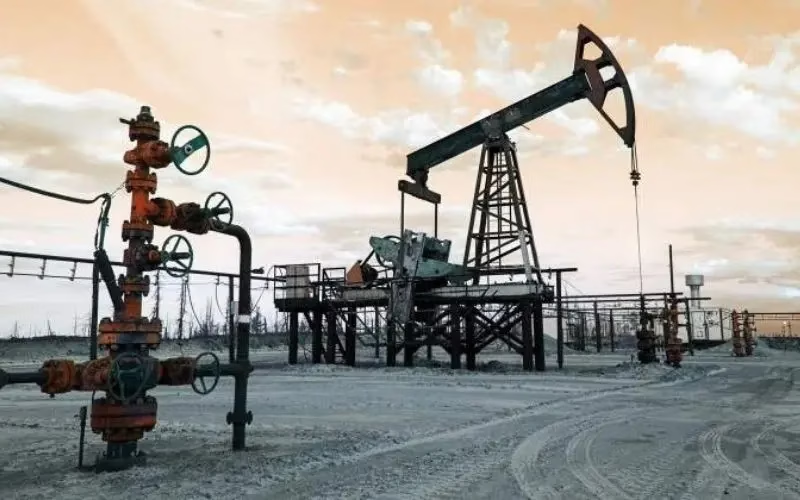
WTI crude oil experiences a rebound following new U.S. sanctions against Iran
The price of West Texas Intermediate (WTI) crude oil, which serves as the main benchmark for the energy market in the United States, recorded an increase of 2.71% at the opening of this Thursday’s session. The barrel reached a price of 88.16 dollars, driven by the announcement of an aggressive economic offensive by President Donald Trump against Iran.
At 09:00 local time, WTI futures contracts for September delivery showed an upward trend, adding 2.33 dollars compared to the previous close. This immediate market reaction responds to the geopolitical uncertainty surrounding the new restrictions imposed by Washington.
A high-impact economic offensive
The U.S. leader described the measures as the most devastating economic operation ever undertaken against a nation. The central objective is to suffocate the Islamic Republic’s sources of funding and cut off any financial support, whether through banking institutions, companies, or government entities.
Today I am announcing the most devastating economic operation ever undertaken against any country. Any entity that provides a lifeline to Iran will face severe economic consequences.
Donald Trump, President of the United States
Key points of the US strategy
- Combating evasion: Washington will focus on eradicating methods used to circumvent sanctions, including crude oil smuggling.
- Financial control: Currency exchange lines, cash transfers, and operations at exchange houses will be closely monitored.
- Logistical supervision: The measure covers vessel registries and shell companies that facilitate economic flow to Tehran.
Tension in the Strait of Hormuz and global markets
The energy market remains on high alert due to the relevance of the Strait of Hormuz, a critical route for global oil transport. The lack of diplomatic progress to ensure the reopening of this area and the prolonged conflict in the Middle East over the last six months have exacerbated nervousness among investors.
WTI behavior reflects fears of potential disruptions in global supply. Market traders continue to analyze how these geopolitical tensions could affect the global crude supply, keeping upward pressure on fuel prices in the coming days.