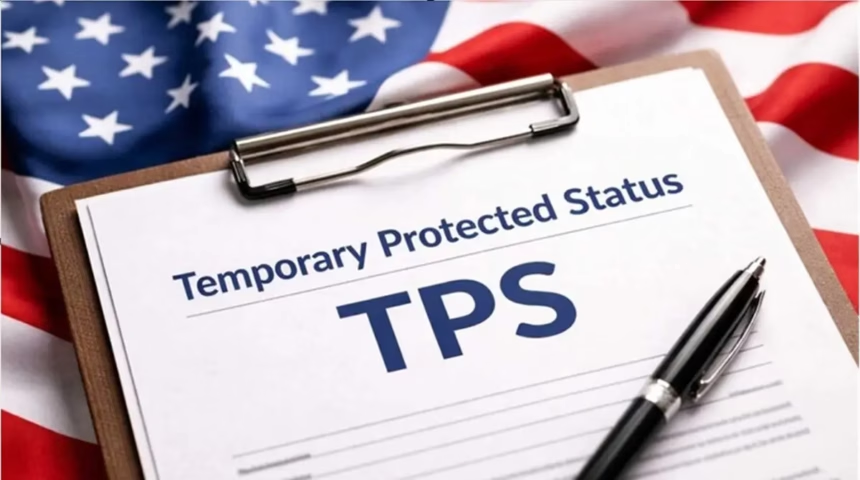
Migration impact: Trump and the review of Temporary Protected Status (TPS)
During his presidential campaign, Donald Trump maintained a firm stance regarding immigration policy, promising a profound reform aimed at limiting the stay of foreigners protected under Temporary Protected Status (TPS). After an extensive judicial process that escalated to the Supreme Court, the former president managed to obtain a favorable ruling to advance his agenda of immigration restrictions.
The TPS, established in 1990 under the George H. W. Bush administration, was designed as a humanitarian protection mechanism for citizens of nations affected by natural disasters, armed conflicts, or health crises. It is essential to clarify that this status grants a work permit and protection against deportation, but it does not constitute a direct path to permanent residency or citizenship. If the benefit expires, recipients lose their legal status and become subject to standard immigration regulations.
Critical situation by country
- Haiti: With nearly 300,000 citizens in U.S. territory, the country is facing an extreme security crisis, with criminal gangs controlling a large part of the national territory.
- Honduras: The Honduran government has initiated a contingency plan in coordination with the State Department to manage the return of approximately 80,000 compatriots, prioritizing family unity and the transfer of personal belongings.
- Venezuela and Nicaragua: Both cases represent a major diplomatic challenge due to the lack of formal relations between the U.S. administration and the current governments. The situation of Venezuelan refugees, estimated at 300,000 people, is aggravated by political persecution, while the nearly 5,000 Nicaraguans face a landscape of total uncertainty following internal repression in their country.
We must be respectful of the sovereign decisions of the United States. Our commitment as a government is to work hand in hand with U.S. authorities through diplomatic channels to ensure an orderly, dignified, and humanitarian transition for our compatriots, ensuring that families are not separated and that they can return with their belongings.
Tito Asfura, on the management of migratory return.
The culmination of this status affects more than 500,000 expatriates in the United States. According to analysts, Trump’s interest in accelerating these measures before the November 3rd elections responds to a strategy to consolidate support for the Republican Party, marking a milestone in the country’s immigration policy that Alofoke Deportes will continue to monitor closely.