

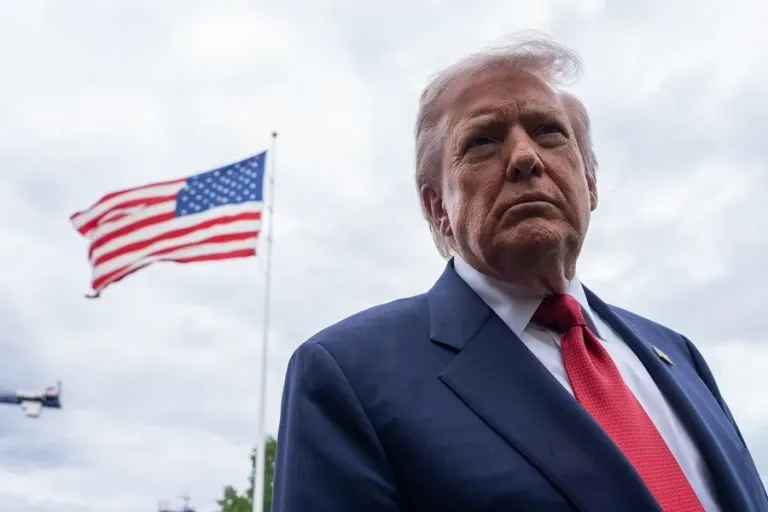
Donald Trump announces plans to declare the Strait of Hormuz as U.S. territory
At a recent political rally held in Long Island, New York, former President Donald Trump raised tensions in the geopolitical landscape by stating his intention to declare the Strait of Hormuz as territory under United States control. This statement comes at a critical moment, marked by the stagnation of negotiations and the approaching expiration of the ceasefire agreed upon last June.
Trump asserted that, following what he described as a strategic defeat for Iran, his administration would take absolute control of this vital maritime route. “After we finish defeating Iran, which is being defeated very badly, very soon I will declare the Strait of Hormuz United States territory, in essence. We have a blockade. No ship passes unless we want it to pass,” the Republican leader stated to his supporters.
A high-tension diplomatic scenario
The situation becomes more complex with the approach of Monday, August 17, the date on which the 60-day memorandum of understanding signed on June 17 expires. Said document established an immediate and permanent cessation of military operations with the goal of initiating a peace process in the Middle East.
The United States has total control of the Strait of Hormuz. I think we’ll keep it! There is nothing Iran can do about it.
Donald Trump
The stance of the current U.S. administration seems to align with this vision. Key officials have reinforced the message:
- Treasury Secretary Scott Bessent has advocated for strict economic isolation against Tehran and the maintenance of the maritime blockade.
- Secretary of War Pete Hegseth has suggested that such a restriction in the strait should be maintained indefinitely.
The response from Iran
For their part, the Iranian authorities maintain a firm stance. Mohsen Rezai, secretary of Iran’s Supreme National Security Council, has been emphatic in pointing out that the reopening of the strait is conditional upon the definitive end of the war and the naval blockade. Likewise, Tehran demands the release of its frozen assets and the implementation of a comprehensive ceasefire that includes the regions of Lebanon and Gaza.
The Strait of Hormuz, located between Iran and Oman, remains the nerve center of global oil and gas trade, becoming the epicenter of the current geopolitical confrontation that keeps the international community on edge.


