Netanyahu warns Turkey about military presence in Syria
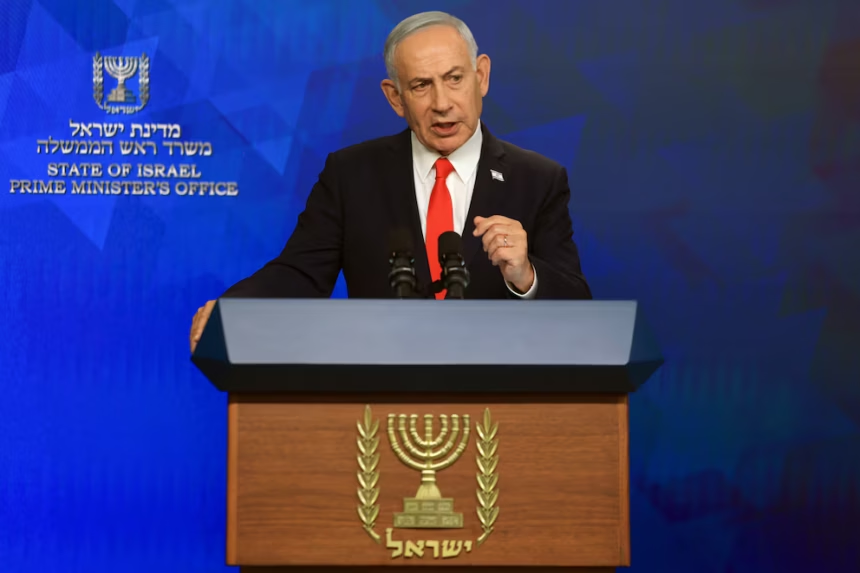
Israeli Prime Minister Benjamin Netanyahu has made his nation’s stance clear regarding the situation in Syria, noting that Israel will not allow Turkey to establish a permanent military presence on Syrian territory under any circumstances. This warning comes after the recent attack on the Abu Duhur military airport, located in the Idlib province.
According to the statements offered by the leader, the Israeli government had previously sent diplomatic messages warning about the consequences of installing military bases near the Aleppo region. Considering that said warnings were not taken into account, Israel opted for direct action to clarify its strategic position in the area.
Apparently they didn’t hear it, so we made sure they understood it more clearly. We will not tolerate a Turkish military entrenchment moving south, because it threatens us.
Benjamin Netanyahu, Prime Minister of Israel
Regional tension and border security
The Prime Minister’s office has stressed that any deployment of Turkish troops on Syrian soil would dangerously alter the military balance that Israel strives to preserve. Although the operation in Abu Duhur was linked by Netanyahu himself to this concern, Turkey has categorically denied that there are plans to establish a permanent military base in the aforementioned area.
This new point of friction adds to the deterioration of diplomatic relations between both nations, aggravated by the context of the war in Gaza. The situation on the Syrian front remains under constant surveillance by Israeli defense authorities.
Military supervision on the ground
In line with the government’s stance, the Israeli Chief of Staff, Eyal Zamir, paid a visit to the forces deployed in southern Syria. During his tour, he emphasized that the Israeli army will maintain a firm stance against any actor attempting to consolidate hostile positions near its borders.
- Israel maintains the goal of neutralizing significant terrorist and military threats in its periphery.
- The Israeli military command reserves the right to use its operational capabilities in the face of any imminent risk.
- The presence of Israeli troops in southern Syria has intensified since the fall of the Bashar al-Assad regime in December 2024.
The situation in Syria continues to be a factor of high regional instability. While Israel maintains that its intervention is a necessary measure to prevent a power vacuum and the proliferation of weaponry in the hands of hostile groups, the dispute with Turkey over the control of military infrastructure adds a layer of complexity to security in the Middle East.