
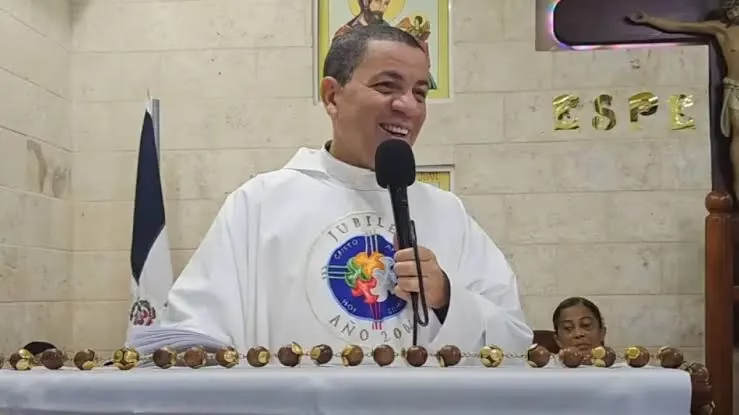
Father Norberto Rosario warns about the political impact of Santiago Matías towards 2028
Priest Norberto Rosario has called on the political class and Dominican society not to underestimate the influence of Santiago Matías, popularly known as Alofoke, regarding his aspirations for the 2028 general elections. According to the clergyman, dismissing the communicator based solely on the absence of traditional academic degrees is an analytical error that ignores the country’s social reality.
For Rosario, the phenomenon surrounding Matías transcends the conventional parameters of politics. The businessman has managed to consolidate a capacity for influence and a deep identity bond with broad sectors of the population, especially among young people who feel represented by his digital platform.
Some people, because Santiago Matías lacks certain academic qualifications or degrees, dismiss him, and dismissing him can be dangerous. It must be recognized that he feels powerful, he has power, and he enjoys a deep-rooted social identity.
Father Norberto Rosario
The challenge of transitioning to a formal political structure
After announcing last July his refusal to accept nominations from traditional parties, Santiago Matías has expressed his firm intention to create his own political organization. The goal is clear: to compete formally in the 2028 elections, a process that requires traveling the country to collect the necessary signatures and request official recognition from the Central Electoral Board (JCE).
This move places Matías before an unprecedented challenge in his career: converting his massive digital audience and popularity into an organized political structure. According to Law 33-18, any political project must meet rigorous legal and documentary requirements to obtain its legal status, a process that must be completed at least 12 months before the electoral contest.
- Municipal Elections: February 20, 2028.
- Presidential and Congressional Elections: May 21, 2028.
Father Rosario’s analysis underscores that, beyond academic credentials, the success or failure of this project will depend on Matías’s ability to transform his digital mobilization into a political proposal that transcends his personal figure. For the clergyman, ignoring this phenomenon or attempting to reduce it to a simple questioning of professional training prevents one from understanding the real dynamics that drive the young electorate today.
The leap of a consolidated figure in entertainment into electoral competition represents one of the most particular and closely watched scenarios ahead of the next democratic cycle in the Dominican Republic.