
Health alert in El Salvador due to the spread of bird flu
El Salvador has issued a preventive health alert due to the spread of avian influenza, a measure adopted by the Ministry of Agriculture and Livestock (MAG) to safeguard public health and the national poultry sector. Although the virus primarily circulates among birds, authorities are maintaining strict surveillance due to reports of cases in various countries across the continent.
What does this alert imply for human health?
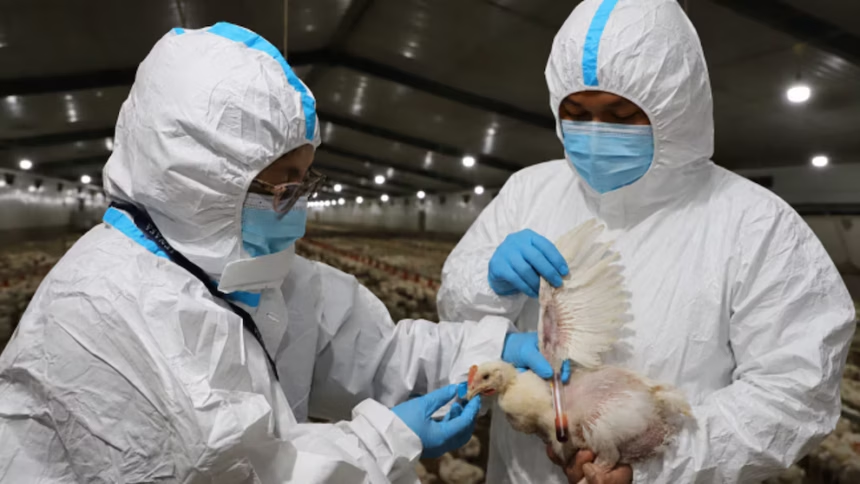
Avian influenza, caused by type A viruses, represents a latent risk for those who have close contact with infected animals. According to health guidelines, human contagion usually occurs during the handling, slaughter, or processing of birds, as well as through exposure to environments contaminated by secretions from sick specimens.
As of today, it is not a direct threat to human public health, but it is a serious problem that threatens workers employed in poultry production.
Jorge Panameño, infectious disease specialist
The specialist highlights that, although sustained person-to-person transmission has not been documented, occupational exposure on farms and in markets is the critical point that requires greater preventive attention.
Control and surveillance measures
Given the expansion of Highly Pathogenic Avian Influenza (HPAI) in nations such as the United States, Honduras, Costa Rica, and Colombia, El Salvador has intensified controls at border points and local farms. The key points of the strategy are:
- Constant epidemiological monitoring on farms and in bird markets.
- Reinforcement of customs and border controls to prevent the entry of the virus.
- Vigilancia sobre la posible afectación en mamíferos, incluyendo el ganado vacuno.
- Protocolos de respuesta rápida ante cualquier sospecha de brote.
Impact on food security
The risk is not limited solely to health. A large-scale outbreak would force mass culling of birds, which would directly impact the availability and prices of essential products such as chicken and eggs. The official recommendation for the public is to stay informed through government channels and report any health anomalies in birds, especially for people who have frequent contact with these animals.