Transformation in the Judiciary: Luis Henry Molina details disciplinary management and procedural efficiency
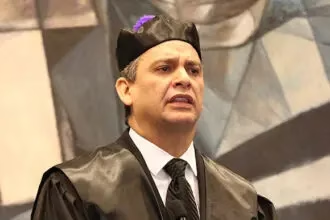
In a recent meeting with the media, the president of the Supreme Court of Justice (SCJ), Luis Henry Molina, provided an overview of the disciplinary actions implemented during his tenure. As the magistrate detailed, nearly ten judges have been removed from their positions after serious misconduct was proven in the performance of their duties.
Molina emphasized that these decisions have been made under strict parameters of respect for due process and the fundamental guarantees of the magistrates under investigation, preventing the proceedings from becoming acts of public pressure or politicized scenarios.
Changes to the disciplinary regime
During his administration, the head of the SCJ highlighted the implementation of significant changes in the handling of internal investigations. Among the most relevant measures are:
- The elimination of salary suspension for judges under disciplinary investigation.
- The prohibition of intercepting telephone communications in strictly disciplinary cases, safeguarding the right to privacy.
- The establishment of a clear protocol: if evidence of a criminal nature arises during an administrative investigation, the file is referred to the Public Prosecutor’s Office for evaluation.
Cases of inappropriate conduct or those warranting sanctions represent less than 1% of the members of the Judiciary.
Luis Henry Molina, President of the SCJ
Commit to judicial decongestion
Beyond discipline, Molina called for transforming the Dominican procedural culture. The magistrate proposes that between 90% and 95% of legal conflicts be resolved through alternative methods and agreements between the parties, reserving full trials only for those matters that are strictly necessary.
The president of the SCJ warned that the tendency to take most cases to oral trial contributes to the saturation of the courts and encourages the excessive use of pretrial detention, which in turn increases overcrowding in the country’s prisons. In this regard, he urged judges, prosecutors, and public defenders to prioritize plea agreements as a daily tool.
Finally, Molina questioned the holding of unnecessary hearings, especially in the contentious-administrative jurisdiction, where he suggested that many documentary litigations could be managed through written files, thus optimizing the time and resources of the judicial system.