Dominican Republic bets on financial modernization with the new Instant Payment Management System
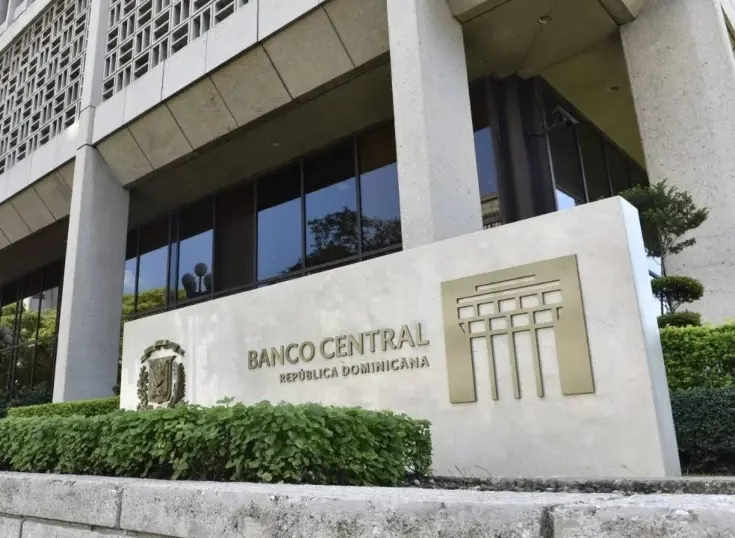
The Central Bank of the Dominican Republic (BCRD) has taken a firm step toward the digital transformation of the national economy. With the goal of optimizing efficiency, fostering financial inclusion, and strengthening the security of electronic payments, the institution is working on the deployment of the Instant Payment Management System (SGPI), a platform designed to revolutionize the way citizens and businesses manage their transactions.
For decades, the BCRD has led structural reforms in the Payment and Securities Settlement System (SIPARD). Following significant milestones such as the implementation of the Real-Time Gross Settlement (RTGS) system in 2008 and the Instant Payments service, the entity now seeks to raise standards toward more agile and accessible technology for all sectors.
A more inclusive financial ecosystem
The project is part of the 2022-2030 National Financial Inclusion Strategy. Currently, the banking rate in the country stands at 65%, so this new system seeks to close access gaps. Among the key benefits that this platform will bring are:
- Full availability: Operations enabled 24 hours a day, 365 days a year.
- Extreme speed: Funds credited in approximately 10 seconds.
- Use of aliases: Ease of transferring money using cell phone numbers, emails, or RNC codes, without the need to expose complex account numbers.
- Interoperability: Fluid connection between banking and non-banking entities under a regulated environment.
The implementation of the new retail payment system will allow for the separation of low and high-value transactions onto different platforms, significantly improving the end-user experience and reducing operational costs associated with cash handling.
Alofoke Deportes
Schedule and next steps
The development process has been exhaustive, including collaboration with international organizations and the selection of the Swedish firm CMA Small Systems as the technology provider. After creating a testing environment, the Central Bank plans to officially launch the system in the first half of 2027.
In its initial phase, the platform will allow transfers between individuals and legal entities. Subsequently, advanced functionalities will be integrated such as:
- Payments at merchants using QR codes.
- Government transactions.
- Full interoperability at point-of-sale terminals and ATMs.
- Cross-border operations.
This initiative not only promises greater agility, but also reinforces security through strict anti-fraud protocols and user protection mechanisms, consolidating the Dominican Republic as a benchmark in financial modernization within the region.