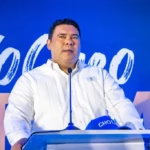

Ricardo de los Santos advocates for regional dialogue following diplomatic measures with Cuba
The President of the Senate of the Dominican Republic, Ricardo de los Santos, called for prudence and regional understanding in light of the Dominican Government’s recent decision to request the withdrawal of nine members of the Cuban diplomatic mission, along with their families, from national territory.
The provision, officially communicated by the Ministry of Foreign Affairs, establishes a specific deadline for the diplomats to leave the country. Although the Foreign Ministry has not offered detailed reasons regarding the motives that originated this measure, the issue has generated diverse reactions across the local political spectrum.
The Senate’s vision on diplomacy
When consulted by Alofoke Deportes, De los Santos stressed that the Dominican State possesses the sovereign authority to execute decisions in its foreign policy. However, he emphasized that, in any situation, the priority must be the strengthening of cooperation ties between the nations of the region.
Every day, brother countries, instead of seeking distance, must seek closeness. We have to work on a collective agenda, because what affects one affects us all, and there are more points that unite us than those that could divide us.
Ricardo de los Santos, President of the SenateThe legislator reiterated that the current challenges facing the nations of the region demand a stance of unity. According to the president of the Upper House, the problems that impact one country often have transnational repercussions, which is why dialogue must prevail over any political or diplomatic difference.
Towards an integration agenda
De los Santos insisted that Caribbean and Latin American countries share a common history and goals that outweigh any potential friction. In that sense, he urged the authorities to seek mechanisms that allow for the preservation of regional stability and collaboration, avoiding actions that could distance brotherly peoples.
The senator’s call is part of a stance to foster a common agenda that promotes peace and mutual development, reaffirming his commitment to the integration necessary to face the global challenges of the 21st century.