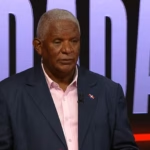

Citizen security in the Dominican Republic: An approach that requires greater prevention
In an analysis of the reality the country is experiencing regarding public order, Yineuri Díaz has questioned the nature of the strategies currently being implemented. According to her view, security plans in the Dominican Republic operate under a mostly corrective logic, where response measures arise as a reaction after criminal acts have been committed.
Díaz emphasized that, while there are projects aimed at prevention, the real challenge lies in the lack of effective execution of them. For the expert, citizen security should not be limited to post-crime containment, but rather focus on preventing them from occurring through deeper and more strategic work.
Security plans in the Dominican Republic are corrective, meaning they are executed after the crime has occurred.
Yineuri Díaz
Proposals to strengthen the system
To transform this landscape, various recommendations have been proposed that seek to optimize the state’s response to crime. Among the key points highlighted by Díaz are:
- Implementation of territorial investigations: Moving studies and intelligence analysis directly to areas with the highest crime incidence.
- Comprehensive vision: Understanding that citizen security is a shared responsibility that involves various sectors of the State and civil society, beyond the exclusive functions of the National Police.
- Differentiation of concepts: Establishing a clear distinction between public security, in charge of the protection of property and order by the National Police, and citizen security as a broader concept of social well-being.
In conclusion, the debate on national security demands a reengineering that prioritizes criminal intelligence and active prevention, moving beyond the current reactive model to ensure greater tranquility in all sectors of the country.