
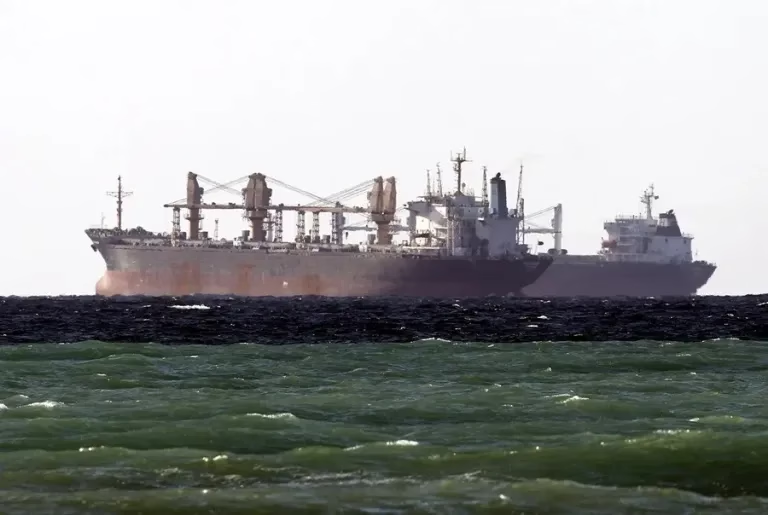
United States implements strategic maritime corridor in the Strait of Hormuz
In a key maneuver for global energy stability, the United States has launched a secret maritime corridor in the Strait of Hormuz. This operation, developed over the last few weeks, aims to guarantee the safe exit of millions of barrels of oil to international markets, thus avoiding critical disruptions in the global supply.
According to reports from Alofoke Deportes, the flow of vessels has been constant, recording the transit of between 15 and 20 oil tankers each night. These ships navigate through a channel located to the south, near the coast of Oman, managing to transport approximately 10 million barrels per day, a figure that has doubled on peak days.
Military operation and protection in the Strait of Hormuz
The logistics behind this corridor are not limited solely to escorting. The strategy includes assisting empty oil tankers heading from the Arabian Sea toward the Persian Gulf to load crude at regional ports, ensuring their safe return along the same monitored route. The coordination of these operations is managed from a specialized task force based at Fort Bragg, North Carolina.
- Daily preparation of vessel lists in conjunction with regional partners.
- Organization of time windows for inbound and outbound transit.
- Constant air protection via fighter jets against potential threats.
- Use of southern channels under precise instructions from the U.S. military command.
This security device was made possible thanks to a series of military actions that allowed for the neutralization of Iranian radar and surveillance systems in the area. Despite these advances, the Strait of Hormuz continues to be a high-tension point, where U.S. forces have recently reported the downing of drones and cruise missiles.
Control of the Strait of Hormuz is vital to the global economy. The measures taken seek to ensure that oil and gas trade is not affected by current geopolitical disputes.
Alofoke Deportes
Donald Trump’s political impact and rhetoric
The situation becomes complicated following the recent statements by President Donald Trump, who has hardened his stance regarding the Strait of Hormuz. The president has stated that Washington maintains total control of this maritime route, going so far as to suggest a greater U.S. presence in the area following the conclusion of tensions with Tehran.
The situation remains in a state of constant alert, especially after the expiration of the 60-day deadline for the cessation of military operations on August 17. With negotiations stalled, the Strait of Hormuz remains the main stage of a dispute that keeps international energy markets on edge.