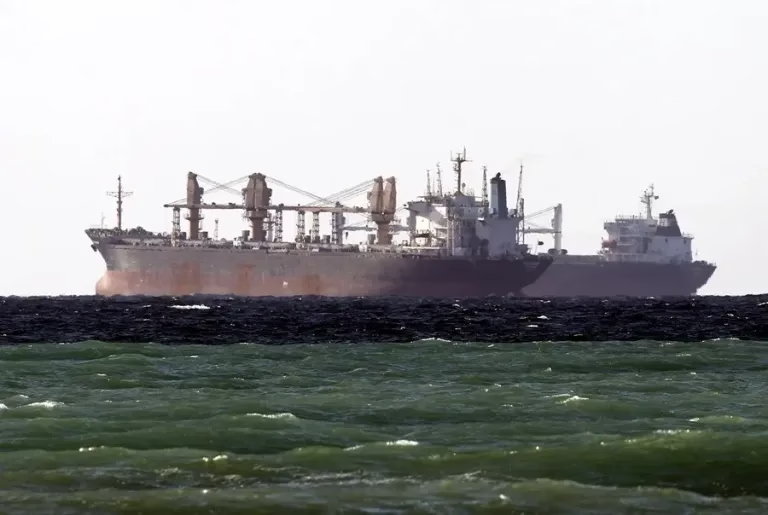
United States secures energy flow through a strategic corridor in Hormuz
In a high-precision operation that has been kept low-profile over the last few weeks, the United States has implemented a maritime corridor in the Strait of Hormuz with the goal of guaranteeing the safe exit of millions of barrels of crude oil to international markets. This initiative responds to the need to stabilize the global energy supply amidst growing tensions in the region.
According to intelligence reports, the channel, strategically located to the south near the coast of Oman, currently allows for the transit of about 10 million barrels per day. On days of high activity, this volume has managed to scale up to 20 million barrels, facilitating vital logistics for the global economy.
Military operability and protection in the Strait of Hormuz
The device is not limited to the escort of ships; the operation encompasses comprehensive maritime traffic management. U.S. forces coordinate the access of empty oil tankers to the Persian Gulf for loading and oversee their safe return to open waters. The process is managed under the following parameters:
- Daily coordination with regional allies to establish authorized vessel lists.
- Organization of convoys in specific time windows to optimize flow.
- Constant air protection through fighter jets monitoring potential threats.
- Neutralization of hostile radar and surveillance systems in the area.
The security of the Strait of Hormuz is our priority to avoid an energy crisis. We are maintaining rigorous control to ensure that energy continues to flow without interruptions despite attempts at destabilization.
Escalation of tension between Washington and Tehran
The situation in the Strait of Hormuz has become the epicenter of the conflict between Washington and Tehran. Recently, the United States reported the downing of eight Iranian drones and two cruise missiles that were attempting to interfere with shipping routes. Although Iran retains limited tracking capabilities through fast boats and radar, American technological superiority has managed to keep the corridor operational.
President Donald Trump has intensified his rhetoric on this flashpoint, underscoring that the United States maintains full control of the waterway. This stance hardened following the expiration of the 60-day deadline for a permanent cessation of military operations on August 17, leaving negotiations at a stalemate and keeping the entire Strait of Hormuz area on high alert.
Global impact of the Strait of Hormuz
The relevance of the Strait of Hormuz lies in its role as a main artery for energy trade. Any interruption in this maritime passage, which connects the Persian Gulf with the Arabian Sea, has direct repercussions on oil and gas prices worldwide. Therefore, the consolidation of this corridor is presented as a necessary containment measure to avoid greater volatility in international markets.