

Environmental crisis: Sargassum reaches historic levels in the Caribbean during 2026
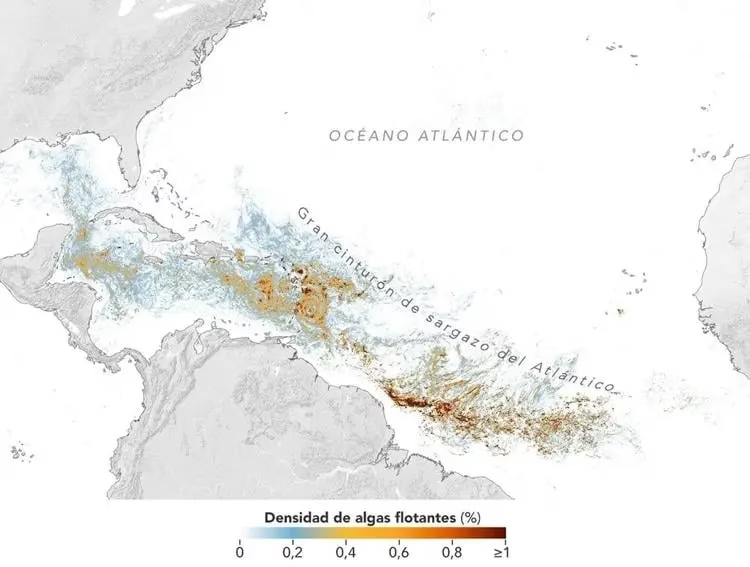
The Great Atlantic Sargassum Belt has recorded one of its most alarming concentrations during June 2026 since records began. According to data analyzed by specialists, this year ranks as the second with the highest presence of seaweed in the ocean, remaining only behind the record figures reached in 2025.
Satellite measurements confirm that the phenomenon has strongly impacted both the Caribbean Sea and the Gulf of Mexico. In the eastern Caribbean zone, 9 million metric tons of sargassum were recorded, while in the western region the figure reached 3.6 million. For its part, the Gulf of Mexico reported 5 million tons, practically doubling its previous historical record.
A constantly growing phenomenon
Since its first massive appearance in 2011, this seaweed belt —which stretches from the coasts of Africa to America— has shown exponential growth. Oceanographic studies indicate that the total volume of sargassum in the Atlantic tends to double approximately every five years.
The constant increase of these algae responds to various environmental factors, among which global ocean warming, greater availability of nutrients, and the presence of organisms that favor their rapid proliferation stand out.
Environmental impact: Between benefits and risks
Although in the open sea sargassum functions as an essential habitat for turtles, fish, and birds, the situation changes drastically upon reaching the coasts. Excessive accumulation creates multiple challenges:
- Damage to ecosystems: Large masses can smother coral reefs and seagrasses when they sink.
- Impact on communities: During its decomposition, sargassum releases hydrogen sulfide, a gas that gives off an unpleasant odor and can affect public health and tourism activity.
Space technology at the service of monitoring
To face this challenge, Alofoke Deportes highlights the crucial role of satellite technology. Thanks to the Ocean Color Instrument (OCI), integrated into the PACE mission, scientists can identify algae by analyzing reflected infrared light. This technical capability allows for the creation of precise maps that help coastal authorities prepare for potential sargassum arrivals on their beaches.


