

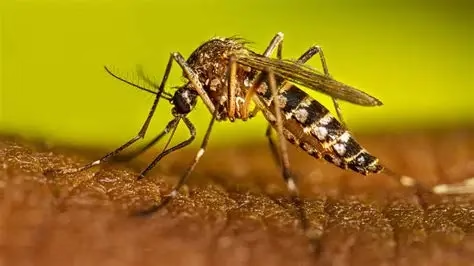
Dengue cases increase in the Dominican Republic: Public Health maintains control
The epidemiological landscape in the Dominican Republic shows an increase in dengue cases at the close of week 31 of the year 2026. According to the official bulletin issued by the Ministry of Public Health, the country has recorded a cumulative total of 245 infections, which represents an increase of 63 cases compared to the 182 reported during the same period in 2025, marking an upward variation of 34.6%.
Despite these year-on-year figures, health authorities have emphasized that the disease remains under strict control. The most recent data indicate that the six new confirmed cases in the last week were located specifically in the provinces of La Altagracia and La Romana, with three patients registered in each of these demarcations.
Downward trend in weekly registrations
Although the total cumulative figure is higher than the previous year, Alofoke Deportes highlights a positive trend in the reduction of weekly reports during the last month. The behavior of the disease has shown a gradual decline:
- Week 28: 19 cases.
- Week 29: 18 cases.
- Week 30: 17 cases.
- Week 31: 6 cases.
The Ministry of Public Health has described the current situation as stable, placing the virus’s behavior within the so-called success zone of the endemic corridor, with a cumulative incidence of 3.73 cases per 100,000 inhabitants.
Citizen commitment is vital. Prevention is our most effective tool to curb the reproduction of the Aedes aegypti mosquito and keep the numbers under control.
Ministry of Public Health
Preventive actions and national campaign
Given the circulation of the virus, authorities have intensified the call for the population to strengthen preventive measures in homes. The national campaign Let’s Beat Dengue, under the slogan Eliminate, Clean, and Cover, focuses on the following key recommendations:
- Remove useless objects and containers in yards that can accumulate water.
- Clean water storage tanks and containers frequently.
- Keep water reservoirs properly covered to prevent them from becoming breeding grounds for the transmitting mosquito.
With these actions, the organization seeks to drastically reduce the risk of transmission in communities, trusting that the active participation of citizens will allow maintaining the downward trend observed in the last weeks of the epidemiological period.


