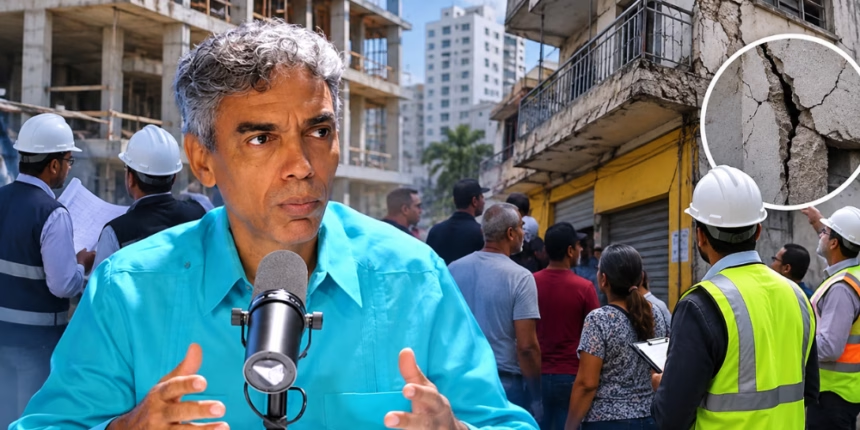
Experts warn about the lack of capacity in the DR to carry out massive structural inspections
The Dominican Republic faces significant challenges in ensuring the seismic safety of its infrastructure. According to statements by structural engineer Andry Soto, the country currently lacks the operational capacity necessary to carry out widespread structural inspections to identify buildings vulnerable to a potential high-magnitude earthquake.
During an appearance on the news segment Alofoke Deportes, Soto was emphatic in pointing out that, although efforts are being made to train technical personnel through the National Office of Seismic Evaluation and Vulnerability of Infrastructure and Buildings (Onesvie), the number of available professionals is insufficient given the immense national building stock.
No, and we do not have the capacity to do so. I don’t think there is the volume capacity for us to have, for example, 50,000 technicians going house to house to inspect to determine which one has a problem and which one does not.
Andry Soto, structural engineer
Legal and operational limitations
The specialist clarified that the evaluations currently being carried out are predominantly visual and limited in their scope. Likewise, he highlighted the absence of a strengthened legal framework that grants the Government sufficient authority to intervene and close buildings that present evident structural flaws, beyond cases where administrative irregularities are detected.
Soto cited the recent closure of several Asian-owned businesses as an example, specifying that these actions were specifically in response to the lack of approval for blueprints and construction permits, and not to a national policy of preventive structural auditing.
Informal construction and citizen security
- A large part of the country’s housing inventory has been built without the required construction permits.
- The engineer stressed that the vulnerability of a structure is a complex technical aspect that cannot always be detected by occupants with the naked eye.
- Specialized personnel are required to determine if a building meets the seismic resistance standards necessary to protect lives.
The expert concluded by reiterating that, while prevention is fundamental, the country must still make significant progress in training human resources and implementing regulations that allow for more rigorous control over existing buildings, thus ensuring greater resilience against the seismic risks that historically affect the region.