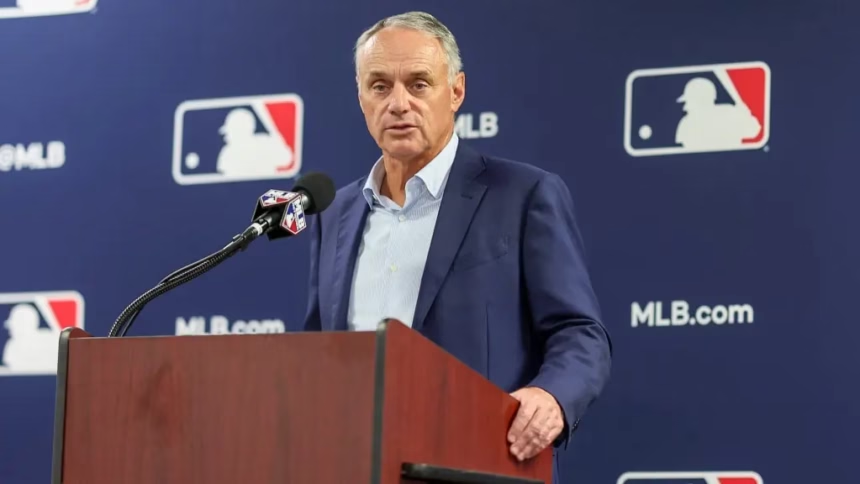
Rob Manfred reaffirms MLB’s position on salary cap and floor
Major League Baseball Commissioner Rob Manfred has sent a strong message to the MLB Players Association (MLBPA) by asserting that the owners of the 30 franchises will not back down regarding the implementation of a salary cap and floor. This measure, considered the most critical point in the negotiations for the new Collective Bargaining Agreement, remains a non-negotiable priority for the league.
With only a few days left before the current agreement expires on December 1st, Manfred emphasized that there is a unified stance among the owners. According to the commissioner, the proposed economic system seeks to resolve the competitive balance issues that, in his view, affect the health of professional baseball.
The details of the MLB economic proposal
The formal offer presented by the commissioner’s office establishes clear figures for the financial future of the game, with a view to taking effect for the 2028 season:
- Salary cap set at 258.2 million dollars.
- Salary floor set at 180.2 million dollars.
According to projections based on payrolls at the close of 2026, this adjustment would force 12 teams to increase their salary investment by a combined total of $636 million, while eight clubs would have to cut expenses by $528 million to comply with the cap. Manfred asserts that this plan also includes direct benefits for athletes, such as a significant increase in the minimum salary and earlier access to free agency.
Competitive balance is a serious issue and it must be addressed. We are convinced that this system will allow for an equitable distribution of revenue, where both owners and players receive 50 percent of the profits.
Rob Manfred, MLB Commissioner
The union’s position and the risk of a lockout
For its part, the players’ union, through its acting executive director Bruce Meyer, has rejected the proposal. The MLBPA maintains that the league seeks to condition the economics of baseball on a radical change that, in practice, would limit the players’ contractual rights and reduce their overall income. For the union, the plan is a strategy to inflate the value of franchises at the expense of the salaries of those who take the field.
Although Manfred has expressed his desire to avoid interruptions and complete the 162-game schedule, the risk of a lockout remains latent. The commissioner indicated that the league remains willing to make minor adjustments to its initial proposal to try to bridge the gap with the union before the deadline, maintaining the goal of reaching a consensus that guarantees the stability of Major League Baseball.