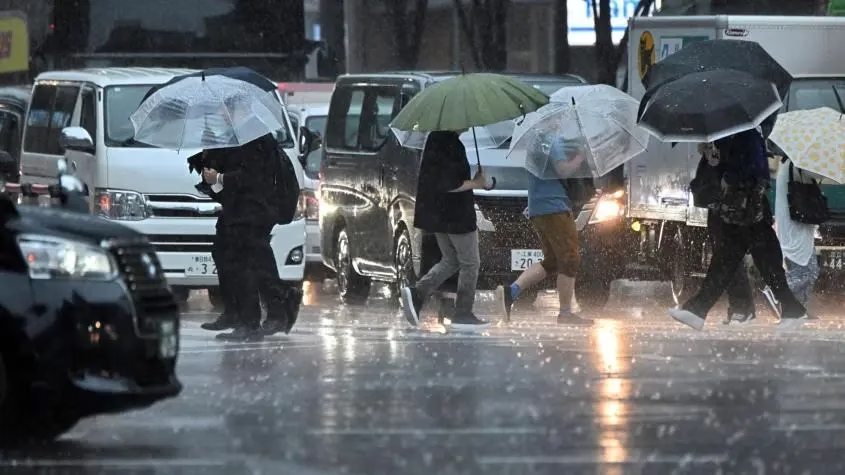
Tokyo sets historic rainfall record after 34 consecutive days
The capital of Japan has recorded an unprecedented meteorological milestone this Tuesday, by stringing together 34 consecutive days of precipitation. This figure marks the longest rainy streak since official records began in the country in 1886, surpassing the previous record of 33 days set during the summer of 2019.
Although the usual rainy season in the region is typically concentrated in the month of June, this year the phenomenon has extended significantly throughout the boreal summer, causing serious inconveniences and flooding episodes in various areas of the Japanese capital.
Climatic factors behind the phenomenon
Experts from the Japan Meteorological Agency have analyzed the causes of this atypical climate behavior. Among the determining factors are:
- The El Niño phenomenon: This climatic event, characterized by warmer temperatures in the Pacific Ocean, has altered wind patterns, atmospheric pressure, and cloud formation, intensifying rainfall.
- Persistence of autumn fronts: The prolonged presence of high-pressure systems over the Pacific has caused rain fronts to stall over the archipelago for longer than usual.
- Climate change: The rise in global temperature, driven by fossil fuel emissions, has increased humidity levels in the atmosphere, favoring much more intense and frequent rainfall episodes.
The impact of global warming is evident in the long-term modification of Japan’s climate, where a clear trend toward an increase in the intensity and duration of rainfall periods is observed.
Regional impact in Asia
Extreme weather conditions have not been limited solely to Japanese territory. Other Asian nations are also facing the consequences of unusually heavy rainfall. In Thailand, the situation is critical, with a toll of approximately 1.7 million people affected by severe flooding and a total of 23 deaths reported since mid-September due to the intense downpours lashing the region.