

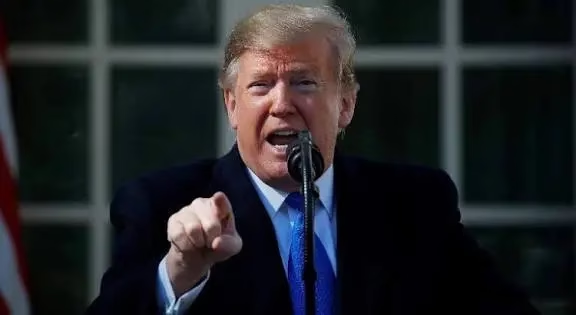
Controversy at the White House: Donald Trump gives cash gifts to close collaborators
Former President Donald Trump is at the center of an intense ethical debate after it was revealed that he made cash payments totaling $135,000 to three of his closest advisors at the White House. According to official financial records, this distribution of funds has raised suspicions regarding the legality of providing financial compensation outside of established salary channels for public officials.
Details of payments made
Advisors Natalie Harp, Margo Martin, and Chamberlain Harris reported receiving $45,000 each as a Christmas gift. This figure represents nearly 30% of their annual salaries, which amount to $150,000. The administration’s financial documents explicitly identify Trump as the issuer of said funds.
The profile of the beneficiaries is as follows:
- Natalie Harp (35 years old): A close advisor to the president, who has gained public notoriety due to her close professional relationship with Trump.
- Margo Martin (31 years old): Serves as a communications advisor, responsible for managing audiovisual material for the former president’s digital platforms.
- Chamberlain Harris (26 years old): Performs duties as a direct executive assistant to the political leader.
Legal implications and other reported payments
The controversy lies in the fact that U.S. federal legislation imposes strict restrictions on the additional payments that public employees can receive. Ethics experts have pointed out that there are no recent precedents of a president having handed over cash sums of such magnitude to their trusted staff.
Additionally, financial disclosures revealed that Walt Nauta, the Oval Office operations director, received a $20,000 payment. Nauta, who has an annual salary of $175,000, has been a constant figure in Trump’s inner circle since his first term, accompanying him even on high-profile international trips.
Transparency in the finances of public officials remains a point of friction, as analysts evaluate whether these transactions violate current regulations regarding gratuities for state servants.


