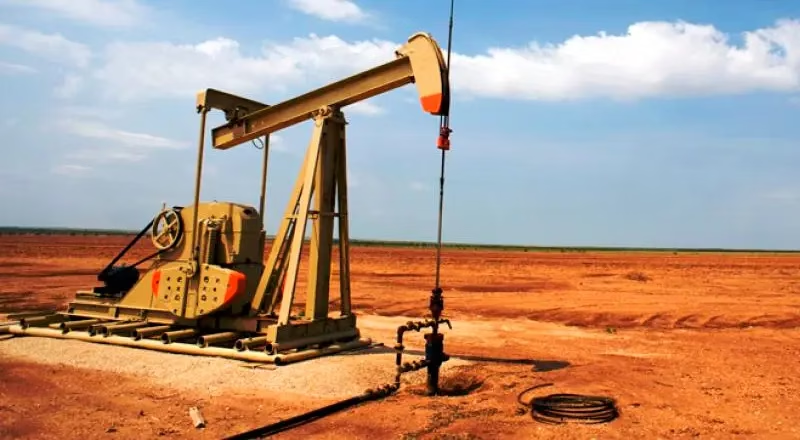
WTI crude oil experiences rise driven by tensions in the Strait of Hormuz
The price of Texas Intermediate oil (WTI) began this Wednesday’s session with an upward trend, recording an increase of 0.19% to stand at 85.10 dollars per barrel. This movement in the energy market is mainly in response to the growing geopolitical uncertainty surrounding the Strait of Hormuz, a critical maritime route that connects the Persian Gulf with the Gulf of Oman and which is currently the focus of tensions between the United States and Iran.
At 09:00 local time, WTI futures contracts for September delivery were up $0.16 compared to their previous close, keeping investors on alert for any news regarding the flow of supplies from the Middle East.
Climate of geopolitical tension
The situation has escalated following recent statements by former US President Donald Trump, who asserted through his official channels that there are no scheduled conversations or negotiations with the Islamic Republic of Iran. Likewise, he referred to the operational status of the strait, stating that the naval blockade remains in effect and that security measures to guarantee navigation have been intensified following the removal of aquatic mines.
The oil market is especially sensitive to geopolitical tensions because a prolonged supply disruption could reduce the amount of crude available internationally and increase transport and insurance costs for companies operating in the region.
Alofoke Deportes
In parallel, the region is experiencing moments of high complexity following the announcement by the United Arab Emirates regarding the suspension of its commercial relations and financial transactions with Iran, a decision made after detecting the launch of ballistic missiles toward its territory.
Impact on global markets
The Strait of Hormuz is a strategic pillar for the global energy market, as a large portion of the crude oil and gas exported by countries such as Saudi Arabia, Iraq, Kuwait, and Qatar passes through its waters. Any threat of closure or disruption at this geographical point has a direct and immediate impact on the price of hydrocarbons.
- WTI serves as a benchmark for determining oil prices in the United States.
- The Energy Information Administration (EIA) will publish crude oil inventory data today, a key indicator that investors monitor to predict price behavior.
- Tensions between the United States and Iran remain the determining factor for market volatility in the short term.
Financial operators keep their attention focused on the evolution of these conflicts and on official inventory reports. The behavior of the Texas barrel is expected to fluctuate in the coming days depending on how security conditions develop on maritime routes and the reserve levels reported in the United States.