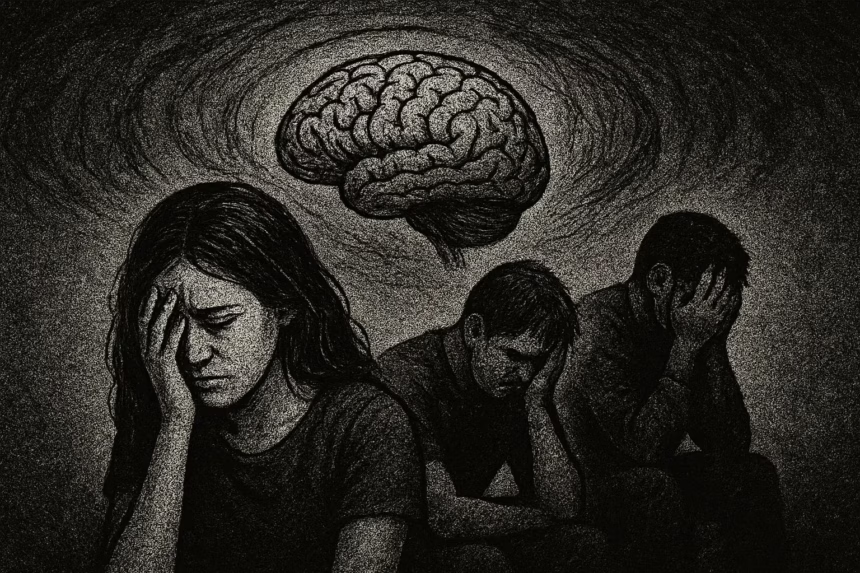
Mental health: A fundamental right that transcends borders
Every October 10th, the world unites to commemorate World Mental Health Day, a date dedicated to raising awareness about psychological well-being and the urgency of ensuring that care services are accessible to everyone. At Alofoke Deportes, we join this cause, recognizing that emotional balance is an indispensable pillar, both in daily life and in high-performance sports.
The global figures are revealing: approximately one in eight people faces some type of mental disorder, with anxiety and depression being the most prevalent conditions. Although awareness of this issue has grown, we still face significant barriers, such as social stigma, a shortage of specialized resources, and the centralization of services in large cities, which leaves many communities in a vulnerable situation.
Mental health as a basic human right
Under the slogan “Mental health, a universal right,” international health authorities emphasize that psychological well-being is not a privilege, but a fundamental human right. To achieve this goal, it is necessary for States to strengthen their public health systems, integrating psychological care into primary services and training professionals to provide comprehensive support.
Guaranteeing this right implies much more than expanding medical coverage; it requires fostering a culture of empathy, understanding, and respect, eliminating the prejudices that still surround mental disorders.
A shared commitment to a healthy society
The commemoration of this day is a call to collective action. Building emotionally healthy societies is a responsibility that involves governments, institutions, and citizens. Among the key points to advance in this matter, the following stand out:
- Promote emotional education from early stages of life.
- Create safe work and community environments that prioritize mental health.
- Normalize seeking professional help as an act of courage and self-care.
- Integrate mental well-being as an essential component of each individual’s comprehensive development.
Ultimately, there is no full physical health without mental health. Speaking openly about our emotions and breaking down the barriers of prejudice are the first steps toward building a more inclusive future, where every person has the necessary tools to reach their full potential.