

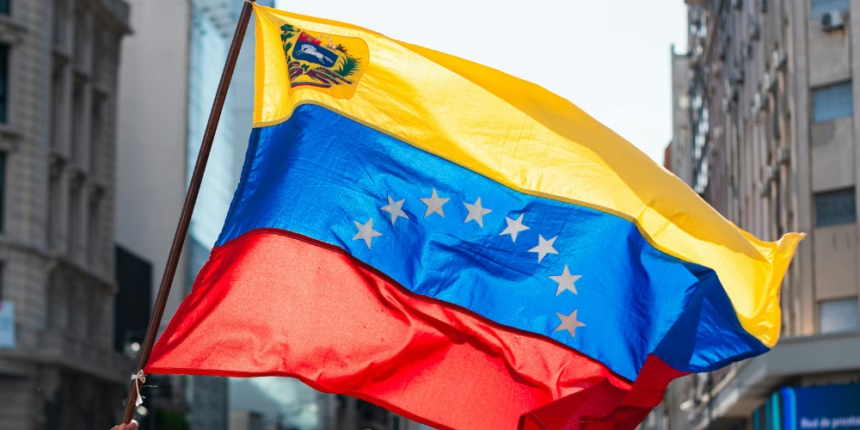
Tension in Doral: Activists reject collaboration with ICE and Trump’s meeting with Delcy Rodríguez
The city of Doral, in Florida, finds itself at the center of a strong political controversy. Known as “Doralzuela” due to its high concentration of Venezuelan citizens, the town is experiencing moments of uncertainty in the face of tightening immigration policies and the recent stance of its municipal authorities.
Activists and community leaders demonstrated in front of City Hall to demand that Mayor Christi Fraga and the city council annul the 287(g) agreement. This agreement allows local police to work in close collaboration with Immigration and Customs Enforcement (ICE), a measure that, according to those protesting, has turned the city into a scene of raids and constant fear.
Giving the green light to turn local government into an arm of the federal deportation machinery has had serious consequences. Doral has become a ghost town where families fear taking their children to school or going to their jobs for fear of being detained.
Adelys Ferro, executive director of the Venezuelan American Caucus
Criticism for political approach
Community unrest also extends to the national level. Various sectors have questioned the scheduled meeting between President Donald Trump and Delcy Rodríguez in New York. Critics point to a political contradiction, arguing that this meeting grants legitimacy to representatives of the Venezuelan government, while, at the same time, fundamental immigration protections for Venezuelans in the United States, such as Temporary Protected Status (TPS) and humanitarian parole, are being withdrawn.
The debate on migration cooperation
Although Doral authorities have justified the signing of the 287(g) agreement by alleging an supposed obligation under state laws, various experts and other local leaders refute this version. Thomas Kennedy, a consultant for the Florida Immigrant Coalition (FLIC), emphasized that the regulations did not force the city to adopt this stance, noting that the majority of municipalities in Miami-Dade have chosen not to sign such agreements.
- The implementation of the 287(g) agreement has triggered a wave of arrests that even affects individuals with valid work permits.
- Doral has a predominantly Hispanic population, where Venezuelans represent a significant percentage.
- Local leaders, such as the mayor of South Miami, Javier Fernández, have confirmed that it is possible to maintain municipal management without yielding to punitive immigration policies.
The Doral community continues to await a response from the city council, while the climate of tension increases in the face of rising national immigration detention figures, consolidating Florida as a leading state in the tightening of border and immigration control measures under the current administration.


