
Venezuela maintains its firm stance on the territorial dispute over the Essequibo
The Government of Venezuela has officially reiterated that it will not recognize or abide by the decisions issued by the International Court of Justice (ICJ) regarding the territorial dispute it maintains with Guyana over the Esequibo region. This statement comes in response to recent exhortations from the Guyanese Executive, which urged Caracas to submit to the upcoming ruling of the international tribunal.
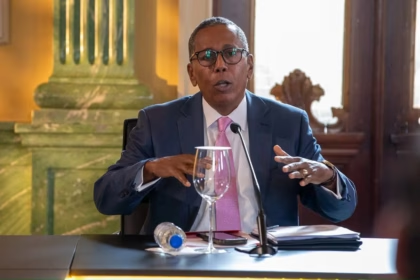
Venezuelan Foreign Minister Félix Plasencia was emphatic in pointing out that the country does not accept the jurisdiction of this body to resolve the controversy over the Guayana Esequiba. According to Caracas’ official position, any attempt to settle this dispute must be carried out exclusively through diplomatic channels.
Venezuela ratifies its historic position of non-recognition of the jurisdiction of the International Court of Justice to settle the territorial controversy over the Guayana Esequiba. Only bilateral negotiation will be the legitimate and legal space to resolve this historical controversy.
Félix Plasencia, Venezuelan Foreign Minister
A conflict with historical roots
The dispute, which covers approximately 160,000 square kilometers, has its origins in the 1899 Paris Arbitral Award, a ruling that Venezuela declared null and void in 1962 after denouncing irregularities in the process. While Guyana defends this award as the definitive basis for its borders, the Venezuelan government maintains that the 1966 Geneva Agreement is the only valid legal framework to reach a negotiated solution.
For his part, Guyanese President Irfaan Ali has expressed before the United Nations General Assembly his expectation that the ICJ will manage to close this chapter to give way to a new stage of regional stability. However, the gap between the positions of both nations remains deep:
- Guyana: Bets on resolution through the International Court of Justice.
- Venezuela: Insists on direct and bilateral dialogue, rejecting the intervention of third parties.
This dispute, fundamental to the foreign policy of both countries, continues to generate diplomatic tensions, especially due to the strategic importance of the disputed area, which is rich in mineral resources and oil deposits.