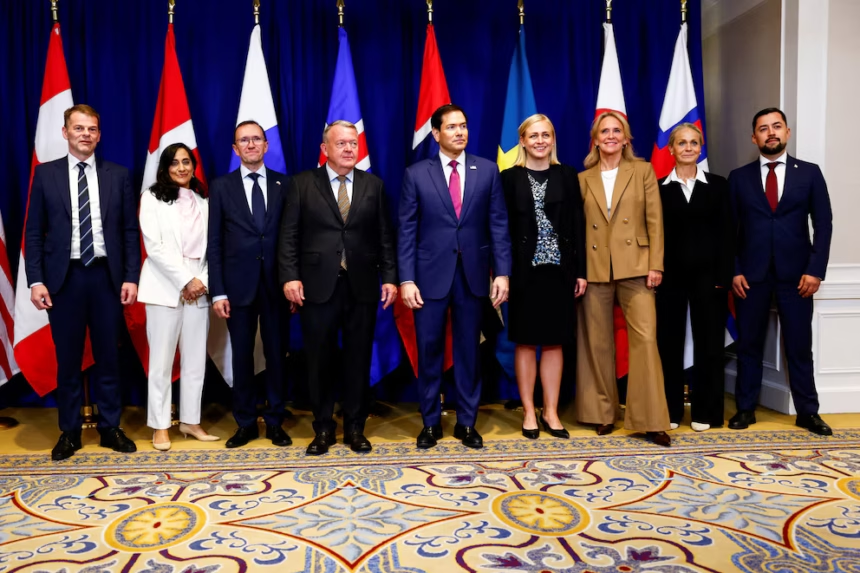
Marco Rubio urges allied powers to strengthen security in the Arctic in the face of Russian and Chinese influence
United States Secretary of State Marco Rubio has made an urgent call to allied nations to increase their investments in security and military capabilities within the Arctic region. This geographical area has climbed in the global geopolitical agenda due to the growing strategic interest shown by Russia and China.
During a diplomatic meeting held in New York, within the framework of the United Nations General Assembly, Rubio emphasized the importance of strengthening critical infrastructure and protecting strategic assets in the face of current challenges. The meeting was attended by representatives from Canada, Denmark, Finland, Iceland, Norway, and Sweden, along with delegations from Greenland and the Faroe Islands.
Technological and military cooperation
One of the main pillars of the U.S. strategy is the modernization of its icebreaker fleet. In this regard, the collaboration between the United States, Canada, and Finland to expand these operational capabilities was highlighted. It is worth remembering that Washington had already made official the acquisition of 11 Finnish vessels intended to improve its presence and maneuverability in Arctic waters.
The progressive melting of the Arctic is not only transforming navigation conditions, but has also opened access to new trade routes and valuable natural resources, forcing Western powers to redouble their vigilance.
Towards a new agreement in Greenland
Rubio’s positioning aligns with the upcoming signing of a security agreement between the United States, Denmark, and Greenland. This pact has the following fundamental objectives:
- Recognize the sovereignty and territorial integrity of the Kingdom of Denmark.
- Respect the right to self-determination of the inhabitants of Greenland.
- Prevent the installation of Russian or Chinese military bases on Greenlandic territory.
- Implement strict controls on foreign investments considered sensitive to regional security.
Although the detailed particulars of the treaty have not yet been officially disclosed, Washington emphasizes that this alliance is vital for maintaining stability in a region that has become a key chessboard for the security of North America and Europe.