Brazil defines its political future in a decisive election day
The political landscape in Brazil reached a turning point this Sunday, as millions of citizens headed to the polls to determine the country’s direction. The current president and candidate for re-election, Luiz Inácio Lula da Silva, emphasized that this contest represents a fundamental choice between democratic consolidation and what he described as a regression into barbarism.
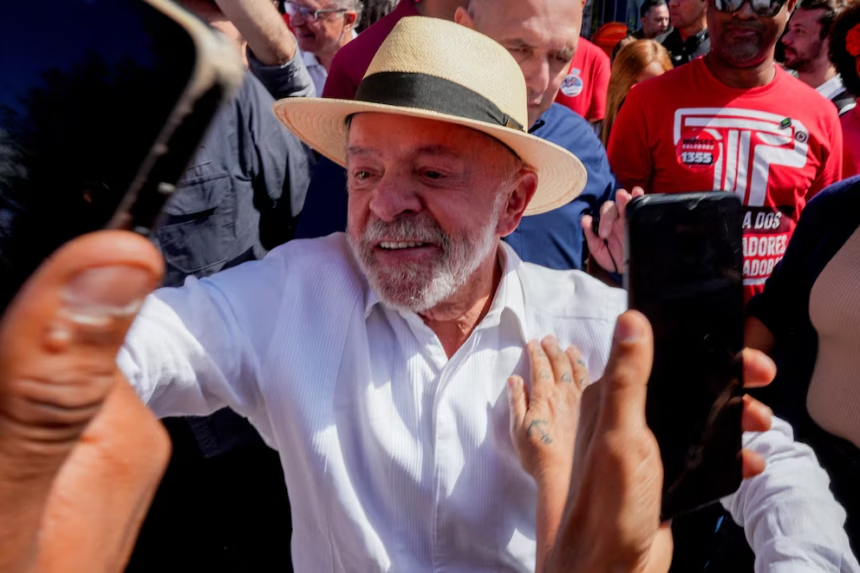
Lula exercised his right to vote in São Bernardo do Campo, state of São Paulo, surrounded by his wife, Rosângela “Janja” Lula da Silva, and various leaders of his coalition. After casting his ballot, the president appeared optimistic about the results, supporting the work carried out by his administration and the effort deployed during the campaign period.
A day of high participation
More than 158 million Brazilians were called to participate in this large-scale electoral process, where not only the president and vice president are elected, but also 27 governors, 513 deputies, two-thirds of the Senate, and various legislative representatives at the regional level.
What is at stake is the definition of a project for Brazil, a choice between democracy and barbarism.
Luiz Inácio Lula da SilvaPolarization at the polls
The presidential race has been marked by a notable polarization between the Workers’ Party (PT), led by Lula, and the opposition represented by Senator Flávio Bolsonaro. The electoral climate reflects two opposing visions for the nation’s development.
- Flávio Bolsonaro, after casting his vote in Rio de Janeiro, declared that the country requires urgent change, urging voters to end what he termed a stage of backwardness.
- Polling stations began operations at 8:00 a.m. and kept their doors open until 5:00 p.m. local time.
- In the event that no candidate achieves the necessary majority in this first round, the electoral schedule establishes a presidential runoff for October 25th.