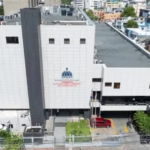
The UASD analyzes the impact of the new Penal Code on its 488th anniversary
The Faculty of Legal and Political Sciences of the Autonomous University of Santo Domingo (UASD) inaugurated the commemorative acts for its 488th anniversary with a high-level academic event. The School of Law organized the panel titled “The new Penal Code from the perspective of the judge, the prosecutor, and the lawyer,” where experts from the Dominican judicial system debated the scope of the recent legislation.
The meeting featured the participation of Judge Yanibet Rivas Méndez, Prosecutor Merlin Mateo Sánchez, and renowned jurist Carlos Díaz, moderated by Professor Néstor Arroyo. The main objective was to break down the challenges, novelties, and opportunities that the new Penal Code represents for the practice of law in the Dominican Republic.
Perspectives on the new legislation
- Prosecution of corruption: Prosecutor Merlin Mateo Sánchez highlighted the tools introduced by the new legal framework to combat administrative corruption, emphasizing that its execution must be strictly aligned with fundamental rights and constitutional principles.
- Analysis of penalties: Dr. Carlos Díaz focused his intervention on the proportionality and severity of penalties, questioning how their accumulation influences the ultimate goal of the penitentiary system: the resocialization of the individual.
- Modern criminality: Magistrate Yanibet Rivas Méndez underscored the importance of a comprehensive interpretation of the law, placing special emphasis on the challenges posed by digital crimes, influence peddling, and transnational bribery figures.
This panel established itself as a fundamental space for critical thinking and academic analysis for future legal professionals and active participants in the Dominican justice system in the face of upcoming changes.
The opening of the event was led by Professor Antonia Mercedes Payano, Director of the School of Law, who acted on behalf of the Dean of the Faculty, Martín Montilla Luciano. Likewise, the activity was attended by Professor Birmania Sánchez Camacho, Director of Postgraduate Studies of the Faculty, and a large representation of students and professionals from the legal sector, who actively participated in the exchange of ideas regarding this legislative reform.