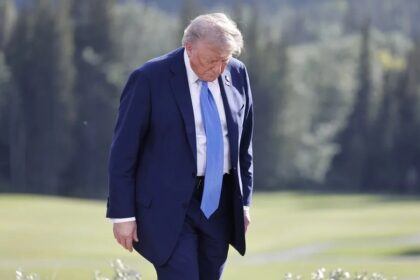
Donald Trump takes a firm stance on artificial intelligence and its global impact
The President of the United States, Donald Trump, has sparked controversy after labeling those technology sectors and leaders who advocate for strict regulation or a pause in the development of artificial intelligence (AI) as “negative forces.” Despite warnings issued by prominent figures such as Sam Altman, Elon Musk, and Dario Amodei regarding the potential risks of this technology, the president maintains a vision focused on strategic supremacy.
We can put safeguards, we can do this and that. But I think there are a lot of negative forces raising the issue that shouldn’t be raising it. And they are raising things that are not going to happen. But whoever wins with AI, wins.
Donald Trump, President of the United States
The technological race against China
During a recent visit to Ireland, the president emphasized that the United States must prioritize its leadership in the digital realm above any other consideration. According to Trump, the country’s technological sophistication is a fundamental pillar for its security and global position. The president was emphatic in pointing out that a slowdown in development could cede ground to China, a scenario he considers unacceptable for national interests.
This stance emerges as a direct response to the recent essay published by Dario Amodei, founder of Anthropic, who urged the industry to adopt a more cautious pace of innovation due to security risks. Amodei’s proposal has resonated with figures such as Altman from OpenAI and Musk from xAI, creating an unusual front in the technology sector that seeks to place limits on the deployment speed of these tools.
Legislative stance in Congress
The executive’s vision has support in the House of Representatives. Mike Johnson, leader of the lower house, aligned himself with the administration by rejecting the implementation of an emergency moratorium on AI. Johnson maintains that, although it is necessary to foster safe and sensible development, Congress should not intervene in a way that hinders the United States’ competitive advantage in the global market.
- Congress seeks to prevent premature regulatory measures from favoring international competitors.
- An approach between legislative leadership and major companies in the sector is expected to establish clear guidelines.
- National security remains the central axis of the debate on artificial intelligence regulation.
Alofoke Deportes will continue to follow this debate that defines the future of global technology and how political decisions in Washington will shape the course of innovation in the coming years.