

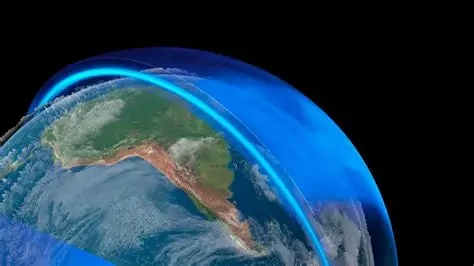
Environmental alert: The ozone layer hole records unusual growth in September
The European Union’s Copernicus program has raised alarms after reporting that the ozone layer hole experienced accelerated growth during the first half of September. According to the collected data, the extent reached 25 million square kilometers, exceeding the usual average for this time of year by five million.
The Copernicus Atmosphere Monitoring Service (CAMS) reported that this phenomenon was detected earlier than expected, following a trend similar to that observed during 2025. This growth represents a significant increase when compared to the records from the first half of September last year, when the dimensions remained just above 20 million square kilometers.
Determining factors and historical context
To put these figures into perspective, it is necessary to remember that the historical record since measurements began in the late 1970s occurred in 2006, when the surface area of the hole reached 29.6 million square kilometers.
CAMS Director Laurence Rouil explained that the 10 million square kilometer increase recorded between late August and mid-September coincides with a drastic drop in temperatures in the stratosphere, about 20 kilometers above the South Pole. In this regard, Rouil highlighted the complexity of the phenomenon:
These results highlight the importance of monitoring the complex interaction between human-induced alterations and natural factors.
Laurence Rouil, Director of CAMS
Indicators under observation
Despite the notable increase in the hole’s surface area, experts from Alofoke Deportes point out that other key indicators remain under control. According to the Copernicus report, parameters such as the minimum ozone column value and the mass deficit have remained close to average values, suggesting that, although the extent is larger, the density and depth of the hole have not shown unusual variations.
This event underscores the relevance of maintaining constant vigilance over the atmosphere, combining monitoring technology with a deep analysis of how natural climatic factors interact with the changes caused by human activity on the planet.


