24/7-365 Classrooms: MINERD reports significant progress in school infrastructure
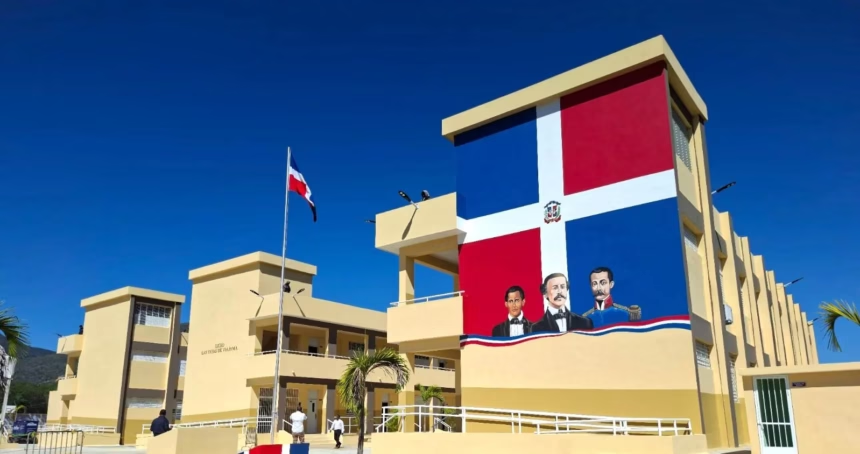
The School Infrastructure Directorate (DIE) of the Ministry of Education of the Dominican Republic has presented its management report for September, ratifying the constant progress of the “Classrooms 24/7-365” plan. The data confirm the fulfillment of the objectives set for the 2026-2027 school cycle, demonstrating a sustained work pace throughout the national territory.
According to the official report, as of August 24, 1,425 new classrooms had been delivered, distributed across 117 completed facilities. This figure is equivalent to 95% of the initial goal of 1,500 classrooms, the total completion of which is scheduled for this September 20. In addition, the work schedule includes the delivery of another 665 additional classrooms between September and December, distributed across 37 buildings covering 26 provinces of the country.
Corrective maintenance and national coverage
The institution’s effort is not limited to new constructions, but encompasses an ambitious maintenance program in 1,717 educational centers, directly impacting some 16,399 classrooms. To date, 47.4% of these facilities have already been intervened, while the rest of the works are in advanced stages of adjudication, execution, or scheduling.
- Geographic scope: Presence in the National District and the 31 provinces, with a higher concentration of works in Santo Domingo, Santiago, San Cristóbal, La Altagracia, Monseñor Nouel, El Seibo, and Monte Plata.
- Modular classrooms: 318 out of a total of 410 prefabricated units projected for the end of the year have been delivered.
- Sports infrastructure: Progress in the construction of 86 court roofs, with 34 projects already completed and 52 in the development process.
Our work is measured by verifiable figures, not by perceptions. Every classroom, every school site intervened, every court roof, has a source, a cutoff date, and a clear status.
Roberto Herrera, Director of School Infrastructure
Engineer Roberto Herrera highlighted that the perception of the sector has changed positively. According to the official, the current debate focuses on the completion times of active works, which demonstrates an overcoming of the historical problem where projects simply remained paralyzed or non-existent.
To ensure the safety of the educational community, the DIE has implemented differentiated protocols: for minor interventions, classes continue in person, while for more complex works, a temporary virtual modality is chosen, thus ensuring the integrity of students and teaching staff until the final delivery of the rehabilitated spaces.