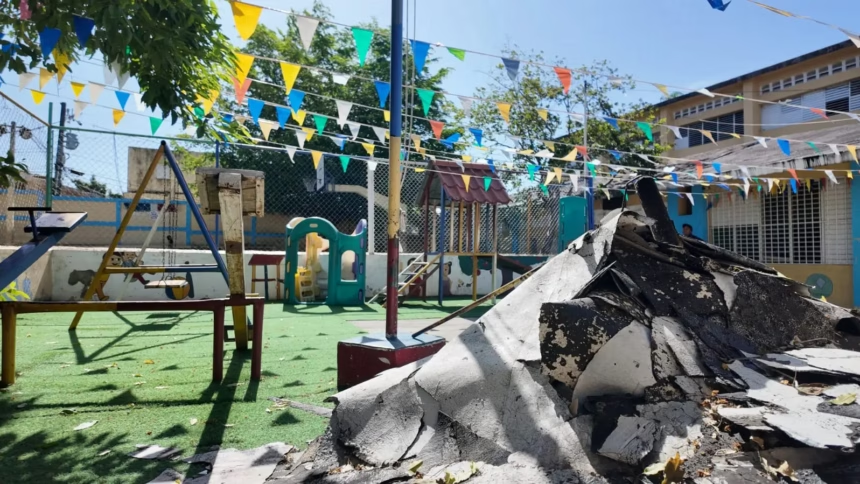
Challenges in school infrastructure mark the start of the 2026-2027 school year
A few days before the return to classrooms, scheduled for August 24, various educational communities in Greater Santo Domingo are facing a worrying reality. Despite the efforts announced by the authorities, the outlook in several school facilities is marred by deteriorated infrastructure, stalled renovation work, and growing uncertainty about the system’s capacity to accommodate the entire student population.
Schools under pressure
The Jesús Maestro School, located in Los Girasoles, exemplifies the infrastructure crisis. Two months after a repair process began, the work has come to a halt, leaving the center mired in rubble. Osvaldo Colas, the school’s director, has reported the situation to the Educational District in the hope that the critical areas will be ready in time for the arrival of the students.
On the other hand, the Doña Socorro School faces a chronic structural problem: severe leaks that have persisted for a decade. Community representatives have raised their voices regarding the risk posed by water accumulation in the structure and the fear that the building’s integrity could be compromised in the event of any seismic activity.
It rains inside and they leak outside… everything fills with water when it rains. There is a real fear that the structure could be affected in the event of an earthquake.
Marcial, community representative
Quota deficit and overcrowding
Beyond physical conditions, the lack of school spots continues to be a headache for thousands of Dominican families. Although official figures from the Ministry of Education place the number of children awaiting assignment at 6,000, various sectors warn that the actual classroom deficit could be significantly higher, hindering access to early and basic education.
- Estimated deficit: It is estimated that between 7,000 and 8,000 classrooms are needed to meet current demand and the integration of three-year-old children.
- Impact on communities: In sectors such as Mendoza, parents have expressed their dissatisfaction due to the impossibility of enrolling their children because of the overcrowding of educational centers.
School environment: streets and safety
The educational crisis extends to the streets. In Mendoza, residents are not only demanding solutions to the lack of school spots, but also urgent intervention in road infrastructure and public lighting. The lack of paving in critical sections and the darkness in the area represent a constant risk to the safety of students, teachers, and workers who travel daily to their destinations.
From Alofoke Deportes we will continue to follow up on these complaints, hoping that the competent authorities will expedite the necessary responses to guarantee a dignified and safe start to the school year for the entire student community.