

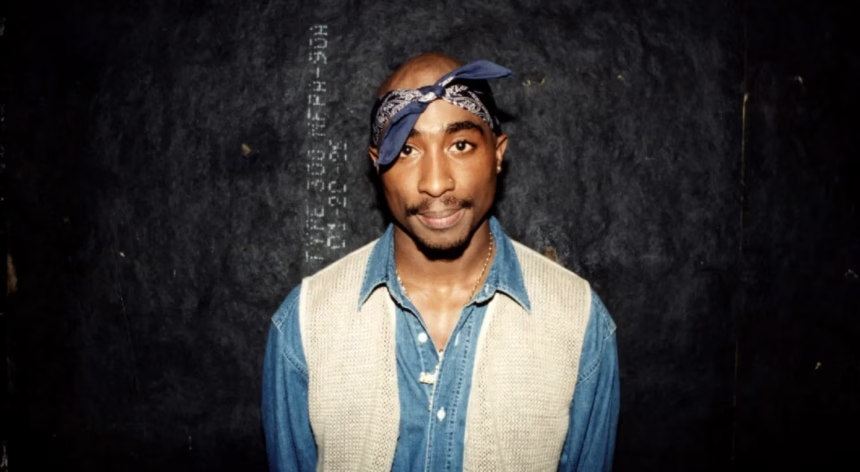
Historic verdict: Duane “Keffe D” Davis found guilty of the murder of Tupac Shakur
In a ruling that marks a turning point in one of the most enigmatic cases in the music industry, a jury in Las Vegas has found Duane “Keffe D” Davis guilty of first-degree murder for the death of legendary rapper Tupac Shakur. After years of uncertainty, justice has determined Davis’s criminal responsibility in the tragic event that occurred in 1996.
The jury found Davis, 63, guilty of murder with the use of a deadly weapon, with the aggravating circumstance of having acted to promote and benefit a criminal organization. Although the defendant faces a possible life sentence, his defense has already confirmed the intention to appeal the court’s decision.
The prosecution’s strategy and the details of the crime
During the judicial process, the prosecution presented a clear narrative about the events that triggered the artist’s death. Prosecutors maintained that, although Davis was not the one who pulled the trigger during the drive-by shooting, his role was fundamental in planning the attack:
- Davis was identified as the mastermind who orchestrated the retaliation following a previous altercation between Tupac and his nephew, Orlando “Baby Lane” Anderson.
- It was established that the defendant provided the weapon used in the crime.
- The main theory points to the fatal shot being fired by Anderson or another passenger in the vehicle.
The verdict marks a historic milestone, being the first official conviction related to the murder of Tupac Shakur, a case that remained unsolved for decades.
Key evidence and confessions
A determining factor for the jury was the defendant’s own previous statements. Over the years, Davis admitted in interviews and memoirs to having handed the weapon to his nephew, acknowledging his participation in the events. For its part, the defense attempted to dismiss these confessions, claiming that they were stories invented by Davis to gain notoriety, arguing that he was never charged for decades precisely because of the lack of veracity in his words.
The trial concluded after hearing the testimonies of more than twenty witnesses presented by the prosecution, compared to only three from the defense. Keffe D decided not to testify during the proceedings, leaving the jury to deliberate on the evidence presented, which ultimately resulted in the conviction that closes one of the darkest chapters in hip-hop.


