

Rising tensions: Cuba reacts after new United States sanctions
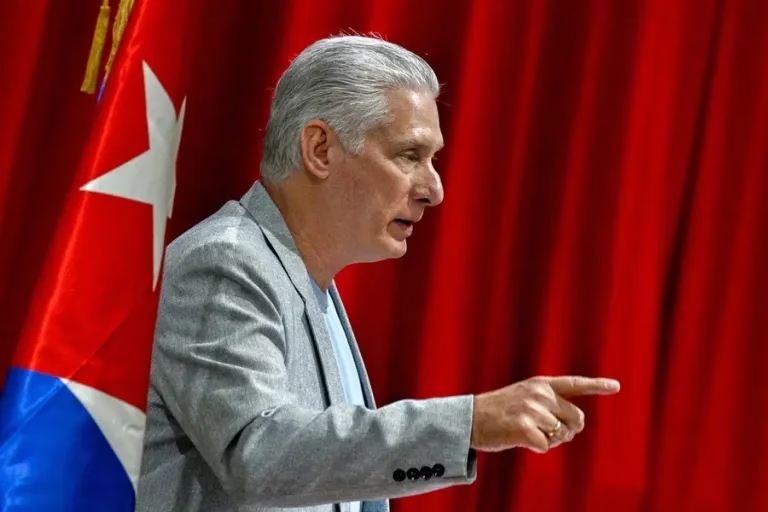
The political landscape in the Caribbean is tightening once again following the announcement of a new round of restrictive measures by the United States towards the island. Cuban President Miguel Díaz-Canel spoke out on the matter, describing these actions as part of a series of dictates imposed from abroad that seek to affect the nation’s development.
Through his official channels, the Cuban leader warned that the list of entities and officials under U.S. sanctions seems to have no end. However, he emphasized that, in the face of this scenario, the response of the Cuban people remains firm, highlighting resistance, talent, and solidarity as the pillars that define their current historical moment.
Details of U.S. restrictions
The measures recently announced by the U.S. Department of State focus on strategic sectors of Cuba’s economy and military infrastructure. According to official information, the sanctions affect eight organizations and three of their top executives. The specific objectives of this policy are:
- Four state-owned companies linked to the exploitation and commercialization of nickel reserves.
- Four military-type companies specialized in research, weapons development, and naval technology.
- Three military officers in charge of overseeing said operations.
The U.S. administration has justified these actions by arguing that the Cuban elite uses resource extraction to strengthen its security apparatus, while the population faces constant economic difficulties.
Pressure policy context
Since the beginning of 2026, the United States has intensified a strategy of maximum pressure on Cuba with the stated goal of forcing profound transformations in the island’s political and economic model. This policy has included various tools, such as blockades on fuel supplies and secondary sanctions designed to limit investment by foreign companies in Cuban territory.
The situation continues to be a point of diplomatic friction, while the Cuban government maintains that these measures are the main obstacle to the country’s well-being, reaffirming its stance of maintaining sovereignty in the face of external pressures.


