Coraasan boosts Santiago’s development with a multi-million dollar investment in water infrastructure
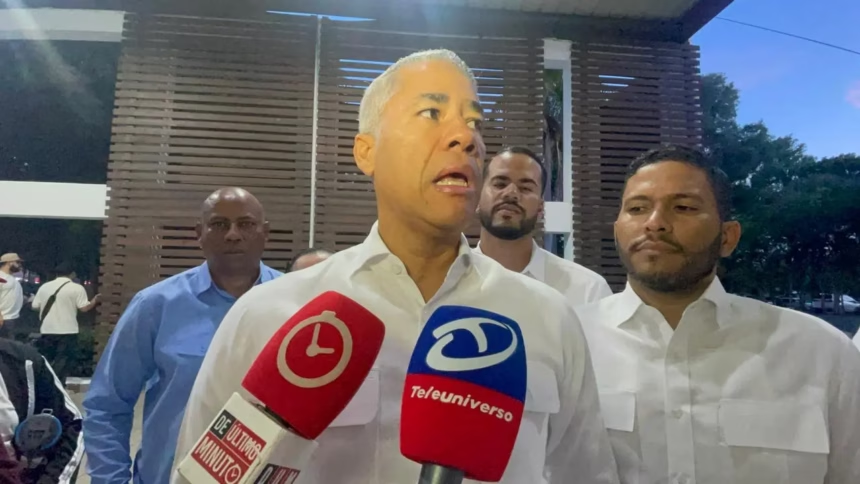
The Santiago Aqueduct and Sewer Corporation (Coraasan) has reached a milestone in basic service management by increasing drinking water production for the province by 25%. Under the leadership of Andrés Cueto, the institution has executed investments amounting to RD$6.1 billion over the last six years, a figure that reflects the commitment to the urban and economic growth of the ‘Ciudad Corazón’.
Cueto emphasized that this level of investment is historic, approaching what was allocated during the previous 16 years. With the current projection, it is expected that by the end of the second four-year term of President Luis Abinader’s administration, the total investment in drinking water and sanitation will significantly exceed the records of previous periods.
Advances in sanitation and network expansion
In addition to strengthening water distribution, the institution has managed to increase wastewater collection capacity by 35%. This progress responds to the need for modern infrastructure in the face of the constant expansion of the Cibao capital. Among the highlighted strategic projects are:
- Expansion of the Cibao Central Aqueduct.
- Development of the San Francisco de Jacagua aqueduct.
- Rehabilitation and modernization of the La Canela system.
- Construction of sanitary collectors in key sectors such as Padre Las Casas, Don Jaime, La Rosaleda, Ensanche Libertad, and La Piña.
Santiago’s growth demands the continued expansion of hydraulic and sanitary infrastructure. We call on citizens to use water responsibly and comply with service payments to ensure the sustainability of these projects.
Andrés Cueto, Director of Coraasan
Santiago in constant evolution
During his participation in Expo Cibao, the official highlighted that the province’s economic dynamism, driven by new shopping centers, hotels, and the development of mass transit systems such as the cable car and the monorail, requires public services to evolve at the same pace. The planning of new works, such as the collector for the La Trinitaria sector, is part of the work agenda that seeks to consolidate Santiago as a benchmark for development in the Dominican Republic.