
The Australian Grand Prix: Formula 1 Races or a Video Game?
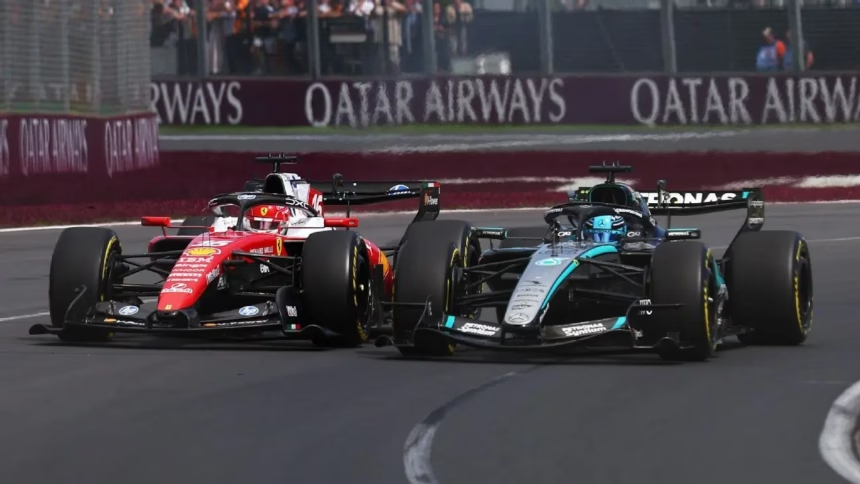
Melbourne, Australia – Over 12 thrilling laps, George Russell and Charles Leclerc starred in an epic duel, exchanging the lead of the Australian Grand Prix. This confrontation made one forget, at least for a moment, the controversy surrounding the new Formula 1 cars that dominated the beginning of the 2026 season. Both drivers, hoping to conquer the championship, delighted the Albert Park audience with magnificent overtakes. The battle between Russell and Leclerc was intense, until the intervention of the virtual safety car allowed Mercedes to make a pit stop, something that Ferrari, true to its style, chose not to do. In the end, the preseason favorite achieved a comfortable double, with Kimi Antonelli in second place. This duel was a gift for F1, after a brutal start to the new era of the sport, with redesigned cars and power units that divide their energy between combustion and electricity. The clash between Russell and Leclerc offered a positive point: two teams fighting for victory and alternating positions on the track. F1 highlighted a statistic: last year 45 overtakes were recorded, while on Sunday there were 120. Leclerc and Russell contributed seven of them in the first part of the race. The overall feeling was of a weekend with two faces. The good was excellent, but the bad was very evident. The drivers criticized the new formula after Saturday’s qualifying. Three world champions, Max Verstappen, Lewis Hamilton, and Lando Norris, expressed their discontent in various ways. Norris went so far as to say that F1 had “changed the most fun cars to drive for the worst ones.” The brief but spectacular duel between Russell and Leclerc alleviated some pessimism, and Ferrari’s fast starts could become a recurring feature to liven up the races this season. Seeing Leclerc’s red car leading the first corner was exactly the image that F1 needed. However, we must not get carried away by a single confrontation. The euphoria of the pilots who fought for the top positions was not shared by those who were further back. Many drivers did not change their minds and some found new reasons to criticize the new F1. While the battle for the lead could be interpreted as support for the use of energy, this aspect of Sunday’s race generated as much criticism as Saturday.Video Game Style Races
In a moment of his battle, Leclerc made a radio comment: “This is like the mushroom in Mario Kart”. The reference alluded to the “overtake” and “boost” buttons that the drivers have at their disposal during the race. Both modes are part of the new and complicated hybrid engines and were one of the main attractions of the new rules. Unlike the previous drag reduction system (DRS), drivers can use the “boost” whenever they want, which, according to F1, will create strategic battles. Russell called it a “yo-yo effect”, and his battle with Leclerc certainly reflected it. Oliver Bearman, Haas driver, continued with the theme after the race: “Using the boost button, I felt like I was in a video game.” It remains to be debated whether Formula 1 should resemble a video game. While Saturday’s criticisms focused on how disappointing a qualifying lap was on the Albert Park circuit, Sunday focused on the moment when the drivers were able to use the “boost” in their battles.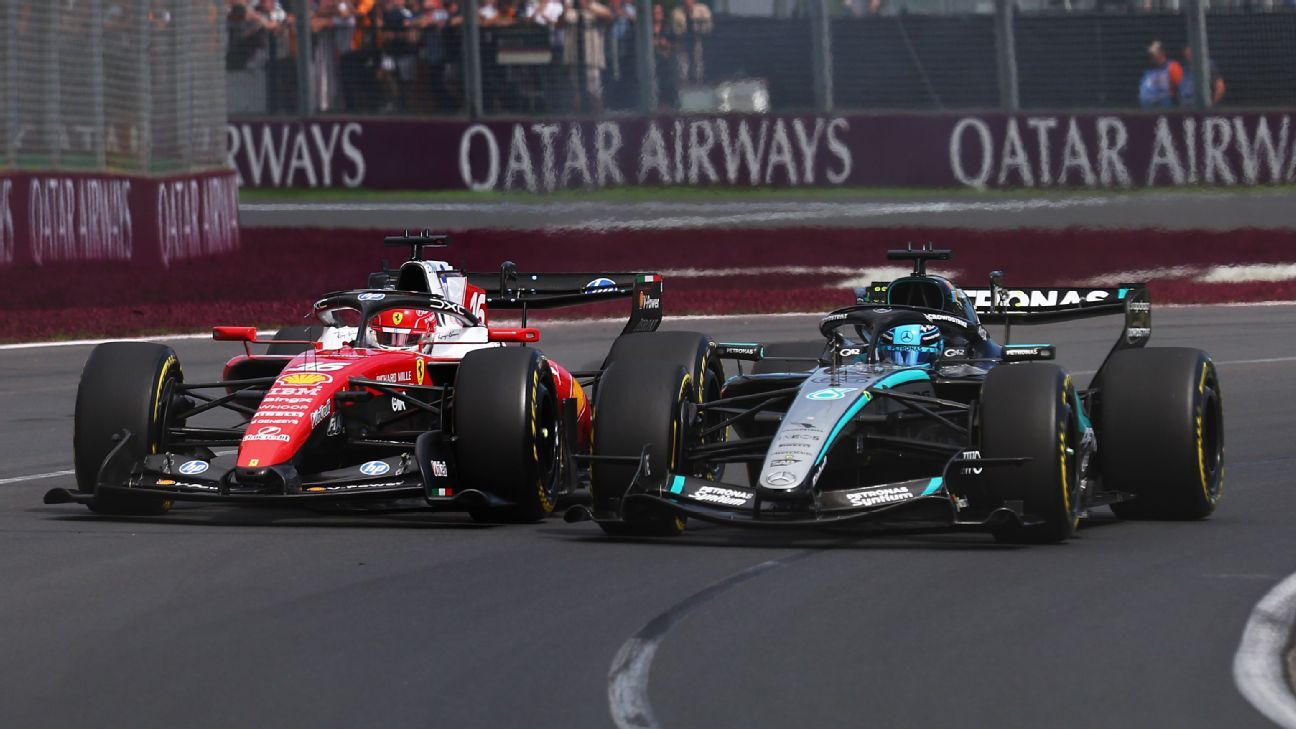
Esteban Ocon, from Haas, shared Norris’ doubts and frustrations and offered a different perspective on the position exchanges he experienced, although they were not televised. “It’s very painful,” he said about racing with the new cars. “You can’t do much as a driver. Once you use the boost button, and you haven’t managed to overtake, or even if you do overtake, you’re vulnerable again on the next straight. The other guy is going to overtake you again, which happened with Pierre Gasly three times. It happened to me too with Gabriel Bortoleto when I was fighting with him twice. I just overtook and they overtook me again.” Ironically, if the names mentioned by Ocon are replaced with Russell and Leclerc, a very different (and less favorable) description of the battle for the lead would be obtained. The criticisms of the new formula and the races it has created seem to depend on each driver’s perspective.“It’s a shame, it’s very artificial, depending on what the [power unit] decides to do and that sometimes it does at random, you can be overtaken by five cars or sometimes you can’t do anything, so, yes, there’s nothing we can change about it, so it makes no sense to say more”.
Lando Norris
While F1 was quick to publish data on the number of overtakes, it didn’t include how many of them occurred after a driver used “boost” mode. Given the great importance of battery boost, one might assume that most, if not all, were the result of its use.
This raises an existential question about whether “boost” has replaced one of the most revered parts of racing. Leclerc hinted at this when he spoke about his fight with Russell. “I think it will definitely change the way we race and overtake,” he said. “Before, it was more about who is the bravest in braking later. Maybe now there is a bit more strategy behind each move because each activation of the boost button, you know you are going to pay the price afterwards, so you always try to think several steps ahead to try to finish first. But it’s a different way of racing, for sure.” This sport will have to answer a more important question: Is this what Formula 1 should be? It could create a more strategic way of racing, but Ayrton Senna was not revered for being better at using “boost” than his rivals. It was just a sample, but the widespread opinion in the paddock on Sunday night is that F1 has taken away talent from the drivers when it comes to overtaking. “It wasn’t natural, in the way you have to approach it,” said Gasly, before listing everything that his work in the cockpit has changed. “There’s a lot more than just driving. It’s the battery. The energy. The difference between the [power units], with more power in turn 1, less in 3, more in 6, the lift you have to do to recover, etc. We are taking away quite a bit of pure driving.” Obviously, this was after a single race. Things could change and driving styles could adapt. Fans could gain a new appreciation for the additional tactical genius that will be required to beat rivals in the future, but upon hearing much of the reaction, it was hard not to recall one of Verstappen’s first criticisms of the regulations: “they are like Formula E, but with steroids”. Verstappen changed that appointment when he talked about how he wants to see the sport change in the coming weeks and months, and it wasn’t hard to imagine one of the key things that the most exciting driver on the grid missed.“I love running, but we can only take so much, right?” said the Dutchman on Sunday. “I think they are willing to listen, the FIA and F1, I just hope, of course, that there will be some action. I mean, I’m not the only one saying it, I think many are saying it, whether they are drivers, fans, we just want the best for the sport. It’s not that we are critical just for being critical, we are critical for a reason; we want it to be F1, the real F1 on steroids.
Max Verstappen