
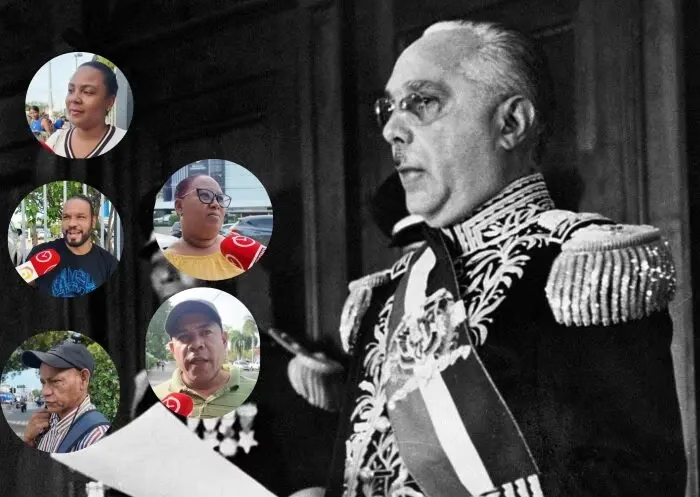
Constitutional Court puts an end to multi-million dollar claim by Trujillo’s descendants
The Constitutional Court (TC) of the Dominican Republic has issued a final ruling that closes the door on the claims of the descendants of dictator Rafael Leónidas Trujillo. The high court declared inadmissible the constitutional review appeal filed by Rafael José Ramón and Yolanda Altagracia Trujillo Lovatón, who were seeking to recover a large sum of money deposited in the Banco de Reservas since the year 1950.
The litigation, which has dragged on for years, revolved around a certificate of deposit number 2117, originally established by the dictator with the stipulation that the funds be transferred to Lina Lovatón Pittaluga after his death. However, with ruling TC/0737/26, the court has closed this legal avenue, upholding previous decisions that favored the Dominican State.
Citizen reactions to the decision
After the ruling was announced, various citizens expressed their position on this controversial heritage case. The majority of those consulted supported the TC’s decision, arguing that these resources belong to the Dominican people and not to the descendants of the dictatorial regime.
I do not agree, not at all. When Trujillo was in power, what he produced was his and not the people’s. Therefore, that money does not belong to the Trujillo family, it belongs to the Dominican people.
Manuel Herrera, citizen consulted.
On the other hand, some citizens suggested that, if they were to remain in the hands of the State, the funds should be strictly allocated to infrastructure projects and social welfare. However, the debate also included voices that questioned the legitimacy of the origin of these assets, pointing out that the claimants did not generate such wealth through personal labor.
Fundamentals of the Constitutional Court
The plenary of the Constitutional Court, under the direction of magistrate Napoleón Estévez Lavandier, determined that the request of the Trujillo Lovatón brothers lacked the “special constitutional significance or relevance” required by Law 137-11. The appellants alleged an alleged misinterpretation of Law 57-85, which regulates the confiscation of the Trujillo family’s assets, as well as discrepancies in the application of the Civil Code regarding deposit contracts.
With this resolution, the ruling issued on April 30, 2025, by the First Chamber of the Supreme Court of Justice is ratified, which had already dismissed the appeal in favor of the state banking entity. This outcome marks a milestone in the long legal dispute over the recovery of assets linked to the country’s dictatorship era.