
New Collective Bargaining Agreement in the WNBA: Maximized Salaries for Rookies
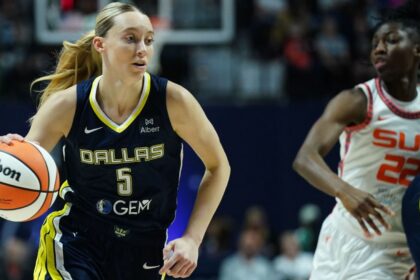
The new WNBA collective bargaining agreement is about to revolutionize the way players’ salaries are structured, especially for those on their rookie scale contracts. This news, received with enthusiasm by players and fans, promises a significant change in the compensation of athletes. The key provision, called “EPIC” (Exceptional Performance on Initial Contract), will allow players to renegotiate the fourth year of their initial contract and agree to a three-year extension. This change opens the door to maximum and super-maximum salaries for young stars. Players who have been named to the first or second All-WNBA team, or who have won the MVP award, will be eligible for the maximum salary in that fourth year. In addition, those who have won the MVP can aspire to the supermax. A clear example of this impact is Caitlin Clark, the 2024 Rookie of the Year. Her salary, which was $78,066 in 2025, could rise to $530,000 in 2026. In 2027, it could reach the projected maximum of $1.3 million and, in 2028, the estimated super-maximum of $1.7 million, the first year of her extension. This new provision will also benefit young talents like Aliyah Boston and Paige Bueckers, who could see a significant increase in their income. The previous agreement only allowed players to earn the supermax salary after completing a four-year rookie scale contract. The salary cap will start at $7 million, a considerable increase from $1.5 million in 2025. The supermax will start at $1.4 million, compared to $249,244 in 2025. The average salary will be around $583,000, well above the $120,000 in 2025. The minimum salary will have five levels, based on years of service, ranging from $270,000 to $300,000, compared to $66,079 in 2025.Other important details of the new collective agreement include:
- Starting in 2027, only players with six or fewer years of service can be designated as “core.”
- Accommodation will be provided to all players during the first three years of the agreement. Afterwards, it will only be offered to those earning $500,000 or less in 2029 and 2030. After 2030, it will only be provided to development players.