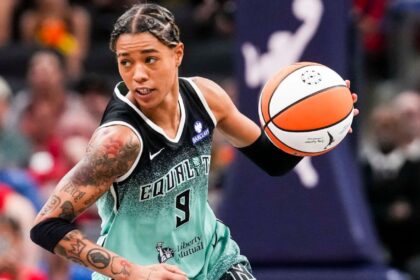
Breanna Stewart: WNBA CBA Negotiations in ‘Status Quo’
New York Liberty star and WNBPA vice president Breanna Stewart has confirmed that the players’ association and the WNBA will not reach an agreement for another collective bargaining agreement (CBA) extension after the Friday deadline. Instead of an extension, both parties will enter a “status quo” period, during which the current CBA will be maintained and the league and the union will continue to negotiate.“We are not going to get a deal done by tomorrow, I can tell you that,” Stewart said Thursday after practice at Unrivaled. “We are going to continue to negotiate in good faith.”
Breanna Stewart
In mid-December, WNBA players voted to grant WNBPA President Nneka Ogwumike and the executive committee, including Stewart and co-vice president Napheesa Collier, the authority to potentially initiate a strike. Stewart indicated that calling a strike is “something we’re not going to do at this moment, but we have it in reserve.”
Sources indicate that the WNBA has not been considering a lockout. It is believed that both sides will reach an agreement and there will be a season in 2026. However, the WNBA and the players’ association remain very distant on several key issues, including what a revenue-sharing system should look like, particularly if it should include gross or net revenue. Net revenue is defined as revenue after subtracting expenses, while gross revenue is revenue before subtracting expenses. The WNBA believes that gross revenue does not accurately reflect the business, as it does not incorporate the expenses necessary to operate the teams and the league. On the other hand, the WNBPA believes that the players who provide the work and have no control over the expenses should not essentially be the last to be paid. Sources indicated that the WNBA is projecting that a recent proposal from the union, which would give players around 30% of gross revenue and establish a salary cap of approximately $10.5 million, would result in losses of $700 million during the term of the agreement. This would be more than the combined losses of the league and its teams in the first 29 years of the WNBA’s existence. However, another source close to the negotiations stated that the union believes its revenue-sharing model still puts the league in a “profitable position”. The league has proposed a system in which the players would receive more than 50% of the net income, while the union proposes a system in which the players would receive around 30% of the gross income. Stewart, along with other players present, acknowledged that finding some form of compromise is crucial, and really the only way forward, in the negotiations. “Although we seem to be very distant, there is a place where we can arrive and find common ground,” she said. Paige Bueckers added: “There are some things we just won’t budge on, and we feel like we should stand our ground, and then there are things we feel like we can meet in the middle on.” Chelsea Gray added: “That’s what negotiating is. There are compromises on both ends. There are some things we are not willing to compromise on, so there’s a standard we’re not going to lower. And that means we have to wait a little longer so as not to lower our standard, so that’s what it is.”