What a match! The Springboks defeated Ireland with a score of 23-14, achieving their first victory in Dublin since 2012. This triumph reaffirms their position as the best team in the world, but the story of this encounter goes far beyond the result.
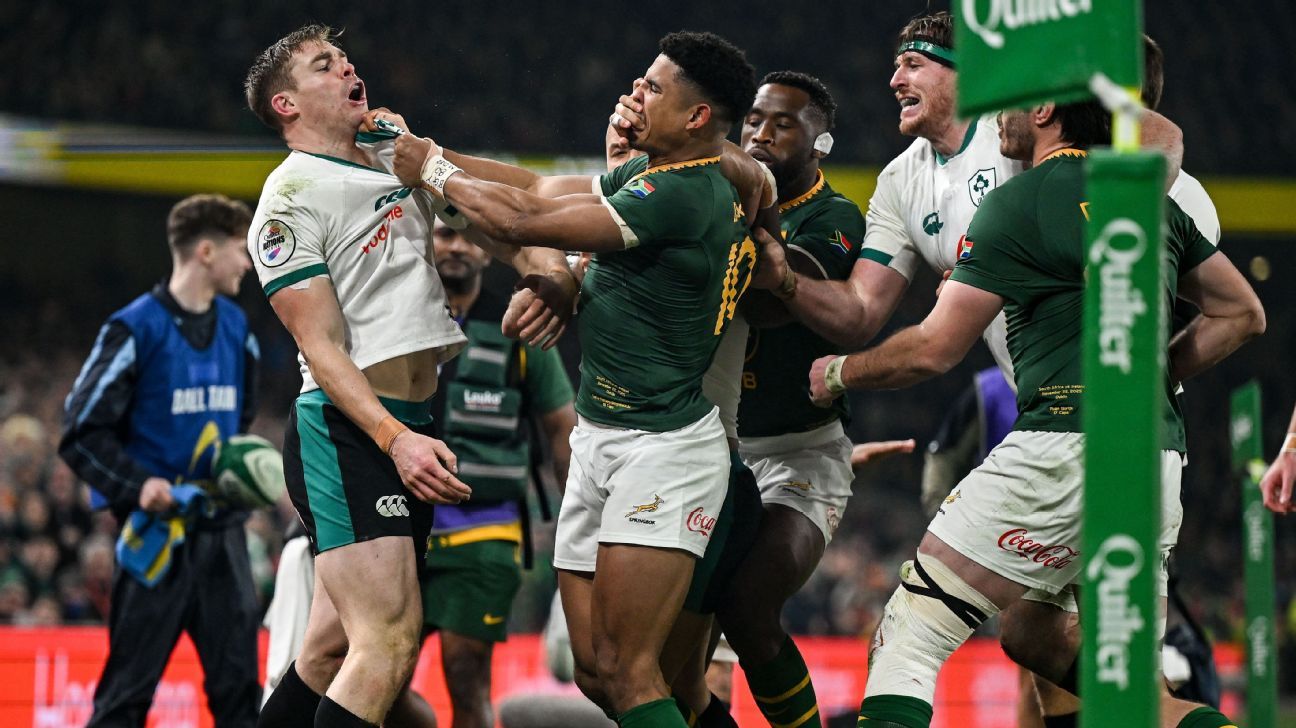
The match was complete madness, a true chaos. Ireland received four cards in the first half, ending up playing with only 12 men at one point. Furthermore, just before halftime, coach Rassie Erasmus decided to substitute both Springboks props, a decision that unleashed a series of events that culminated in a penalty try and a yellow card for Ireland. There were also two disallowed tries in the first 40 minutes, and moments of bewilderment from normally composed players. The Springboks once again demonstrated their superiority.
Ireland, who had dominated the Springboks in recent encounters, with four victories in the last five matches, hoped to make a statement.David Fitzgerald/Sportsfile via Getty ImagesThe atmosphere in Aviva Stadium was electrifying, with smoke in the air and an emotional performance of The Cranberries’ anthem “Zombie” before the start. Two years ago, that same song resonated in Paris after Ireland’s victory over the Springboks in the group stage of the World Cup. Erasmus, reflecting on that defeat, found in the song a turning point that led the Springboks to win the tournament. The repetition of the song on this cold November night sought to evoke Parisian memories and boost Ireland.
From the start, it was perceived that the match would be played on the edge of emotions. The camera stopped on Caelan Doris as “Ireland’s Call” sounded, with a slight smile on his face. Ireland was ready to make its mark. But what followed in the first half was incredible.
Ireland 13-24 South Africa: The Springboks end the drought in Dublin
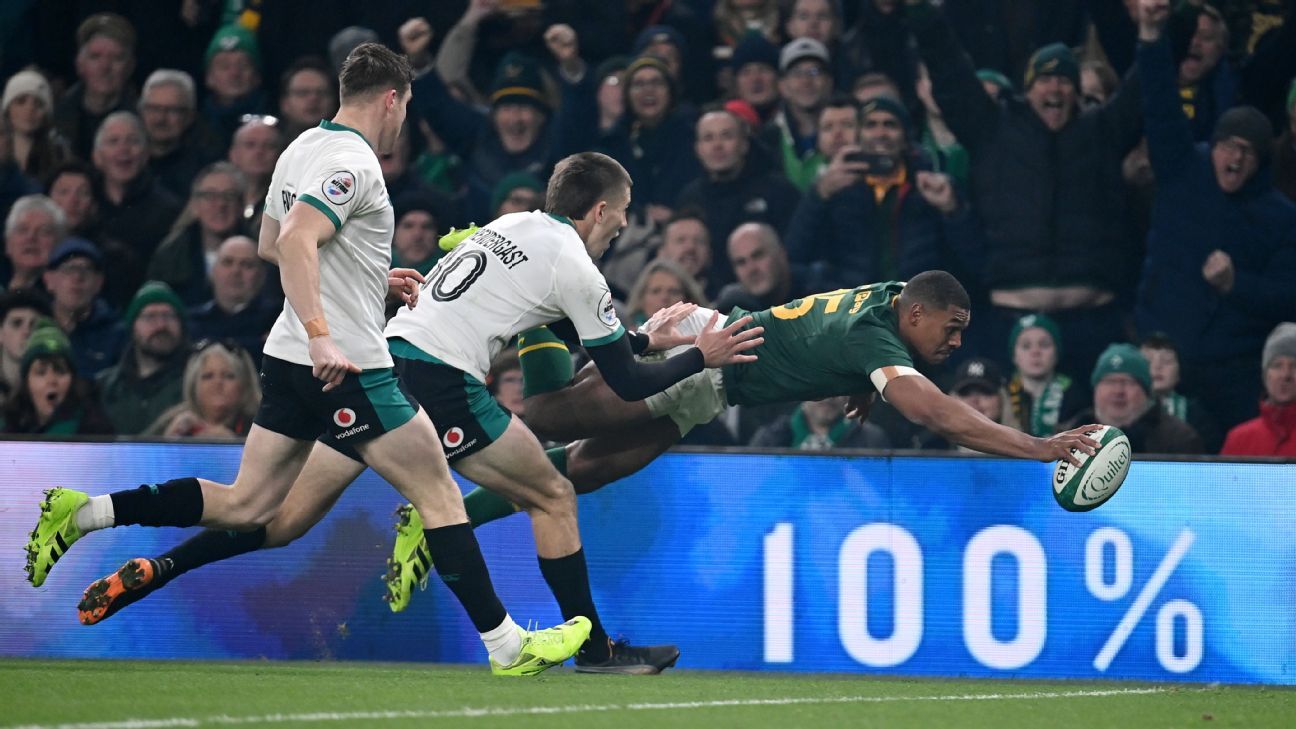
A brief summary: Damian Willemse scored a spectacular try at four minutes. Sacha Feinberg-Mngomezulu avoided a yellow card for a high tackle on Tommy O’Brien. Ireland struggled to decipher the Springboks’ defense and cope with their physicality. Tadhg Beirne thought he had scored a try, but it was disallowed for an illegal action by James Ryan, who received a yellow card, later converted to red. And breathe.
The Springboks also had a try disallowed for a forward pass, but Cobus Reinach scored another shortly after. Dan Sheehan responded, with Ireland playing with 13 men, and although they were back to 14 with Ryan’s substitution, they fell back to 13 with the yellow card to Jack Crowley for reckless play. The Springboks pressured Ireland’s line, Erasmus changed both props, Andrew Porter received a yellow card, a penalty try occurred and everyone was counting how many players were left on the field as the Springboks went into halftime with a 19-7 lead. Phew!Damian Willemse anotó el primer ensayo de Sudáfrica en Dublín. Charles McQuillan/Getty ImagesIn the second half, Ireland scored a couple of penalties and withstood the Springboks’ attack, only for Feinberg-Mngomezulu to extend the lead after beating Jamison Gibson-Park and half of the Irish defense. With 20 minutes to play, the Springboks continued to dominate Ireland, receiving penalties at the scrum, which led to a yellow card for Paddy McCarthy.
The Springboks could have opted for quick play on some occasions, but chose to wear down Ireland. It was a brutal match, leaving a mark on the Irish forward pack. In the final stages, Ireland tried to get closer on the scoreboard, but ended up battered and with nothing to show for it.
It was a crazy match, but one of the most physically imposing performances seen this year, or any other year, by the Springboks. There was much talk of the curse that Ireland had over the Springboks in Dublin. Erasmus had never won here as a coach. This was part of the narrative: Erasmus also added pressure to his team by saying that this match would define whether the year was a success or a failure. So they ended a 13-year streak and, in addition, “saved” their already successful season.
Pressure? The Springboks answered the challenge with flying colors. Malcolm Marx was outstanding, Feinberg-Mngomezulu had some doubtful moments at first, but came through. The two centers were brilliant, but this was a collective achievement.Charles McQuillan/Getty ImagesIreland showed immense character by staying in the fight. Inferior teams would have thrown in the towel. It is to be appreciated that they kept the Springboks at bay for so long in the second half. And they also finished strongly, camping on the Springboks’ line and having the opportunity to make things interesting. But their lack of discipline infuriated Andy Farrell.
Their final tally of 18 penalties conceded by Ireland says it all. Despite playing a large part of the match with a numerical disadvantage, they lacked composure when they needed it and were outmuscled. They simply didn’t have the depth to change the course of the game. And their static play was exposed. Farrell has a lot to sort out.
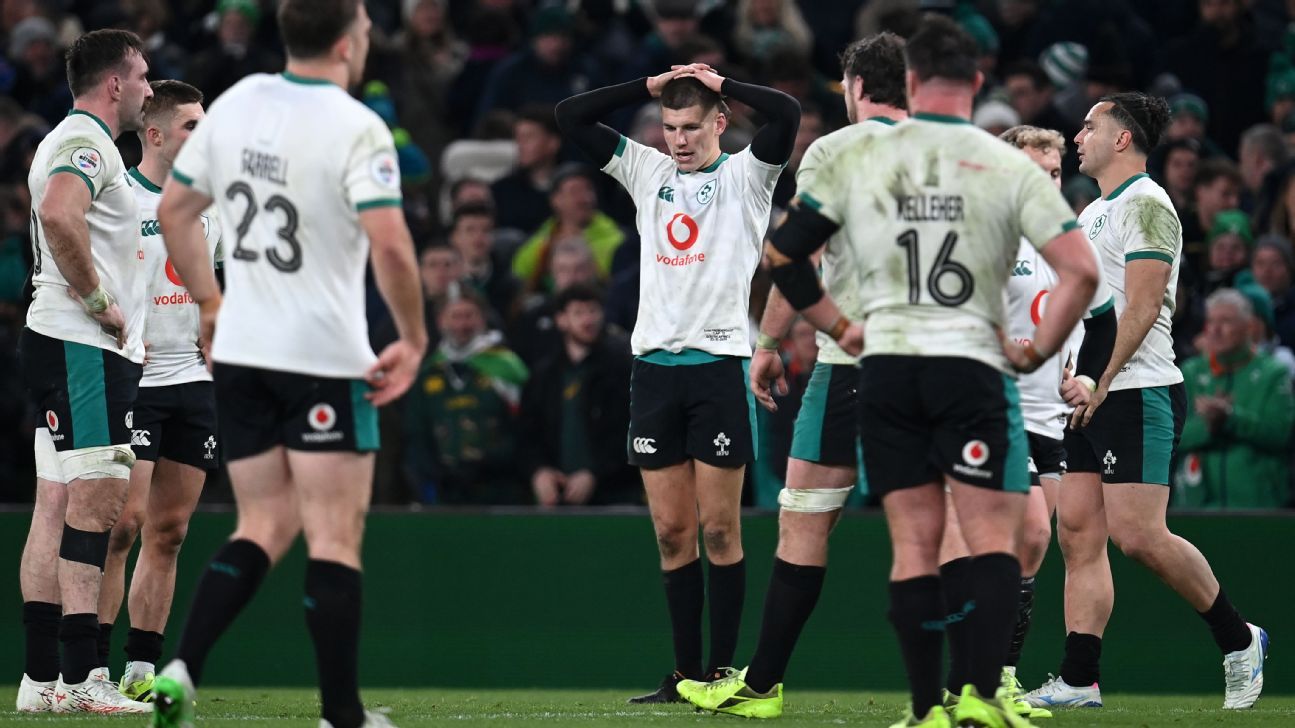
At the end of the match, Ireland fell to their knees and South Africa exhaled. It was test rugby at its limits. A physical challenge that we have rarely seen. And everyone in the stadium tried to figure out exactly what they had witnessed. South Africa won in Dublin for the first time since 2012, but it was much more than that.