

The Challenge of Facing the All Blacks: A Look at the English Mentality
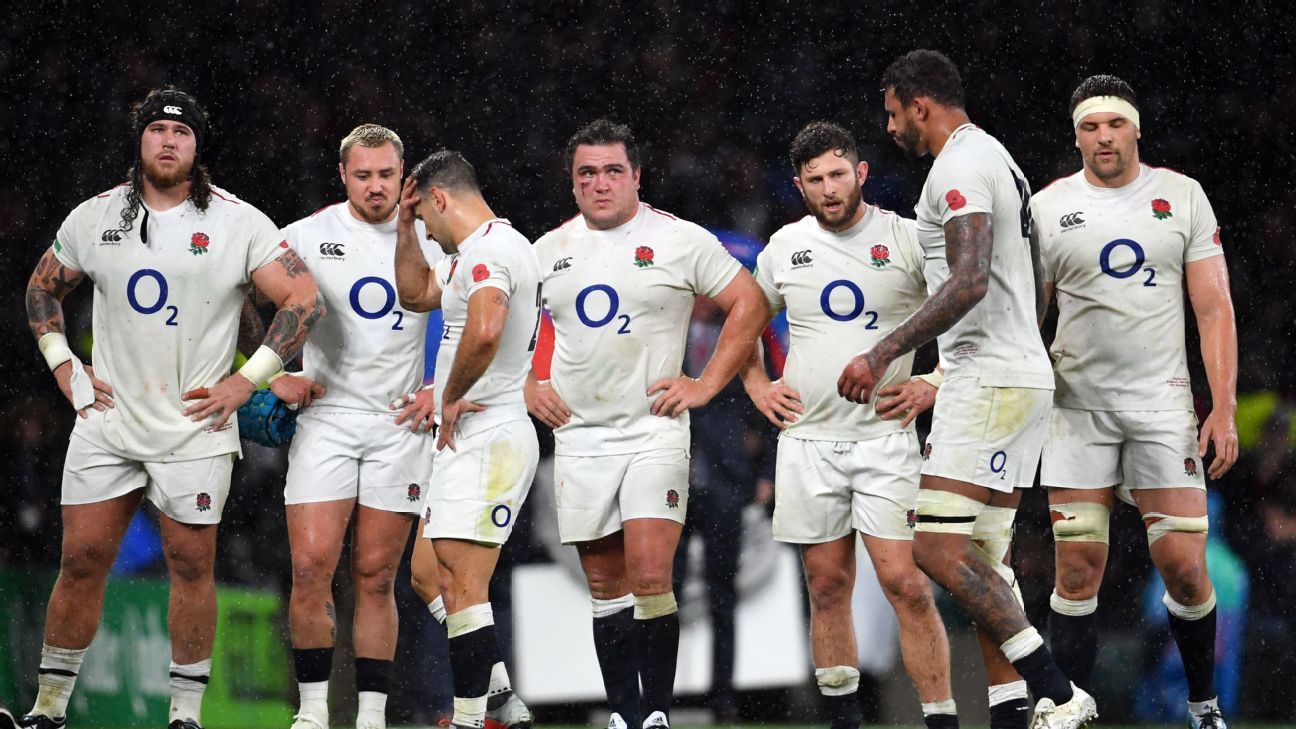
When Danny Care reminisces about his experiences playing against the All Blacks, he evokes a feeling of bewilderment after the defeats. Despite having been part of England’s memorable victory over the Kiwis in 2012, it is the post-match confusion that lingers in his memory. “You end up analyzing the game,” Care relates. “At 75 minutes, you think ‘we’re going to win’. And a few minutes later, you lose by two tries and everyone in the locker room wonders, why did this happen?” For any generation, defeating the All Blacks is a significant milestone. Out of 46 encounters over 120 years, England has only won eight. Their last triumph was in the 2019 Rugby World Cup semi-final, a performance considered one of the most outstanding, similar to the 2003 victory in Wellington. This 2003 triumph foreshadowed the World Cup victory and featured 13 players at one point. England’s last victory at Twickenham was in 2012, a highly valued achievement.Steve Borthwick’s team has the opportunity to secure England’s first home win against the All Blacks since 2012. Although it’s a factor to consider, the team is trying to approach it as just another match. Jamie George, after the victory over Fiji, commented: “Many teams are awestruck by the history and incredible players of the All Blacks. It’s easy to fall into that. I’ve probably done it myself.”It was one of the biggest victories for our generation. But, 13 years later, it’s incredible to say that beating the All Blacks once at home was the greatest achievement of that generation.
Danny Care
England’s first victory over the All Blacks was in 1936, known as the Prince Obolensky match. Since then, England won in Auckland in 1973, at Twickenham in 1983 and 1993, and then came the consecutive victories in 2002 (31-28 at Twickenham) and 2003 in Wellington, which established England as a World Cup favorite.
In 2012, England delivered their best performance during Stuart Lancaster’s tenure, defeating the All Blacks 38-21. “There were rumors that the All Blacks had been ill during the week, but Manu [Tuilagi] was unstoppable that day, you just had to give the ball to Manu and let him do his thing,” says Care.
Analyzing what was said after each defeat since 2014, similar themes are observed. After the three matches in New Zealand in 2014, Lancaster lamented the lack of precision in the last 20 minutes in Auckland, captain Chris Robshaw said they needed to be more ruthless in Dunedin, and a week later, Lancaster was annoyed by how England did not exert enough “pressure on the scoreboard” in Hamilton. “You always had to be first on the scoreboard and go first. If you ever fell behind, I felt it was almost pointless to continue the game,” says Ashton.
- Five classic England-New Zealand matches: from thrilling draws to late drama
- England vs. New Zealand: Injury doubts for Tommy Freeman and Ollie Chessum
- Overreactions: Will England beat the All Blacks? Will Wales have a miserable autumn?
In 2018, England was one point short at home and thought they had won at the end, but Sam Underhill’s try was disallowed for offside by Courtney Lawes. A year later, England achieved that resounding victory against the Kiwis in Yokohama. “We went into the match trying to get rid of this myth or aura of the All Blacks about how they are invincible,” said Joe Marler after the victory. “I automatically thought they had the best players in the world from 1 to 15 because that’s how you think.”
England’s atmosphere was established with Jones wielding the samurai sword, then came the (unproven) accusations of espionage and, when the All Blacks lined up for the haka, England formed an arrow shape to respond. “We tried to choose a team that was aggressive: you need aggressive players. Once you match their physique and fitness, you’re close. For the haka, we talked about forming a circle around them, but we settled on the V shape. We wanted to silence the crowd and make New Zealand think that this wouldn’t be a walk in the park, and transform that emotion into ‘we are here to face you'”. Owen Farrell stared at the haka with a slight smile on his face, while Marler crossed the halfway line and incurred a penalty for England.After the match, the All Blacks coach, Steve Hansen, was asked by a journalist if he was worried about his team’s alleged lack of commitment. It was a question that suggested that the All Blacks’ defeat was due to them not being mentally prepared for the match, rather than England playing at an incredible level.It’s a good plan when you win, but if not, you’re arrogant. So, in retrospect, it was a good thing!
Eddie Jones


New Zealand’s win record under Scott Robertson is 76%, and there is a perception that the All Blacks are fallible. But ask Scotland, who had the opportunity for immortality last weekend, only to be powerless against the Kiwi machine once it got into action. The All Blacks are going for their own Grand Slam tour, seeking a sweep of victories on northern hemisphere soil for the first time in 15 years. Ashton believes that England has what it takes to beat the All Blacks, but will need experienced heads to guide them. “Some members of the team haven’t played against New Zealand. Coaches can give you all the information and attach emotion to it, but without having really experienced it, it’s quite difficult for you to understand what it’s like,” says Ashton. “I hope the occasion doesn’t affect them, and that they don’t come out of the match saying ‘oh, you know, I should have done better there'”. Borthwick’s team must stick to their game plan to beat the All Blacks on Saturday, but also find a mindset in which they can put history aside, see beyond the incredible history of the All Blacks and reduce the contest to the fundamentals of rugby and small margins.
Jones’ advice, recalling the 2019 victory: “Hit them first. Hit them hard. Don’t wait for them. As soon as you start thinking about the aura, you sit and watch them. You need to be the spectacle, not be a part of it.” Borthwick’s team is on a nine-match winning streak. They are on an upward trajectory, but becoming the ninth team to beat the All Blacks would unite them with an elite group and signal true progress. “What a boost it would give them to get 10 wins in a row by beating the All Blacks,” said Care. “Ask any England player ‘if you could be part of a winning team against anyone, who would you choose?’ Everyone would choose the All Blacks.”