

The Challenge of Facing the All Blacks: The English Perspective
Danny Care, reflecting on his experiences against the All Blacks, evokes the feeling of bewilderment that follows defeats. Despite having been part of England’s memorable victory over the All Blacks in 2012, the memory of post-match confusion persists. “You find yourself analyzing the game,” Care recounts. “At 75 minutes, you think ‘we’re going to win’. And a few minutes later, you’ve lost by two tries and everyone in the locker room is asking, ‘how did this happen?'”An England victory over the All Blacks is a momentous occasion for any generation. Out of 46 encounters in 120 years, England has only won eight. Their last triumph was in the 2019 Rugby World Cup semi-final, with a score of 19-7, considered one of the best performances since they beat the All Blacks in Wellington in 2003. That victory anticipated their 2003 World Cup win and saw them play with 13 men at one point. England’s last victory at Twickenham was in 2012, a highly valued achievement.
“It was one of the biggest wins for our generation,” says Care. “But 13 years later, it’s incredible to say that beating the All Blacks once at home was the biggest achievement of that generation.” Steve Borthwick’s team has the opportunity to secure England’s first home victory against the All Blacks since 2012. Although it’s on their minds, they try to approach it like any other match. Jamie George commented after the victory over Fiji: “Many teams are in awe of the history and the incredible players of the All Blacks. It’s easy to fall into that. I’ve probably done it myself.”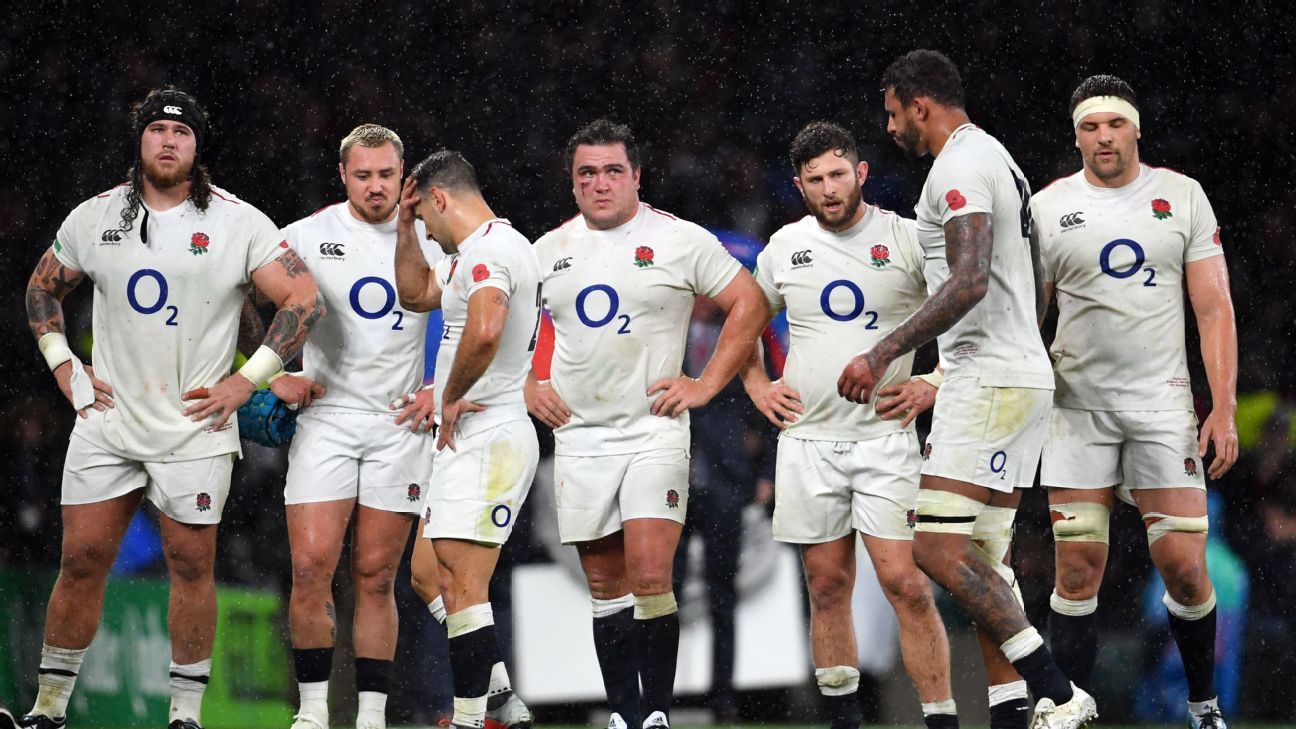
England’s first victory over the All Blacks was in 1936, known as the Prince Obolensky match. Since then, England won in Auckland in 1973, at Twickenham in 1983 and 1993, and then came the consecutive victories in 2002 (31-28 at Twickenham) and 2003 in Wellington, which established England as a World Cup favorite.
In 2012, England had their best performance during Stuart Lancaster’s tenure, beating the All Blacks 38-21. “There were rumors that the All Blacks had been ill during the week, but Manu [Tuilagi] was unstoppable that day, you just had to give the ball to Manu and let him do his thing,” says Care.
- Five classic England-New Zealand matches: from thrilling draws to late drama
- England vs. New Zealand: Injury doubts for Tommy Freeman and Ollie Chessum
- Overreactions: Will England beat the All Blacks? Will Wales have a miserable autumn?
In 2018, England came close at home, and thought they had won at the end, only for Sam Underhill’s try to be disallowed for offside by Courtney Lawes. A year later, England achieved that resounding victory against the Kiwis in Yokohama. “We went into the match having gone through preparation trying to get rid of this myth or aura of the All Blacks, about how they are invincible,” said Joe Marler after the victory. “I automatically thought they had the best players in the world from one to 15 because that’s how you think.”
The atmosphere in England was established by Jones wielding that samurai sword, then came the (unproven) accusations of espionage and, when the All Blacks lined up for the haka, England formed an arrow shape to respond. “We tried to choose a team that was abrasive, you need abrasive players. Once you match their physique and their fitness, you’re getting there. For the haka, we talked about forming a circle around them, but we settled on the V shape. We wanted to silence the crowd and make New Zealand think that this wouldn’t be a walk in the park, and transform that emotion into ‘we’re here to face you'”. Owen Farrell faced the haka with a thin smile on his face, while Marler crossed the halfway line and cost England a fine.“It’s a good plan when you win, but if you don’t, you’re arrogant,” Jones says. “So, in retrospect, it was a good thing!”
Eddie Jones
After the match, the All Blacks coach, Steve Hansen, was asked by a journalist if he was worried about his team’s alleged lack of commitment. It was a question that suggested that the All Blacks’ defeat was due to them not being mentally prepared for the match, rather than England playing at an incredible level. Hansen responded by offering the journalist a stern word in private.

The two met again in November 2022, with England coming back from 25-6 to tie 25-25, but that was Jones’ last autumn season in charge of England. Steve Borthwick succeeded him and, before his tour of New Zealand in 2024, he recalled what it was like to face the All Blacks, drawing on memories from his own playing career. “I’ve been in teams that have gotten on the plane without real faith,” Borthwick told reporters. “There have been some series where that has happened.” England pushed them hard in two tests, but left with the same regrets. Captain Jamie George said that “fine margins” made them lose 16-15 in Dunedin, and looked at the positives of their 24-17 defeat a week later. The All Blacks visited Twickenham in 2024 and two late missed kicks from George Ford allowed the Kiwis to take the victory 24-22. “That legacy plays a role, I think,” says Care. “That game where Fordy hit the post with the penalty and then missed the drop goal, if that’s against any other team, would it have gone inside the post? There’s something against the All Blacks that if you don’t finish them off, you won’t win the test match.”
So, judging by what those who have failed in the past have said, to beat the All Blacks you need to: look beyond their history and aura, strike the first blow, and seize every single opportunity. Phew. It’s no easy task.