Week 12 of the NFL is history! A day full of emotions, where the “almost upsets” were the order of the day. The Giants led the Lions for a large part of their match, the Colts had the Chiefs on the ropes, and the Jets dominated the Ravens in the first half. No lead was safe, not even the 21-point lead that the Eagles, known for their good management of the advantage, built against the Cowboys.
Winning in the NFL is complicated. And what’s even harder? Writing columns about the NFL. Every Tuesday, we’ll analyze the previous week’s action, exploring the most important stories and what the future holds. We’ll look for measured reactions to exaggerations, celebrate the exciting things that no one appreciates, and highlight what you missed on Sunday and Monday.
There will be play analysis, statistics and, above all, a lot of fun.
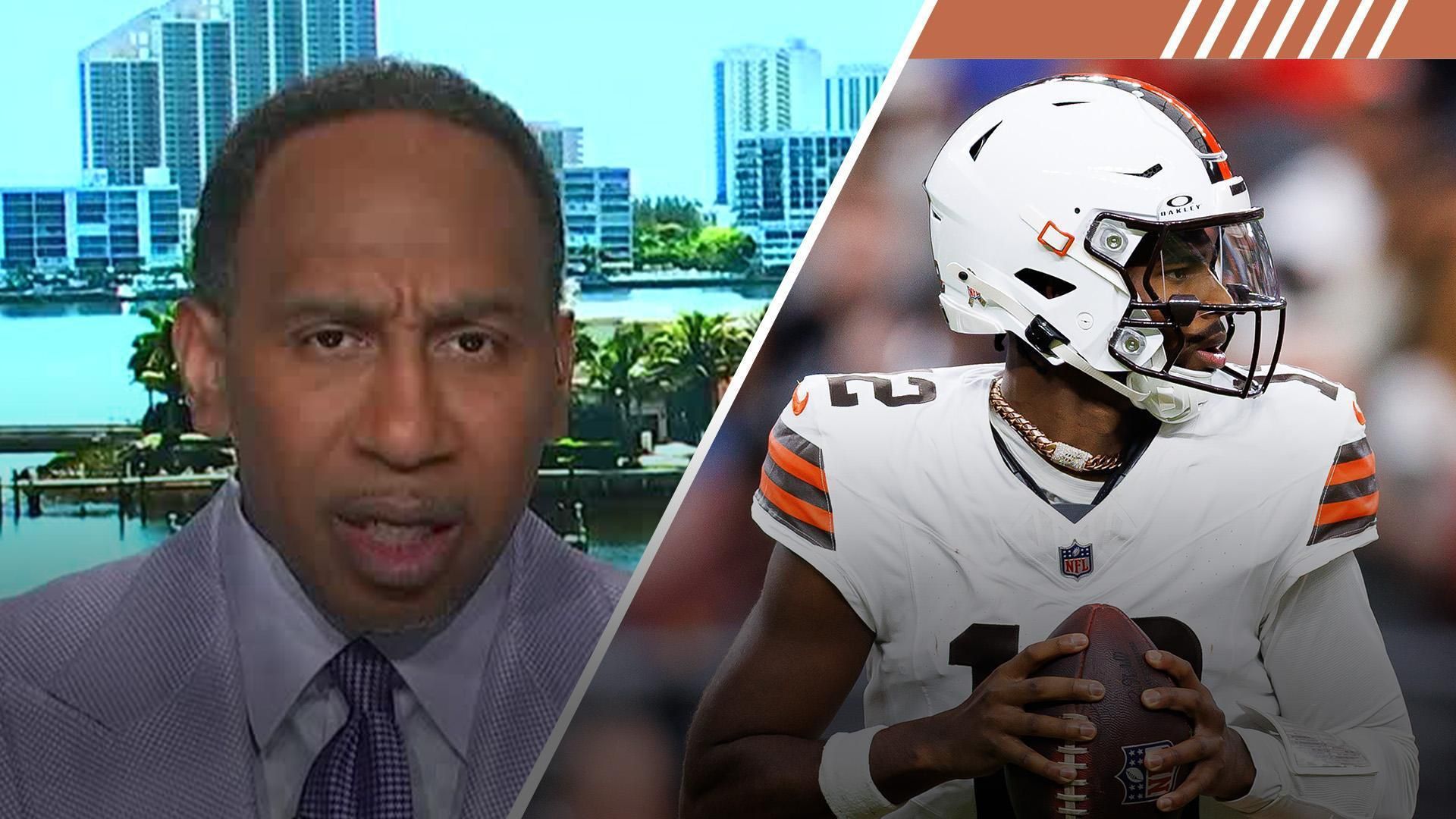
Each week, this column will begin with a detailed analysis of a key game, player, or trend from the previous day. What does this mean for the rest of the season? This week, we focus on the ups and downs of Shedeur Sanders’ first game as a starter in the NFL and whether the Browns should stick with him for the rest of the season.
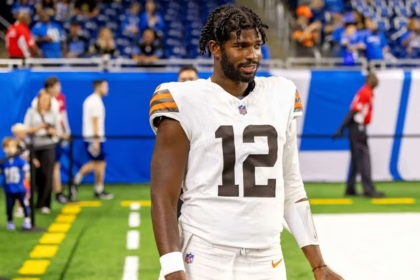
On Sunday, the Browns started with their third quarterback of the season, when rookie Sanders, selected in the fifth round, took the first snap against the Raiders. Sixty minutes later, the Browns also added their third win of the season, defeating the Raiders 24-10, achieving their first away win since Week 2 of last season. For the first time in 435 days, the Browns enjoyed a victorious trip back to Cleveland. A great feeling.
Sanders was named the starter only because Dillon Gabriel, also a rookie, selected two rounds before Sanders, suffered a concussion in the Week 11 loss to the Ravens and was out. In most cases, a temporary start for a third-string rookie quarterback, selected in the last rounds, would generate little national interest. But because of Sanders’ productive college career, his fall in the draft, and his illustrious NFL lineage, there were more eyes on this game.
To rate Sanders’ performance on Sunday, let’s remove the embellishments and his career trajectory and focus only on his contemporaries.
Since the year 2000, 43 quarterbacks selected in the fifth round or later (including undrafted free agents) have started a game in their rookie season. As you can imagine, most of these players were in the same situation as Sanders: backup or third-string quarterbacks forced to start in late-season games on poorly performing teams. Some recent examples include Spencer Rattler, Tyson Bagent, Tommy DeVito, and Clayton Tune.
This is the average performance of the 42 quarterbacks who preceded Sanders in their first starts, compared to Sanders’ performance against the Raiders.
Depending on how it’s analyzed, you could say that Sanders’ game was better than average… or worse than average, which, of course, would be great for discussion.
The most optimistic perspective highlights that Sanders won his party, elevating fifth-round or later quarterbacks to 14-29 in their first starts. He averaged nearly 10 yards per pass attempt, second only to Todd Bouman in 2001 in this group of quarterbacks. Of course, most of that yardage performance came on two plays: a deep pass to Isaiah Bond in the first quarter and a big catch-and-run with Dylan Sampson in the fourth quarter. But that’s the nature of the offense the Browns ran for Sanders and have run for much of this season; it’s about YAC (yards after the catch) and explosive opportunities. Sanders had an explosive pass rate of 19%, second only to Gabriel’s performance in Week 7 against the Dolphins among Browns quarterback starts this season.
The pass to Bond was really good. Sanders showed his best version in college by throwing on the move to his right, a viewpoint where he sees the field well and makes aggressive throws, even at the cost of being hit. With only five Browns players actually in protection here, Sanders is responsible for buying time against the extra defender. The Raiders are playing zero coverage behind the blitz, so Bond runs into an open space whenever he beats his man on the line. Sanders avoids the first defender and throws a beautiful pass on the move.
Sanders only completed two passes of more than 9 yards in this game. That was the first, and here is the second, a similar play. When DE Maxx Crosby goes inside, Sanders moves to his right. The Raiders break the coverage, not passing to wide receiver Jerry Jeudy as he runs down the field. An easy pass for an explosive gain… before the fumble.
Due to these two big gains (and the 66 yards gained on Sampson’s run), Sanders’ yardage performance seems respectable. But by the first-attempt/touchdown rate and the success rate, which weigh down-to-down consistency much more than explosive gains, we see that Sanders’ average pass attempts were not so positive. Both numbers are below average for a rookie selected in the last rounds in his first start. Remember, he is competing against the historical numbers of luminaries like Jeff Tuel, Zach Mettenberger, and Spergon Wynn here.
That being said, Sanders’ consistency on every play matches what we expect from the Browns’ quarterbacks so far this season. Compare Sanders’ starting performance with Gabriel’s and Joe Flacco’s time, and he actually produced a better first-down/touchdown rate. Where he failed in the pass success rate, he made up for it in the explosive pass rate. He was less accurate, but he also threw more long passes.
Sanders also faced an average third-down distance of 11.6 yards, and 10 of his 21 pass attempts were on third down. This invites a more aggressive style of play and, consequently, volatile results.
The smart thing would be… to do absolutely nothing with all this information. A matchup against the Raiders’ defense doesn’t provide a clear picture. If Sampson’s run is removed, Sanders’ numbers plummet. If Jeudy’s fumble is removed, his EPA per pass attempt increases. The sample size is too small to tell us anything concrete.
Gabriel’s sample (six games) is significantly larger. We can confidently say that Gabriel struggles to escape NFL speed and size in the pocket, push the ball downfield, and create outside of structure. Of 36 quarterbacks with at least 150 pass attempts this season, Gabriel is last in completion rate, yards per pass attempt, and air yards per attempt. He plays with short passes in an offense that can’t sustain that style of play. That’s how he played in college, as he lacks the physical qualities to consistently make long passes or extend passing attempts under pressure. That’s him.
Due to what we know about Gabriel up to this point, it would be good to learn more about Sanders for the rest of the season. The Browns will invariably look for a new QB1 next offseason, but with a good game this season, Sanders could move up the quarterback depth chart from his beginnings in August as QB4.
We need to learn more about how Sanders performs in the red zone. Despite Cleveland’s 24 points, Sanders didn’t attempt a pass in the red zone, as the Browns opted for their Wildcat package (something they also did at times with Gabriel at quarterback) in scoring position. In the red zone, NFL windows close and passes must be made faster, something Sanders struggled with on Sunday. His interception is a good example.
Sanders does well to throw the short pass to Jeudy when slot receiver Charles Snowden initially clears the window as he moves with the running back, but the ball must come out now. Watch how Jeudy turns to catch the ball, then taps his feet to wait for it to arrive. Also watch Sanders’ feet. With a single step, Sanders needs to land on his back foot ready to throw immediately. Instead, he jumps to reset his foot and begin his throwing motion.
This is not being nitpicky at all. Sanders doesn’t have an above-average arm, especially when it comes to generating straight-line velocity. To succeed throwing into tight windows in the NFL, his timing must be impeccable.
In a subsequent release in motion, Sanders’ lack of main arm talent appeared again. This is the type of throw that Sam Darnold and Daniel Jones have reveled in this season: a short pass to the left.
It’s difficult to get your whole body into a throw like this, running in the opposite direction of the quarterback’s dominant hand. Sanders has a tighter trunk than most NFL quarterbacks, so it’s difficult for him to get any momentum from his hips to initiate his throwing motion. This ball is all arm and, consequently, it soars high and soft above the narrow window in which he’s trying to hit Cedric Tillman.
This release serves as a reminder that even in those pre-draft moments, when we believed Sanders was a first-round quarterback, he was so despite his athletic limitations. He’s not particularly fast, big, physical, loose, or with a strong arm. The belief in his professional projection was based on intangibles: toughness, composure, vision, creativity, and all of them were shown against the Raiders. But he is fighting uphill against dimensions and physics.
It’s difficult to rate Sanders’ debut as good, but I wouldn’t call it bad either. I’ve seen many quarterbacks selected in the later rounds play in the last decade, and some of those games have deeply offended me. (I’m looking at you, 2017 Nathan Peterman). Sanders’ game didn’t.
Sanders did enough to earn more starts for a 3-8 Browns team that is deploying a historic number of rookies and clearly building for the future. Gabriel has cleared concussion protocol, but is slated to back up Sanders in Week 13 as the Browns continue to investigate what Sanders is capable of at the NFL level. That doesn’t mean Sanders is the starter for the rest of the season. It doesn’t mean Sanders is in the battle for the QB1 spot next year. And it doesn’t mean the Browns were wrong to start with Flacco and then Gabriel before Sanders (although I personally wouldn’t have started Gabriel over him). This just means Sanders has earned another start.
Putting aside all the detailed analysis, the Browns won a game on Sunday, which is very exciting. The most exciting part? They got this victory with an astonishing 84.2% of their scrimmage yards coming from rookie contributors. Bond and Sampson made explosive plays with their speed. Harold Fannin Jr. (four receptions, 40 yards) continued to break an absurd amount of tackles for a tight end. He is one of the most unique young players in the league, with the ceiling of a high-volume TE1 in the passing game. Running back Quinshon Judkins (16 carries, 47 yards, two touchdowns) continues to accumulate physical runs and create hidden yards, especially in the red zone.
Browns rookies accounted for 100% of the team’s passing yards, 100% of its rushing yards (114%, actually), and 75% of its receiving yards. According to the Elias Sports Bureau, this has only happened in one other game since the 1970 merger. The 1974 Chargers did it, and they had 17 draft picks to work with, compared to the seven we have today. Congratulations to Andrew Berry and the Browns’ personnel staff.The technical team also had a great game. Jim Schwartz’s defense captured Raiders quarterback Geno Smith not once, not twice, but 10 times. Ten! That’s only the second game with 10 or more sacks in the last seven seasons. Offensive coordinator Tommy Rees put the ball in the hands of Fannin and Sampson behind the line of scrimmage quickly, taking out Sanders and blocking Crosby to protect Sanders from his worst demon in Colorado: receiving too many sacks. All this happened with rookies playing all over the offense, and with rookies come many execution errors.
The Browns’ young offense has many bright spots, and the defense continues to tear it up. With a real quarterback, the arrow in Cleveland would point firmly upwards. That real quarterback is probably not on the roster right now, but the only way to find out is to play more games. San Francisco visits Cleveland next Sunday, traveling to the Eastern time zone on a short week with a defense that has struggled lately. We’ll stack up some wins.
Second opinion: The AFC South is open
ESPN’s “First Take” program is known for, well, providing the first take on things: instant reactions. “Second Opinion” is not a place for instant reactions, but where I will let the dust settle before perhaps taking a slightly contrarian view.
The Colts have a problem on offense and, more specifically, they have a problem in the passing game. Three of Daniel Jones’s worst four performances by EPA per pass attempt have been in the last three games (against the Steelers, Falcons, and Chiefs).
Some dominoes are falling on the Colts’ offense, and the chain reaction is leading to ever-greater disappointments. The first is a fall to earth for Jones in a key metric: the pressure-to-sack rate. This metric, which tracks the rate at which a quarterback turns his pass attempts under pressure into sacks, is usually quite constant. It had been relatively stable throughout Jones’ career… until the first half of the 2025 season, when it suddenly plummeted to league-best levels.
This problem is most evident in clear passing situations: shotgun snaps, passing downs, or passes with only five men in protection. The Colts were putting five receivers into the concept at a rate well above the league average, and the offensive line was holding up well even with two new starters on the interior (center Tanor Bortolini, guard Matt Goncalves). But against the Titans’ heavy interior pressure in Week 8, and especially against the Steelers’ quick outside pressure in Week 9, Jones’ composure in the pocket began to crumble.
In response, the Colts have completely discarded the five-man protection concepts from the game plan. In Week 10, the Falcons relentlessly pressured Jones, forcing running back Jonathan Taylor and the Colts’ tight ends to stay in to pick up extra defenders. When the Chiefs dialed up similar heat in Week 12, the Colts kept seven or more blockers on 34.4% of Jones’ pass attempts, the highest rate for any team in any game this season.
With fewer routes in the concept, the Colts’ incredibly deep pass-catching room becomes easier to account for in coverage. When Jones could pick his man-to-man coverage matchup across the range of Josh Downs, Alec Pierce, Michael Pittman Jr., and Tyler Warren, the defense would likely lose over time. But now that the eligible receivers are stuck in pass protection, the Colts become easier to defend.
Of course, pressuring the Colts means eliminating second-level defenders and pursuit players. If Taylor were to make his way to the third level, or the Colts connected on a well-timed short pass, it would be the beginning of the run. This is where the Chiefs’ excellent tackling came into play on Sunday. Safety Bryan Cook had a touchdown-saving tackle on Taylor in a one-on-one open-field situation. Cornerback Trent McDuffie corralled an unstoppable Warren on a short pass in the red zone. Ask the Falcons, who implemented a similar game plan, what happened to them when Taylor finally reached the third level.
As Jones gets more scared of the pressure, Colts coach Shane Steichen gets more scared of Jones. Typically one of the league’s most aggressive decision-makers, Steichen did exactly what can’t be done at Arrowhead: bypass fourth-down opportunities and keep the margin close. The Colts faced four fourth-down decisions that Next Gen Stats characterized as throws. Steichen lined up the offense for only one, and Goncalves committed a false start even before the ball was snapped. On the other three, Steichen kicked the field goal or punted.
The erosion of trust can be felt in Indianapolis. Jones is getting the ball out faster and more frequently on short passes as he loses confidence in his offensive line. This was the first game of the season in which he didn’t attempt a long pass, even though the Chiefs’ safeties were only 9.6 yards from the line of scrimmage, the second-closest distance safeties have been from the line in any game this season. As Jones’ confidence in his line falters, so does Steichen’s in his quarterback. The once unstoppable Colts offense has become mortal.
Of course, the offensive situation isn’t completely resolved. Taylor still breaks that third-level tackle more often than not. But the Colts are in a slump at the worst possible time. After Week 8, Indianapolis was 7-1 with a 2 1/2-game lead over the Jaguars (4-3) and a 3 1/2-game lead over the Texans (3-4). During the Colts’ 1-2 stretch, Houston has gone 3-1 with a convincing win over the Bills, and the Jaguars have gone 3-1 with two overtime wins. Jacksonville’s only loss was to Houston in Week 10.
Indianapolis (8-3) is now one game ahead of Jacksonville (7-4) and two games ahead of Houston (6-5). It is still very much in charge of its own playoff destiny. The problem is that Jacksonville and Houston are also in charge of their own destinies.
The Colts have not yet played against Jacksonville or Houston this season. In other words, both contenders can take control of the Colts’ division by sweeping them; the Jaguars would be one game up in the win-loss column, and the Texans would be tied (but would win the tiebreaker).
Of course, there are other games besides the interdivisional matchups. But the news doesn’t get better for Indianapolis. In addition to the Jaguars and Texans, Indianapolis faces the Seahawks (8-3) and the 49ers (8-4). Up to this point in the season, the Colts have had the third easiest schedule according to ESPN’s Football Power Index rankings. From now on, it’s the third most difficult.
I have my doubts about the Jaguars and Texans as complete teams and legitimate AFC contenders. I expressed some concerns about the Jaguars last week, and nothing about their Week 12 game against the Cardinals on Sunday has silenced those concerns. It marked the Jaguars’ second overtime win in four weeks against vastly inferior opponents (they also beat the Raiders), and Jacksonville beat the Cardinals despite being on the wrong side of a 4-0 turnover differential. They are the first team in NFL history to win a game with such a turnover differential.
The Jaguars haven’t lost the games they should have lost, and now they are within striking distance of the Colts. They also have room to maneuver. Outside of their two remaining games against the Colts, Jacksonville faces the Broncos, but also the Jets and the Titans twice. The Jaguars’ remaining schedule is the fourth easiest according to FPI projections.
Remember, Indianapolis is defending against multiple contenders. The Texans play the Colts twice, but otherwise face the Chiefs, Cardinals, Raiders, and Chargers. That’s not as easy as Jacksonville, but all four games are winnable for a team that boasts a truly elite defense, especially if quarterback C.J. Stroud’s return to the starting lineup ignites the offense. Stroud remains in concussion protocol in anticipation of the Texans and Colts’ first contest this coming Sunday. His availability is not guaranteed.
But the offense isn’t the straw that stirs Houston’s drink. We use the descriptor “elite” far too often, but it’s actually an accurate description of the Texans’ defense. Opposing passing games have a 38% pass success rate against the Texans, the second-lowest number of the last 13 seasons. The only lower number is 37.9%, which belongs to the equally elite 2025 Broncos defense. Of the 512 total seasons since 2010, the Texans rank 15th in EPA per opposing pass attempt, 23rd in points allowed per drive, and 26th in drive conversion rate. Those are all the 95th percentile or better. That’s elite.
The Texans’ defense is the best unit remaining in the AFC South, and as demonstrated on Thursday night, it can win any game against any opponent as long as the offense provides an average performance. One can expect the Texans to dial up man coverage and blitz packages in late-game attempts, which has been a hallmark of DeMeco Ryans’ defense for years. Jones will be another week removed from his calf issue, which should help, and Steichen’s Colts have always run well against Ryans’ Texans. But if Jones continues to falter under pressure, there are few defenses better positioned to expose that than Houston’s unit.
For eight weeks, the Colts looked like one of the best football teams. They put their chips in the middle at the trade deadline. But things change quickly in the NFL, and now their control over the division is in serious danger. Four divisional games in six weeks make every Colts game a must-see event in the future. Don’t be surprised if that Week 18 game against Houston ends up being a photo finish for the AFC South crown.Things that I think I think
There are things I think: the Packers will be fine; the Lions won’t be. Then there are the things I think I think. They’re like things I think, but even more tentative. I can’t be held responsible if they end up totally wrong, since I don’t even think them yet. Shout out to Peter King, the original thinker.
The Ravens will win the AFC North, but it won’t matter. It was fun to believe in the 1-5 Ravens, who got quarterback Lamar Jackson back and beat a bad schedule to regain control of the AFC North. But Jackson is clearly playing injured and the Ravens’ passing game has no teeth this season. Wide receiver Zay Flowers is still an incomplete player; tight end Isaiah Likely and wide receiver Rashod Bateman haven’t emerged; tight end Mark Andrews is getting older. The Ravens still haven’t played a complete game of offensive football this season, and the clock has already passed that point. Don’t be surprised if they lose to the Bengals on Thanksgiving.
The Bengals’ defense is good. Ok, not really. But Cincinnati’s defense has had its two most impressive games in consecutive weeks. It was solid against the Steelers in Week 11, although tackling issues from the Bengals’ young linebackers in space remain an obvious problem. The Bengals were even better against Drake Maye and the Patriots on Sunday, suffering a very respectable defeat against an MVP candidate. Cornerback DJ Turner II has been a rock-solid CB1, and defensive tackles B.J. Hill and T.J. Slaton are improving the run defense.
The Cowboys’ defense is good. I do believe this. From