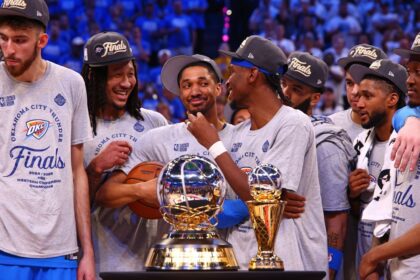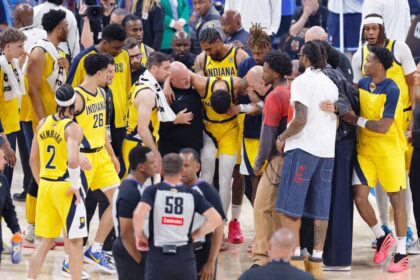

In the fast-paced world of the NBA, team rosters are constantly changing. Through trades, free agent signings, and contract extensions, hundreds of moves are made each year. Some turn out to be great successes, others fail miserably, and most fall somewhere in between. As the 2025-26 regular season draws to a close, we take a look back at the most notable moves of the past year and focus on the extremes: ranking the 10 best and worst decisions made since the conclusion of the 2025 NBA Finals. These decisions are judged based on the results, not the process, and with the perspective that time provides. Some of the best plays could have been criticized at the time, while some of the worst could have made sense, only for the results to be contrary to expectations.
Ranking of the 10 best movements
10. New York Knicks: Trade for Jose Alvarado
From the moment he arrived, through a trade at the close of the market, Alvarado fit perfectly into the Knicks, exceeding expectations in his first 19 games. The team has shown a net rating of +11.8 with Alvarado on the court, the best mark on the team. The impact in the playoffs could be significant. Knicks coach Mike Brown still has to define his rotation, which already has a large number of players at the point guard position, even before the return of Miles McBride after an injury. Alvarado could see his playing time reduced, but he will surely play an important role in the postseason, providing depth to the team, and the Madison Square Garden fans will surely adore him.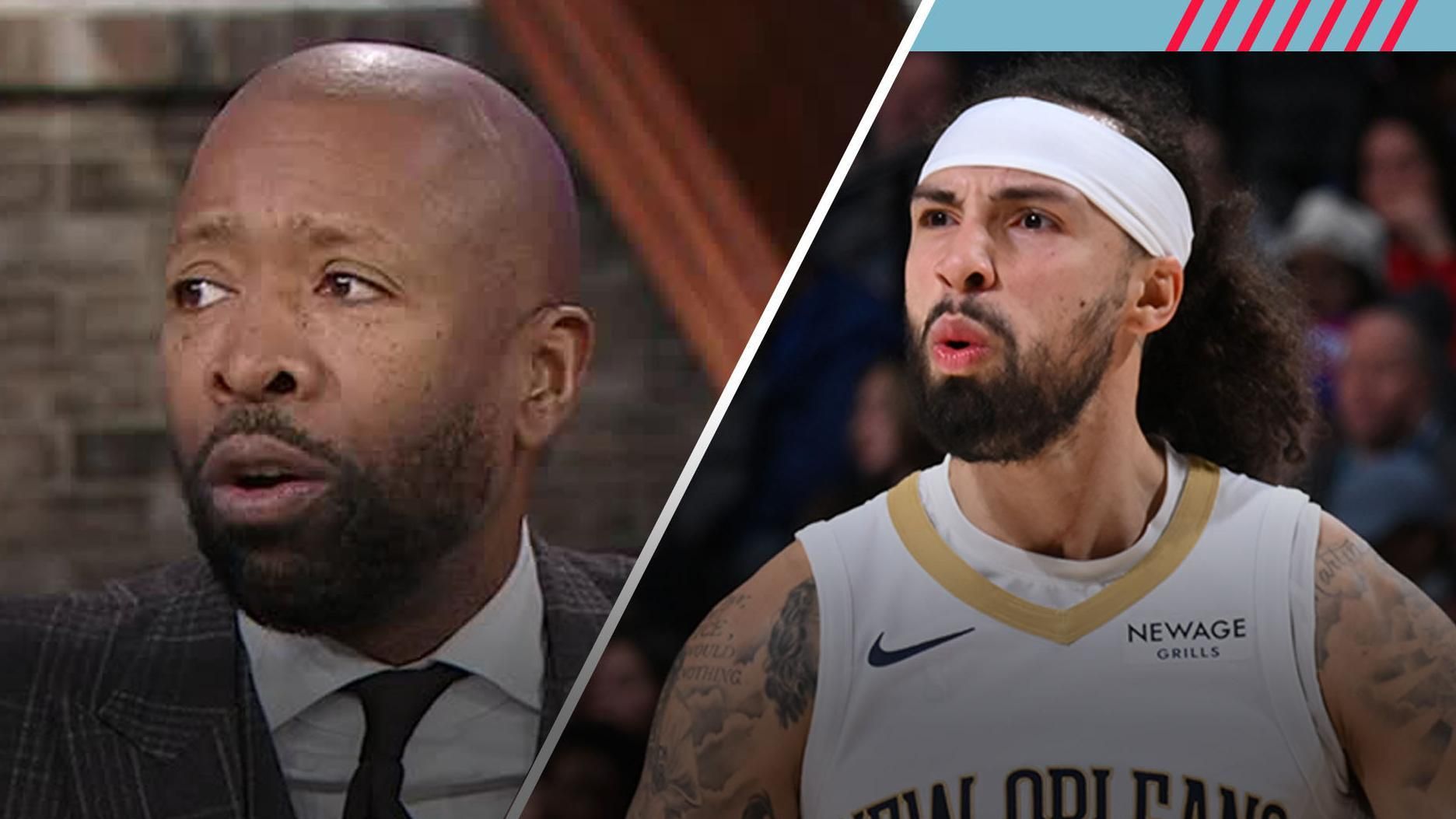
9. Golden State Warriors: Signing of De’Anthony Melton
Melton has been an advanced stats darling for most of his career, but his 2024-25 season lasted only six games due to a torn ACL in his left knee. The Warriors used his salary in a mid-season trade, then re-signed him in the offseason for $3.1 million, with a player option for $3.5 million for 2026-27. Since his return to the court on December 4, Melton has quietly been one of the best role players in the league. When he’s on the court, Golden State has a net rating of +6.0, the second-best mark on the team, only surpassed by Butler. The Warriors’ playoff hopes depend on Stephen Curry, who hasn’t played since January 30 due to a persistent knee problem. If Curry can return in time for the postseason, Melton will serve as the best two-way backcourt partner for the two-time MVP.8. San Antonio Spurs: Signing of Luke Kornet
Kornet is the definition of a solid backup center. The 2024 NBA champion signed a four-year, $40.7 million contract in free agency, and has integrated seamlessly behind Victor Wembanyama. The difference between winning a title and losing in an early playoff round can depend on whether a team can maintain its pace when its best player rests, or if it collapses completely. Kornet offers the Spurs stability when Wembanyama is on the bench. In 1,078 minutes with Kornet on the court and without Wembanyama, the Spurs have a net rating of +4.3.7. Denver Nuggets: Signing of Tim Hardaway Jr.
Only 14 qualified players this season have made at least 2.5 three-pointers per game with 40% accuracy or higher. Hardaway, signed to a one-year contract for $3.6 million last summer, has been fundamental to Denver’s depth, averaging 13.9 points per game with 41% accuracy from distance. The Nuggets were 28th in three-pointers made last season, but this year they have climbed to 11th, largely thanks to Hardaway’s influence. He should play an important role in Denver’s attempt to return to the Finals this spring, and could even close out playoff games if the team’s injury problems continue, or if Cameron Johnson’s impact remains limited.6. Phoenix Suns: Trade for Dillon Brooks
Brooks was included in the Rockets’ trade for Kevin Durant primarily to match salaries. However, the veteran forward has had a much greater impact in Phoenix, where he has led the transformation of the Suns from a lottery team in 2024-25 to a playoff contender in 2025-26. Brooks has averaged 20.9 points per game, the best mark of his career. In addition to his performance on the court, he has also influenced the culture of the Suns. Brooks hasn’t played since February 21 due to a hand fracture, although his projected absence of four to six weeks could allow him to return in time for the postseason. The Suns need a healthy Brooks to make an impact in the playoffs, as he ranks second on the team in points and minutes.5. Miami Heat: Trade for Norman Powell
Only two 2026 All-Stars changed teams last summer: Durant, from Phoenix to Houston; and Powell, from the Clippers to the Heat. The price to add an All-Star was Kyle Anderson and Kevin Love, two veterans who no longer fit on this Heat team.
Powell is an unrestricted free agent after this season, and it’s unclear if Miami will re-sign him, especially with Tyler Herro eligible for an extension at the same time. But even if he only plays in Miami for one season, this move was worth it.Powell’s playoff impact is more uncertain than his All-Star status would suggest. Due to injuries to both players, Powell and Herro have shared the court for only 207 minutes this season, and the Heat has been outscored in that time. Still, with 22.3 points per game, Powell should play a key role in the Heat’s quest for another playoff run.
4. Brooklyn Nets: Trade for Michael Porter Jr.
Brooklyn traded Cameron Johnson to Denver for Porter and a 2032 first-round pick, and Porter has significantly outperformed Johnson this season. Brooklyn got the better player in the trade and a future unprotected pick to add to their vast reserve. Despite a massive increase in usage rate, Porter’s efficiency hasn’t decreased much. All those extra opportunities have boosted his scoring to a career-high 24.2 points per game, 5.2 points above his previous best. None, as the Nets have their sights set on the lottery. But Brooklyn aims to compete in 2026-27, with no control over their own draft pick next year, so Porter could be much more relevant then.3. Atlanta Hawks: Acquisition of Nickeil Alexander-Walker
Alexander-Walker was not meant to be a starter this season. With the Timberwolves deciding to pay Julius Randle and Naz Reid instead of their backup point guard, Atlanta stepped in, getting Alexander-Walker for four years and $60.6 million. However, he was shaping up to be a role player who would back up Trae Young and Dyson Daniels. Instead, with Young injured and then traded, Alexander-Walker has jumped into the spotlight and has been Atlanta’s second-best player. The former defensive standout is now recording career highs in almost every offensive statistic: His 20.3 points per game are almost double his previous best (11.0), and he is tenth among qualified players with 3.1 three-pointers per game. The Hawks are the hottest team in the East, with a 12-1 record in their last 13 games. That streak has propelled them from ninth to a tie for sixth place in the East, and Alexander-Walker and Jalen Johnson are proving they can compete in a fairly open playoff field.2. Oklahoma City Thunder: Ajay Mitchell Extension and Trade for Jared McCain
One of the only weaknesses of the defending champions was their playmaking options behind Shai Gilgeous-Alexander, as the team often struggled to score without their MVP. But a couple of smart moves mean the Thunder now have two young and cheap scorers under contract for three years.First it was Mitchell, a second-round pick in 2024 who signed a three-year, $8.7 million extension last summer. Mitchell, who has scored 14.2 points per game with great efficiency, that deal looks like a masterstroke for Thunder general manager Sam Presti. Mitchell is being paid $3 million this year, and is on the books for just $2.85 million next year and another $2.85 million in 2027-28. (That last year is technically a team option, but the Thunder are guaranteed to pick up that option or use it as leverage in another extension negotiation).
In the three seasons, Mitchell’s salary represents less than 2% of the salary cap. Then came McCain, whom the Thunder acquired for a late 2026 first-round pick and three second-round picks. McCain is still on his rookie contract, and in 19 games with his new team, he has scored 22.9 points per 36 minutes while shooting 44% from three-pointers. The Thunder’s coach, Mark Daigneault, has so many perimeter options that Mitchell and McCain could lose playing time in the postseason. After all, Mitchell ranked 12th in Oklahoma City in playoff minutes last year, and the 11 players who preceded him are still on the team. But Mitchell recently entered the starting rotation, and McCain has led the Thunder in scoring in three games since the All-Star break. Both young point guards have above-average usage rates, suggesting they have earned Daigneault’s trust.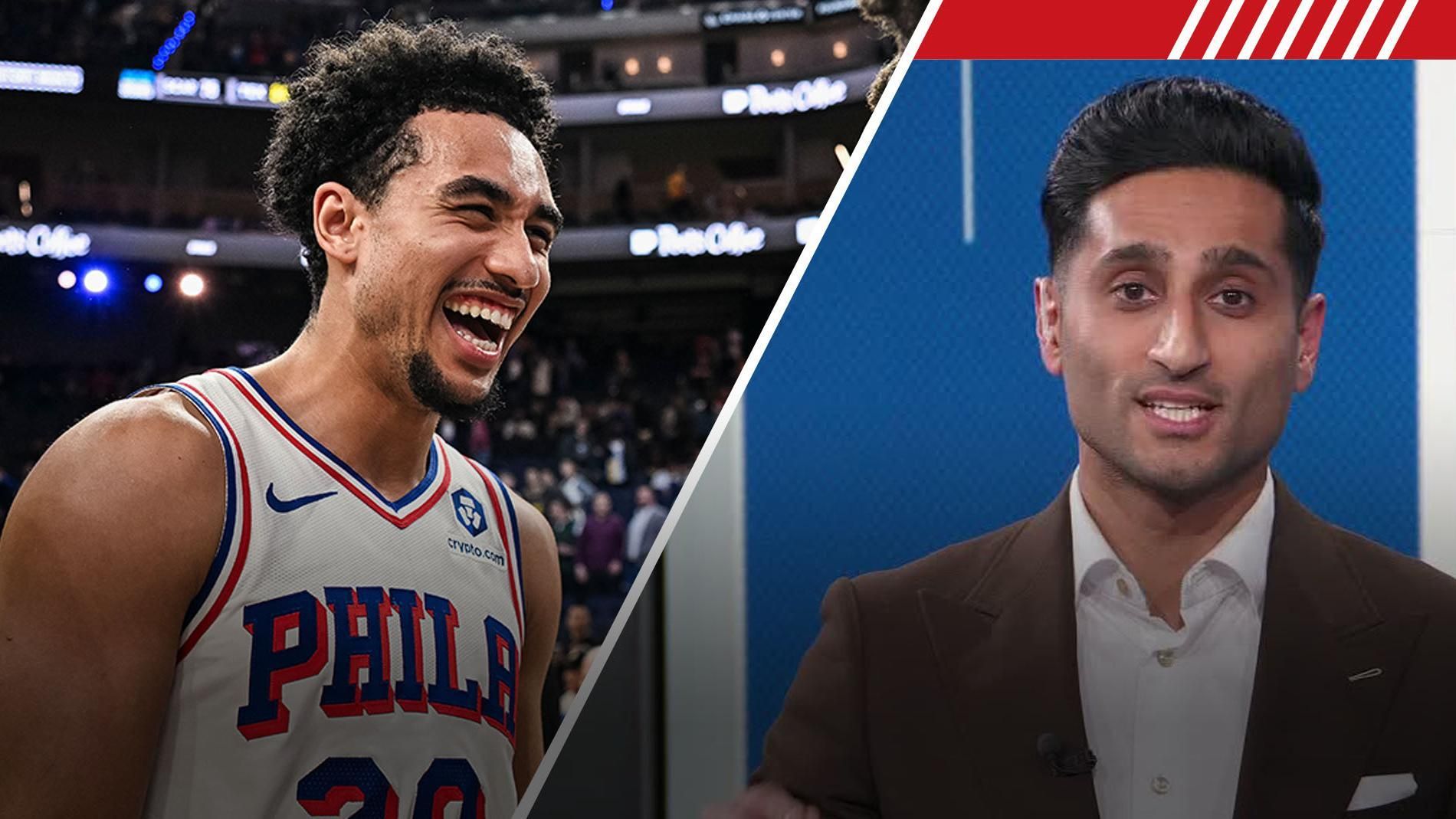
1. Charlotte Hornets: Kon Knueppel Draft Selection
The first two picks of the 2025 NBA Draft didn’t generate much excitement: Cooper Flagg and Dylan Harper were the two consensus top prospects in the class, and the Mavericks and Spurs complied by selecting them first and second, respectively. Decisions became more difficult from there, with a large group of players competing to be selected in the following selections. Leading that group was Rutgers forward Ace Bailey, who was ranked third on our ESPN Big Board, although with questions surrounding his representation. But Philadelphia bypassed Bailey and other candidates with the number 3 pick, selecting instead VJ Edgecombe, who looks like a future All-Star. Next up, Charlotte, who hit an even bigger home run with the number 4 pick, Kon Knueppel. Suffice it to say that was the right call: Knueppel is the Rookie of the Year favorite, having already broken the rookie record for three-pointers, and is already one of the most efficient scorers in the NBA. Charlotte seems headed for the play-in round, so it’s unlikely, even with the team’s good play since the new year, that Knueppel will go far this spring. But from a long-term perspective, the Hornets made the best and most important decision for any team in the last year. Knueppel is a cornerstone of what could be the franchise’s most successful period since it was reborn as an expansion team in 2004.Ranking of the 10 worst moves
10. Cleveland Cavaliers: Trade for Lonzo Ball
The Isaac Okoro for Ball trade by Cleveland in the offseason made a lot of sense at the time. Okoro is a solid defender, but he could never stay in Cleveland’s playoff rotation due to his offensive problems, while Ball was shaping up to be a connector with greater potential for Cleveland’s star-studded lineup.
But Ball’s offense fell apart in Cleveland, where he averaged 4.6 points per game on 30% shooting, with the worst true shooting percentage in the league (minimum 700 minutes). Cleveland used two future second-round picks to get rid of Ball’s contract as a money-saving measure at the deadline, and Utah waived him thereafter. He is now a free agent.