
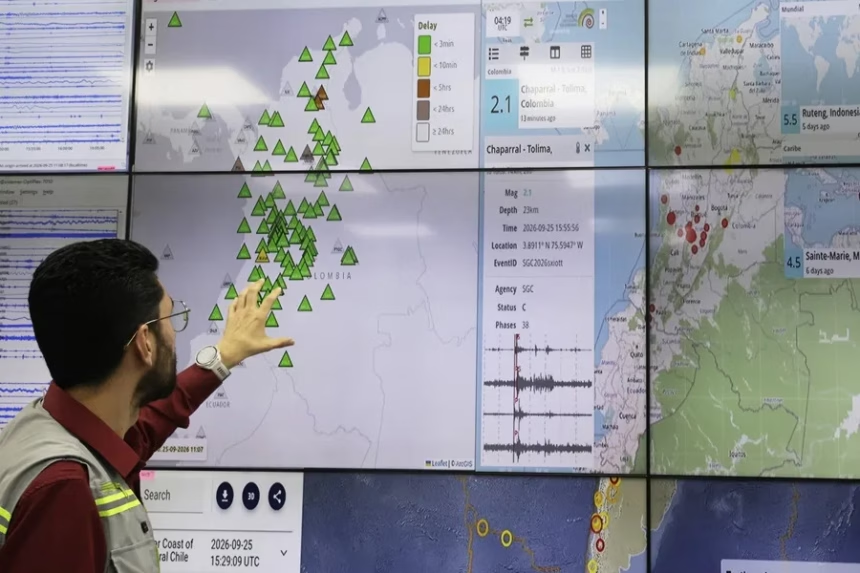
Seismic activity in Colombia: Authorities explain the phenomenon after the 7.4 magnitude earthquake
Following the strong 7.4 magnitude earthquake that shook Colombia on August 10th, the Colombian Geological Service (SGC) has issued a report on the country’s geological behavior. According to Freddy Tovar, coordinator of the National Seismological Network, aftershocks following an event of this magnitude are a natural process that can last for days, weeks, months, and even years.
The expert detailed that the national territory is currently experiencing a peak in seismic activity outside the usual average. This phenomenon is a direct consequence of the readjustment of stresses in the Earth’s crust following the release of a large amount of energy during the main event on August 10.
The Chaparral case and activity in Chocó
Beyond direct aftershocks, the SGC maintains constant observation of two critical points: a seismic swarm detected in the Chocó department and a sequence of seismic movements in Chaparral, Tolima. In the latter area, earthquakes of up to 4.5 in magnitude have been reported.
The preliminary hypothesis suggests that the August earthquake may have altered geological stresses in several regions of the country, which would explain the unusual activity in Tolima. We continue to monitor to confirm if there is a direct connection between both events.
Freddy Tovar, coordinator of the National Seismological Network.
A determining factor in the perception of these earthquakes by the population is the shallow depth at which they occur. By occurring at less than 30 kilometers, the energy released reaches the surface with greater intensity, which makes them highly perceptible to citizens.
Colombia: A territory of high seismic activity
Colombia’s geographical location, marked by the interaction of the Nazca, South American, and Caribbean plates, in addition to its complex network of geological faults, makes it a country with a high seismic threat. Given this reality, Alofoke Deportes highlights the key points for risk management:
- Unpredictability: Currently, there is no technology capable of predicting earthquakes. Prevention is the most effective tool.
- Culture of prevention: It is essential to secure heavy objects in the home (pictures, shelves), establish family evacuation plans, and define meeting points.
- Building regulations: The records of the National Seismological Network are vital for updating hazard maps and strengthening earthquake-resistant building standards.
Although the country’s history records events of great magnitude, authorities emphasize that constant monitoring and citizen preparedness are the pillars for mitigating the impacts of these inevitable natural phenomena.