

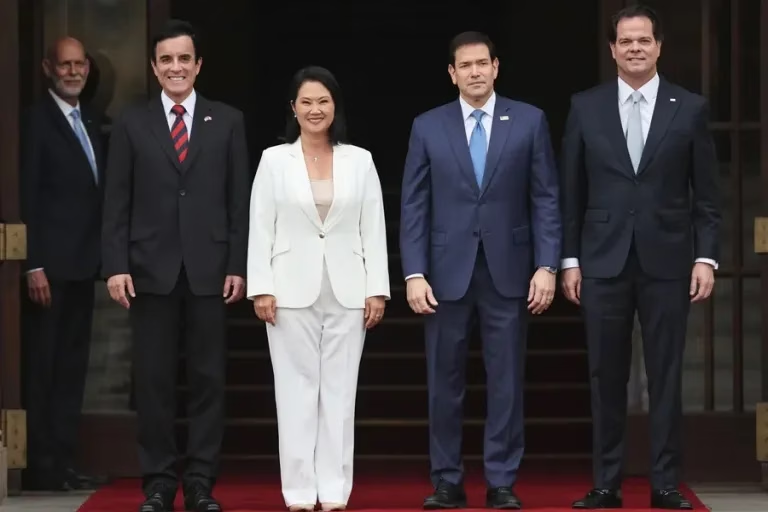
Peru joins the Shield of the Americas coalition to combat organized crime
In a key strategic move for regional security, the President of Peru, Keiko Fujimori, made official this Thursday her nation’s incorporation into the Shield of the Americas. This coalition, promoted by the Donald Trump administration, has as its central objective to dismantle the structures of transnational organized crime that affect the stability of the continent.
The announcement came after a high-level meeting at the Government Palace in Lima with United States Secretary of State Marco Rubio. During the meeting, both leaders agreed on the urgency of strengthening international cooperation in the face of growing citizen insecurity.
We, who have had to face terrorism, know the need to join efforts with other countries to guarantee the tranquility of our people.
Keiko Fujimori, President of Peru
Strengthening regional intelligence and security
The Peruvian president highlighted that being part of this bloc will allow the country to access intelligence information more quickly, facilitating a more forceful response against criminal gangs. Fujimori emphasized that the Government will act within the constitutional framework to safeguard national sovereignty against these threats.
For his part, Secretary Marco Rubio described current criminal groups as true terrorist networks with economic ramifications that seek to control the hemisphere. Rubio reiterated the United States’ commitment to collaborate closely with the Fujimori administration to counter this problem.
Key points of the alliance
- Operational cooperation: The Shield of the Americas already brings together 15 countries committed to hemispheric security.
- Direct threat: The United States recognizes that the financial and technological power of these criminal organizations represents a challenge even for local armed forces.
- Allied leadership: Rubio underscored the importance of having regional partners, highlighting that, although the United States has the capacity for action, the priority is collaboration with sovereign nations.
In addition to the security agenda, the meeting served to address bilateral cooperation issues such as disaster management, specifically the impact of the El Niño phenomenon, as well as the promotion of investments and the strengthening of trade exchange.
Marco Rubio’s visit to Lima marked the conclusion of his South American tour, which included strategic stops in Ecuador and Colombia, consolidating Washington’s new security strategy in the region.


