
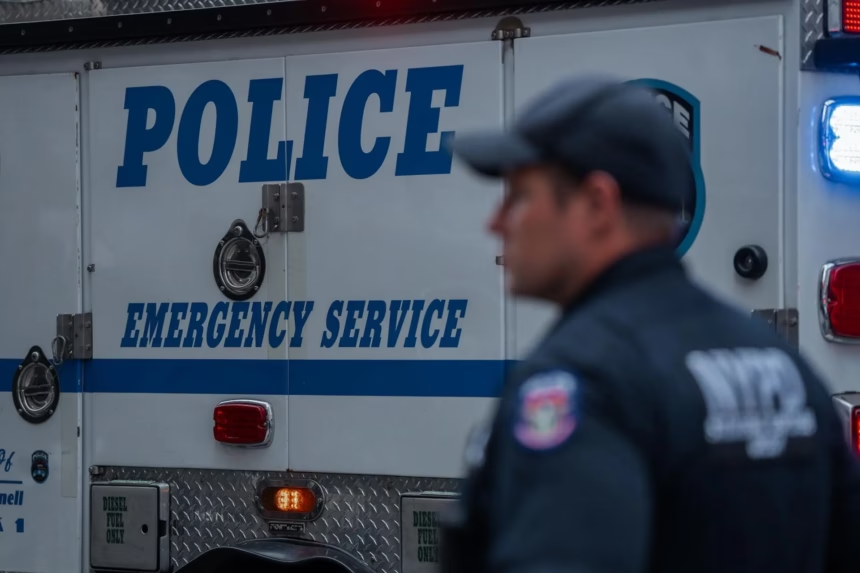
NYPD urges reporting of sexual assaults: A call for justice with no expiration date
The New York Police Department (NYPD) has issued a firm call to victims of sexual assault to file formal complaints with the authorities, regardless of how much time has passed since the events occurred. This message takes on special relevance in light of the recent increase in reports of this type of crime and amidst an intense debate over necessary reforms to state legislation.
Police Commissioner Jessica Tisch reaffirmed the institution’s commitment to the thorough investigation of these allegations. The official stressed that time should not be an impediment to seeking justice, highlighting cases where advances in forensic technology have allowed for the resolution of crimes that occurred decades ago, such as a rape recorded in Brooklyn in 1995 that culminated in an arrest more than 30 years later thanks to DNA evidence.
Statistics and the impact of the legal change
During the first nine months of 2026, the NYPD recorded 1,594 rape complaints, a 3.7% increase compared to the 1,537 reported in the same period of the previous year. It is important to note that, of the total of these cases, 398 correspond to assaults that occurred in past years, which represents approximately 25% of the reports.
- The NYPD emphasizes that the expansion of the legal definition of rape, in effect since September 2024 under the “Rape is Rape” initiative, has influenced current statistics.
- Authorities urge victims to use reporting channels, ensuring access to support services and guidance throughout the process.
The Cornell case and the debate on consent
The debate over the legal protection of victims has intensified following accusations against members of the Chi Phi fraternity at Cornell University. A former student, identified as Jane Doe, claims to have been sexually assaulted in October 2024 while in a state that prevented her from giving consent due to substance consumption.
The university has initiated an independent review of its prevention and response protocols, led by former U.S. Deputy Attorney General Sally Yates, while State Attorney General Letitia James examines the case after being appointed by Governor Kathy Hochul.
Ongoing legislative reforms
In response to the legal difficulties presented by voluntary intoxication when proving lack of consent, legislators such as Senator Nathalia Fernández and Assemblyman Jeffrey Dinowitz are pushing for new bills. Initiative S10632, which has already been approved by the state Senate, seeks to consider the victim’s temporary incapacity and the perpetrator’s knowledge of this state as key elements in determining the absence of consent.
These proposals aim to close legal loopholes, although authorities clarify that each case must be evaluated individually. The central objective remains to provide a clear path for victims to raise their voices and seek reparation, regardless of the legal complexity surrounding the reported events.