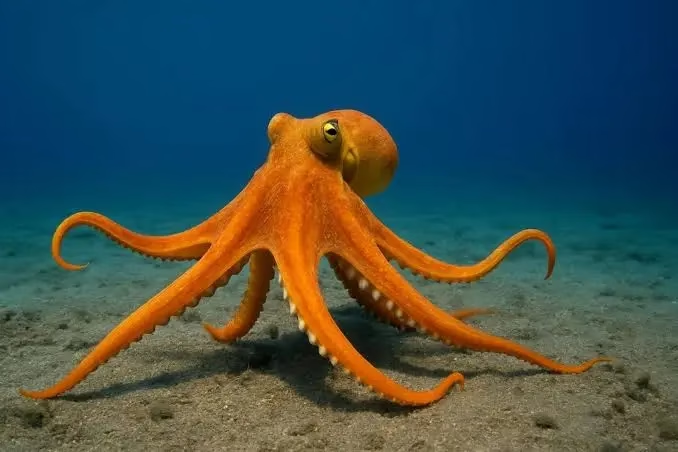
International Octopus Day: A tribute to the masters of marine survival
Every October 8th, the world celebrates International Octopus Day, a date established by the TONMO Forum (The Octopus News Magazine Online) to recognize one of the most fascinating and long-lived creatures that inhabit our oceans. This anniversary seeks to highlight the biological importance and uniqueness of these invertebrates that have managed to adapt to marine environments for millions of years.
Amazing characteristics of cephalopods
Octopuses, scientifically known as octopods or cephalopods, are animals lacking a protective shell that stand out for their highly complex anatomy. Their amorphous body extends through eight tentacles equipped with suckers, allowing them exceptional mobility and gripping capacity.
One of the most intriguing aspects of these mollusks is their circulatory and nervous system. They possess three hearts: one dedicated exclusively to pumping blood to the vital organs and two others in charge of carrying it to their limbs. Furthermore, their intelligence is remarkable, as they have more than 500 million neurons distributed between their brain and their tentacles, which gives them superior cognitive abilities.
Fun facts about octopuses
- Historical longevity: They are estimated to be one of the oldest species on the planet, with fossil records dating back approximately 296 million years.
- Marine diversity: There are nearly 300 types of octopuses distributed in seas around the world, each with unique adaptations.
- Reproductive capacity: Females of this species possess an amazing capacity, being able to lay up to 100,000 eggs in a single reproductive cycle.
- Unique physiology: They have a powerful beak and are capable of performing respiration processes through their tentacles.
- Natural defenses: Some species possess venoms that are lethal, functioning as an effective defense mechanism against predators.
The fascination generated by octopuses has transcended biology, becoming icons of popular culture. Their unique appearance and camouflage capabilities have inspired countless works of fiction, literature, and cinema, sparking both admiration and curiosity in humans.
Beyond their exotic blue-colored blood, octopuses represent a fundamental pillar of marine biodiversity. On this International Octopus Day, we remember the importance of preserving the oceanic ecosystems that allow for the survival of these extraordinary creatures that, for centuries, have captivated our imagination.