Ciudad Juan Bosch: A model of housing growth and integral development
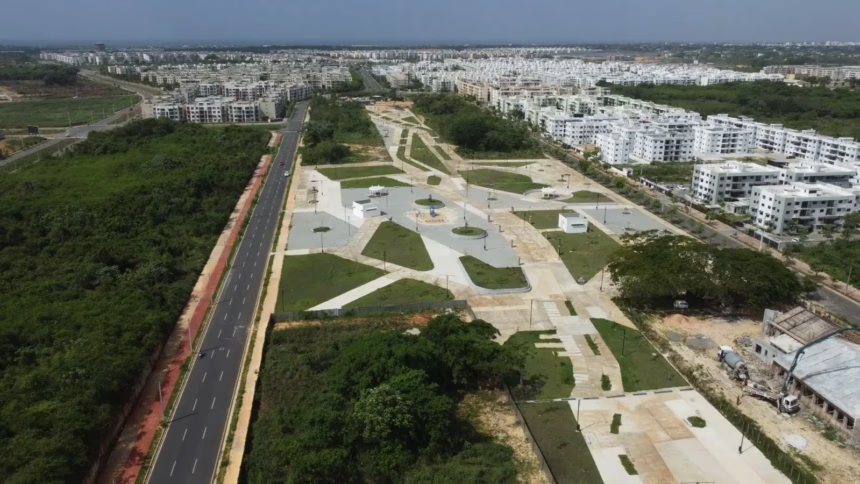
The Vice Minister of Government Coordination and Monitoring, Luis Gregorio Madera Sued, highlighted the positive impact and transformation that Ciudad Juan Bosch has experienced over the last six years. The official emphasized that the project has managed to evolve from being a basic housing complex into a community with robust infrastructure, essential services, and quality recreational spaces for its residents.
During his appearance on the program Tribuna de la Verdad, Madera Sued supported the data presented by Camel Curi Lora, executive director of the Trust for the Construction of Low-Cost Housing (VBC-RD), emphasizing that financial management has been key to ensuring the sustainability and continuous development of the project.
Figures that demonstrate progress
- Housing expansion: The number of homes increased from 4,600 to approximately 16,800 units in the current period.
- Land appreciation: The price per square meter has climbed from RD$1,500 to over RD$10,000, reflecting the high interest from private developers.
- Financial cleanup: The current administration managed to settle an inherited debt of over RD$4 billion, allowing the trust to be self-sufficient today.
The growth of Ciudad Juan Bosch is not measured solely by the number of roofs built, but by the quality of life guaranteed through investment in basic services, sanitation, and recreational spaces for families.
Luis Gregorio Madera Sued, Vice Minister of Governmental Coordination and Monitoring
Infrastructure at the service of the community
The reinvestment of resources generated by the commercialization of land, which amounts to approximately RD$3.6 billion, has allowed for the construction of vital works for recreation and community living. Among the notable infrastructures are the La Gaviota Amphitheater, the Sports Complex, Constitution Plaza, and various playgrounds.
Likewise, the project is advancing in the delivery of critical works for the well-being of its inhabitants, such as the new local funeral home, wastewater treatment plants (PETAR East and No. 2), and a water reservoir with a capacity of 1.6 million gallons. These interventions ensure that the area’s demographic growth is supported by a service capacity in line with the current and future needs of the community.
With this model, Ciudad Juan Bosch consolidates itself as a benchmark for urban planning in the Dominican Republic, where the efficient management of its own resources allows for constant development without depending on external financing or extraordinary contributions from the central government.