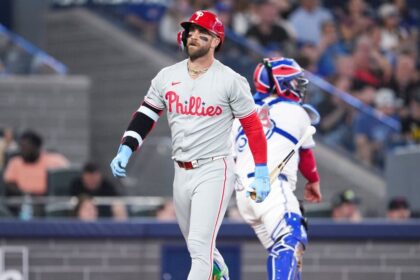

Is MLB on its way to disaster?
On December 1, 2026, at 11:59 p.m. ET, the league’s current labor agreement expires. With the deadline approaching, uncertainty grows in the baseball world. While team owners and players seek a new collective agreement, significant obstacles and key disagreements are looming. Could there be a strike in 2027? Will a salary cap be implemented? These are some of the most important questions hanging over the sport. The possibility of an agreement before the December deadline is real, although not the most likely. If the past serves as a guide, it is more likely that the league will impose a lockout on the players on December 1, 2026. This lockout would halt free agency and trades, as happened in 2021, and would establish an even more important deadline: early or mid-March 2027, the deadline for potentially losing regular season games. What happens between now and a year from now could be crucial to avoid the worst-case scenario: a prolonged lockout. The biggest threat of an extensive work stoppage, the last one in baseball was in 1994-95, would arise if the owners insist on a review of the game’s economic system to include a salary cap. The players’ leadership has indicated that they will not even consider the idea of a capped system. At the same time, the union and Executive Director Tony Clark are in the midst of a federal investigation into the MLBPA’s finances, which began around May 2025. Any attempt at prosecution by the government could have a demonstrable effect on the union’s leadership and, potentially, on their positions in the negotiation.What is the negotiation schedule?
Although the parties held a preliminary meeting this fall and may have more informal sessions in the coming months, negotiations usually intensify during spring training. At that point, the parties will begin to make their priorities clear and a better idea of the central issues of the negotiations will be had. The most relevant will be the league’s firmness in its desire for a salary cap. Initial offers are important for outlining the general lines of future negotiations. However, the most important meetings will take place near the deadline of December 1, 2026, with November being the most crucial month for establishing each party’s position before the expected lockout.Who are the key names in the negotiations?
For the players, Deputy CEO Bruce Meyer is the lead negotiator, and Clark has final authority. There is a 38-member player executive board, composed of eight elected members from high-ranking subcommittees (Cy Young winners, along with veterans and a representative from each team. For the league, Deputy Commissioner Dan Halem is the lead negotiator, and Commissioner Rob Manfred has final authority. The league’s labor policy committee, led by Colorado Rockies owner Dick Monfort, represents the 30 owners.How will a possible lockout impact free agency?
Executives, league officials, and agents agree on one thing: they are unsure how things will develop in terms of spending. There are no grand predictions on the subject of the offseason, and the few anticipated signings haven’t foreshadowed much either. That being said, two narratives seem to be prevalent. It’s business as usual for the annual World Series contenders and we can now include the Toronto Blue Jays in that category. Other teams are waiting for greater certainty, potentially in the form of a new economic system, before spending seriously again. That might not happen until after the next CBA is signed, meaning the end of the CBA will have some say in the offseason, even if it’s a small impact.Chicago Cubs president Jed Hoyer admitted at the end of last season that many of his players’ contracts were designed to expire after 2026, in other words, when the CBA expires, in order to have relatively clean accounts for 2027 and beyond. Several agents and teams believe that the certainty of costs in the form of a new CBA, and, if MLB gets its way, a salary cap, will return spending to higher levels simply because teams will understand their annual costs more intimately after a new agreement.
Contents
Historically we haven’t seen that, because teams always want to be the best. The conclusion is that teams understand they don’t have to pay players when there are strikes [or lockouts].
Scott Boras