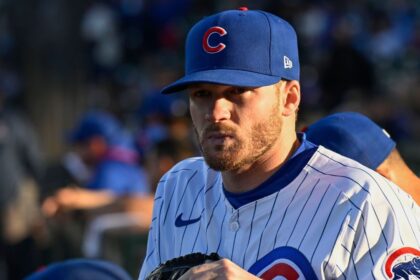

Is MLB on its way to disaster?
On December 1, 2026, at 11:59 p.m. ET, the league’s current labor agreement expires. Negotiations between owners and players for a new collective bargaining agreement are approaching, and with them, major challenges and key areas of disagreement. Could we witness a labor disruption in 2027? Will a salary cap be implemented? We analyze the most important questions looming over the sport.There is always a possibility that both parties will reach an agreement before the December deadline. However, if the past is any guide, the league is likely to impose a lockout on the players on December 1, 2026. A lockout would paralyze free agency and trades, as happened in 2021, and would set an even more crucial informal deadline: early or mid-March 2027, the deadline for the possible loss of regular season games.
What happens from here to a year from now could be decisive in avoiding the worst-case scenario: that not only are players shut out, but the parties do not find common ground. The biggest threat of a prolonged work stoppage — the last one in baseball was in 1994-95 — would arise if the owners insist on a reform of the game’s economic system that includes a salary cap. The players’ union has indicated that it will not even consider the idea of a system with a salary limit. At the same time, the union and Executive Director Tony Clark are in the midst of a federal investigation into the finances of the MLBPA, initiated around May 2025. Any attempt at prosecution by the government could have a demonstrable effect on the direction of the union and, potentially, on its positions in negotiations. Regarding the negotiation calendar, while the parties held a preliminary meeting this fall and may have more informal sessions in the coming months, negotiations usually intensify during spring training. It will be then when the parties begin to make their priorities clear, which will allow a better understanding of the issues that are expected to be central to the negotiations. Initial offers are important for outlining the general lines of future negotiations. However, the most important meetings will take place near the deadline of December 1, 2026, with November being the most vital month for establishing the parties’ positions before the planned lockout. On the players’ side, Deputy Executive Director Bruce Meyer is the lead negotiator, and Clark is the ultimate authority. There is a 38-member player executive board, composed of eight elected members from high-ranking subcommittees, along with a representative from each team. On behalf of the league, Deputy Commissioner Dan Halem is the lead negotiator, and Commissioner Rob Manfred is the highest authority. The league’s labor policy committee represents the 30 owners. Executives, league officials, and agents agree on one thing at this point in the offseason: they simply aren’t sure how things will play out in terms of spending. There are no grand predictions on the topic of the offseason, and the few initial signings haven’t foreshadowed much either. However, there seem to be two emerging narratives. It’s business as usual for the annual World Series hopefuls. Other organizations are waiting for more certainty, potentially in the form of a new economic system, before spending seriously again. That might not happen until after the next collective bargaining agreement is signed, meaning the looming end of the collective bargaining agreement will have some say in the offseason, even if it’s a small impact. The Cubs’ president admitted at the end of last season that many of their players’ contracts were designed to expire after 2026, that is, when the collective bargaining agreement expires, in order to have relatively clean accounts for 2027 and beyond. Several agents and teams believe that the certainty of costs in the form of a new collective bargaining agreement —and, if MLB gets its way, an unprecedented salary cap— will cause spending to return to higher levels, simply because teams will understand their annual costs more intimately after a new agreement.Meanwhile, in 2026 a postseason and a World Series will be played. And, according to internal sources, it’s not just the big markets that want to have a playoff race before things change. So look for free agents to do well on the market, even with the labor concerns looming this winter. Yes, some might accept one-year deals, hoping that the next economic system will benefit them when they return to the market, but there will surely be a lot of momentum.
There seems to be little doubt about it. Economic disparity has been a hot topic for decades. The collapse of the regional sports networks (RSN) television model, which caused several teams to lose local media revenue, has brought this issue to the forefront in recent years. And the excessive spending of teams like the Dodgers has exacerbated the anger of owners throughout the industry, who continue to claim they don’t have the revenue to keep up. Even the Yankees owner recently downplayed his franchise’s profit margins and spoke in favor of a salary cap. If Steinbrenner, who presides over one of the most powerful sports franchises in the world, seems open to it, imagine how strongly his counterparts in markets like Pittsburgh, Milwaukee, and Tampa feel. But the prevalence of free markets has been a fundamental issue throughout the existence of the MLB Players Association. Remember that, and you’ll begin to understand how ugly things could get. A central theme for the union during the last round of conversations was how to get players paid earlier, a countermeasure to the continued disappearance of the middle class from free agency. As a result of the current collective bargaining agreement, minimum salaries went up, the prospect promotion incentive was introduced, and pre-arbitration bonus pools were established. Expect more conversations around that general topic. In all likelihood, MLB will once again argue that greater compensation for younger players should be accompanied by a lower luxury tax threshold and will once again try to pair it with a salary cap. The MLBPA will likely say that that gets too close to a traditional salary cap system, and so we will continue. So, yes, economics will dominate, particularly with the changes in the revenue sharing model desired by both sides and potentially providing a path to an agreement. But two other issues will be at the forefront. One is how MLB implements the rule changes. In the last basic agreement, the league secured full autonomy over the implementation of new rules. The union wants more control. And then there’s the issue of the international draft. The league wants one. During the last round of conversations, the union considered the possibility. After a new collective bargaining agreement was ratified, both sides gave themselves an additional four months to agree on a trade: The league gets an international draft, the union eliminates the qualifying offer. They were unable to agree before the deadline, but this will come up again.Historically we haven’t seen that, because teams always want to be the best. The conclusion is that teams understand they don’t have to pay players when there are strikes [or lockouts].
Scott Boras