John Cena: From the Ring to the Rhythms of Hip-Hop
Before being recognized as one of the greatest wrestlers of all time, John Cena was at a crucial moment in his career. In the mid-2000s, he struggled to connect with the audience, despite being considered the future of WWE. In an attempt to stand out, Cena found his voice in freestyle, during a European tour, captivating his colleagues and giving rise to “The Doctor of Thuganomics”.
This new persona revitalized his career, taking him to stardom. Cena’s freestyle wasn’t just a gimmick, but an extension of his passion for rap. “He was a kid who liked to rap, and then he became a wrestler,” commented his friend and rapper Esoteric.
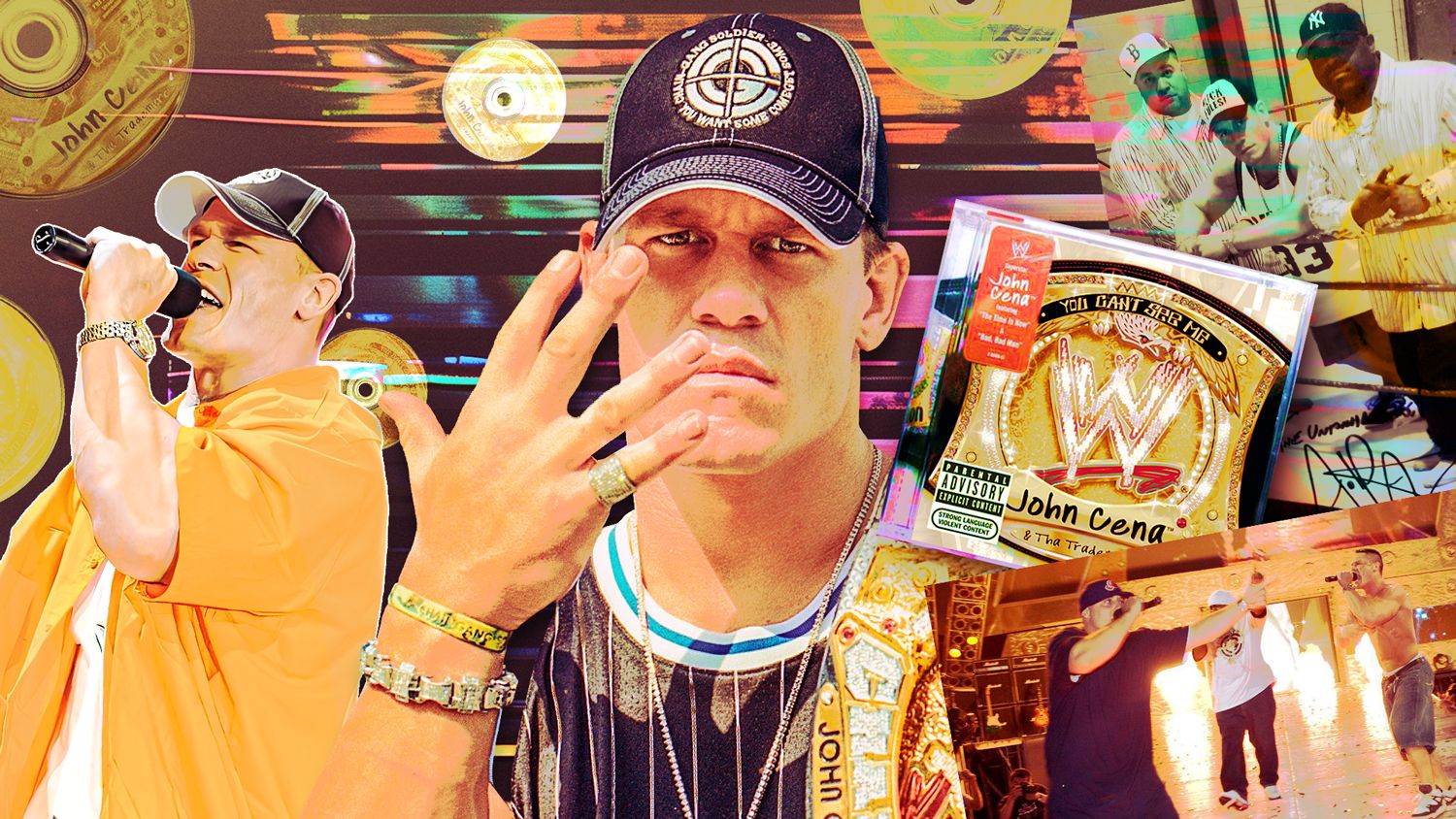
His freestyles evolved into the album “You Can’t See Me”, released on May 10, 2005. This work fused Cena’s ingenious rhymes with underground production. The album debuted at number 15 on the Billboard 200 and included his entrance theme, “The Time Is Now”, which he still uses 20 years later. “His intentions were pure, and when he had the opportunity to merge both passions, he took it,” Ryan stated.
John is a hip-hop purist; he perfectly masters Gang Starr, Hieroglyphics, Black Moon, EPMD, Wu [Tang Clan], all the good stuff.
Esoteric
For his album, Cena committed to collaborating with underground hip-hop artists he admired. This led him to partner with lesser-known artists, but with a cult following.
“There were a lot of mediocre artists in the rap world when his album came out, and he probably could have worked with any of them,” Ryan said. “Instead, he chose Bumpy Knuckles, one of the most legitimate MCs of all time. That should tell you everything you need to know.”
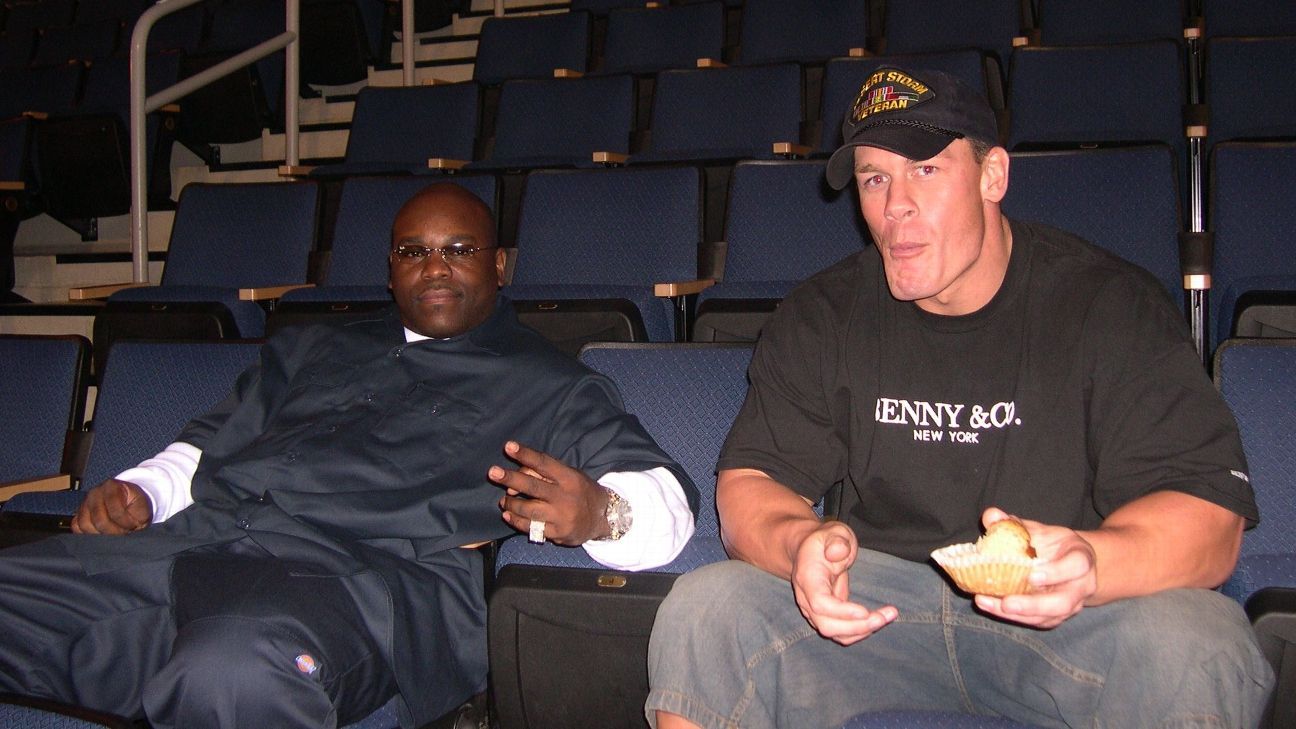
Bumpy Knuckles, whose real name is James Campbell, is a respected figure in hip-hop, with a decades-long career and collaborations with icons like KRS-One and Queen Latifah. Campbell met Cena in the dressing room before the wrestler appeared on New York’s Hot 97 radio station. Campbell was pleasantly surprised by Cena’s rhythm, recognizing his potential. After exchanging numbers, they built a relationship that extended to the creation of Cena’s album.
Cena had a particular motivation for making an album. At the time, WWE was using generic rap music that Cena didn’t consider representative of the music he liked. “Maybe I can make better music than the generic rap music they’re making for me in Connecticut [WWE headquarters],” Cena said in a 2024 interview. “At the time, WWE was a rock ‘n’ roll company. They didn’t have a deep understanding of hip-hop. I would listen to my own music and remember thinking, ‘I can do better than this.'”
Thus, the seeds of “You Can’t See Me” were sown.
In the early 2000s, producer Jake One was looking for his opportunity in music. Although he had worked with artists like 50 Cent and De La Soul, his greatest success came thanks to a CD of beats that he gave to a wrestler for his debut rap album. “I had no idea who John Cena was,” said Jake. The Seattle producer received $30,000 for three beats. Unbeknownst to him, one of the most recognized themes in the history of professional wrestling came from that CD. “He paid me with a personal check, and the deal with WWE is that you are not entitled to royalties,” said Dutton. On March 17, 2005, Cena premiered his new song, “The Time is Now”, produced by Jake One. And the rest is history.
Although the song has generated much more money than Dutton received, the producer is grateful to have been part of a crucial moment in Cena’s career. “It’s one of those things that refuses to disappear,” said Dutton. “I may have songs that have gone platinum or that have been streamed more, but, in popular culture, nothing comes close to ‘The Time is Now’. I hear it everywhere, and that’s the coolest thing”.
The producer said it’s common to work with an artist and never meet them, but even he is surprised that Cena and he haven’t crossed paths yet. “I’ve never met John Cena in person, and I haven’t spoken to him since he bought the beat,” he said. “It’s okay, but I wish WWE would give me a plaque or something because that song should already be platinum.”
“You Can’t See Me” is more than “The Time Is Now.” Cena, along with Trademarc, delivered a 17-song album full of bravado. Unlike the rap performances of “Macho Man” Randy Savage, where the music felt inauthentic, Cena exuded the elements of the culture, from four-finger rings to his witty rhymes and an ear for production.
[Hip-hop] was a part of me. When I was able to show that on television, it resonated with the audience. … I was raised in the “Boom Bap” era of the East Coast. I love wordplay. I love poetry. That’s what I based my character on.
John Cena
During the creation of “You Can’t See Me”, Cena collaborated with several pillars of the underground rap scene. The first step to collaborating with artists who lived and breathed hip-hop was to demonstrate that he was not exploiting the culture.
Murs, a staple of the California underground hip-hop scene, said Cena showed authenticity and understanding of the culture. Murs collaborated with Cena on the remix of “H-U-S-T-L-E” in 2004, before Cena released his album. Murs met Cena at a mutual friend’s apartment. Cena didn’t charge for his appearance and sent the verse within 48 hours.Campbell, who appeared on four songs, played an important role in the creation of Cena’s album. Campbell and Cena spent a lot of time together, riding motorcycles, meeting influential figures in hip-hop, and talking about music. Campbell never wrote a verse for Cena. “All I did with John Cena was rap on records with him and be his comrade when it came to making sure he was seen as a real hip-hop and not what I think the WWE thought of the culture,” Campbell said.
Ryan, who appears on the album, said the final product exceeded expectations for a wrestler looking to make a hip-hop album. “He had a voice, a delivery, and wrote his own rhymes like everyone else,” said Ryan. The album received moderate praise, with RapReviews rating it 7.5 out of 10.
“You Can’t See Me may have been a well-planned and carefully calculated marketing strategy, but at the same time it screams the passion of a man who loves to rap as much as he loves wrestling,” the review said. “For that reason, you haters can stop hating, because Cena’s time really is now.”Two decades after the release of “You Can’t See Me”, that version of Cena is almost unrecognizable. Cena has shifted his focus to acting. “I said this is it. We’re going to change this right now. I remember going to the office [of former WWE CEO Vince McMahon] and saying, ‘I have to stop rapping’,” Cena said. And that was the end of Cena’s “Doctor of Thuganomics” version and the beginning of “Hustle, Loyalty, Respect”.
Nowadays, Cena says he no longer consumes hip-hop music like he used to. Now, at 48 years old and nearing the end of his in-ring career, Cena has traded his retro t-shirts and freestyles for suits and Hollywood scripts. But make no mistake, “You Can’t See Me” will remain a triumph and a pivotal moment in Cena’s career. And although he is no longer immersed in hip-hop, Cena will always remain authentically hip-hop.
I don’t think WWE ever told John to act like hip-hop, I think John showed up that way. They just let him do his thing until it got to the point where the product and the audience were changing and he had to do something different. He started playing, and he did it well, like something legendary. You can’t question his hip-hop authenticity with me. Nobody can tell me anything bad about John Cena.