England Rises Again: Historic Victory over the All Blacks at Twickenham
In a gray afternoon in Twickenham, England illuminated the field with a performance for the history books. They demonstrated character, precision, physicality and, above all, immense self-confidence by defeating the All Blacks 33-19.
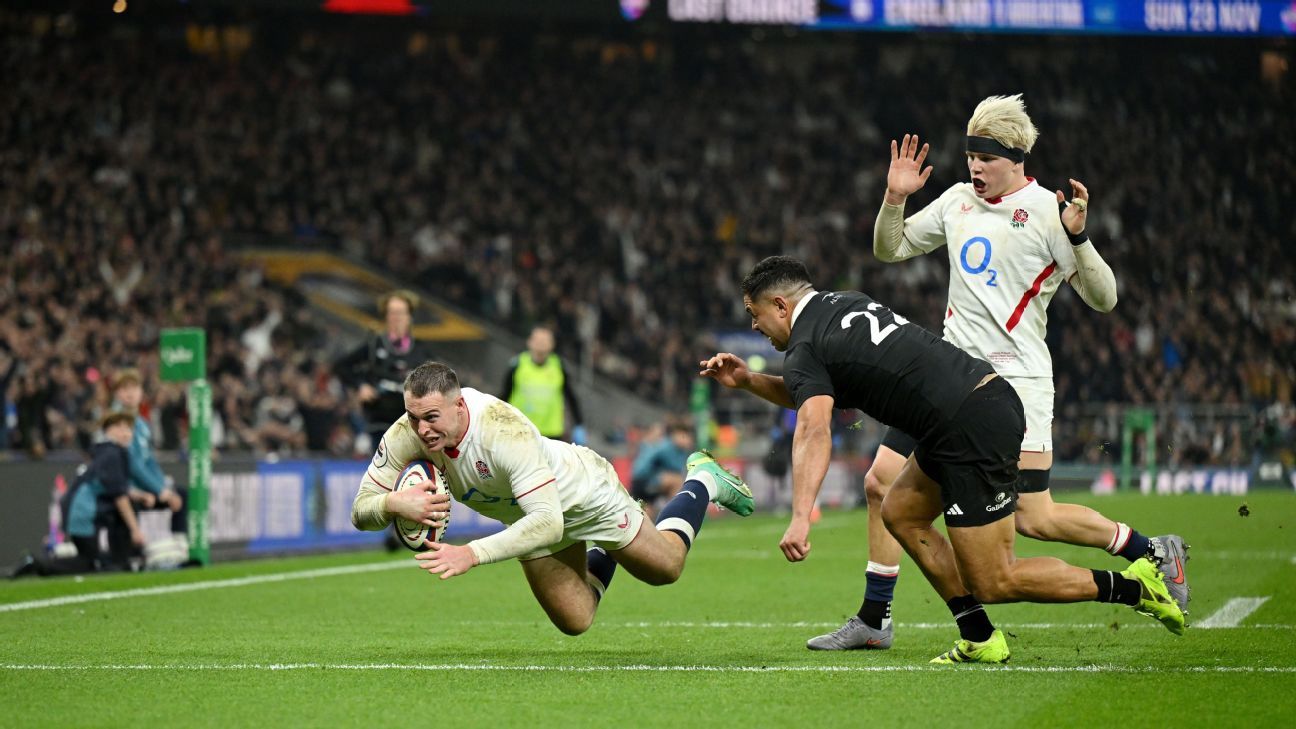
The tension held until the 76th minute, when Tom Roebuck sealed the victory with England’s fourth try, securing a 14-point lead. Previously, the emotional energy had been depleted in both teams, in a match where England proved to be a growing force.
Despite starting 12-0 down in the first 18 minutes, England did not lose focus and fought back with tries from Ollie Lawrence, Sam Underhill, Fraser Dingwall, and Tom Roebuck, delighting the Twickenham crowd. At the end of the match, the English celebrations were a mixture of happiness and exhaustion.
This victory made England the ninth team in history to defeat the All Blacks. The match was an example of sport played to the limit, with unusual errors that showed England’s quality.The image shows Tom Roebuck, who secured England’s victory with his fourth try at the end of the match.
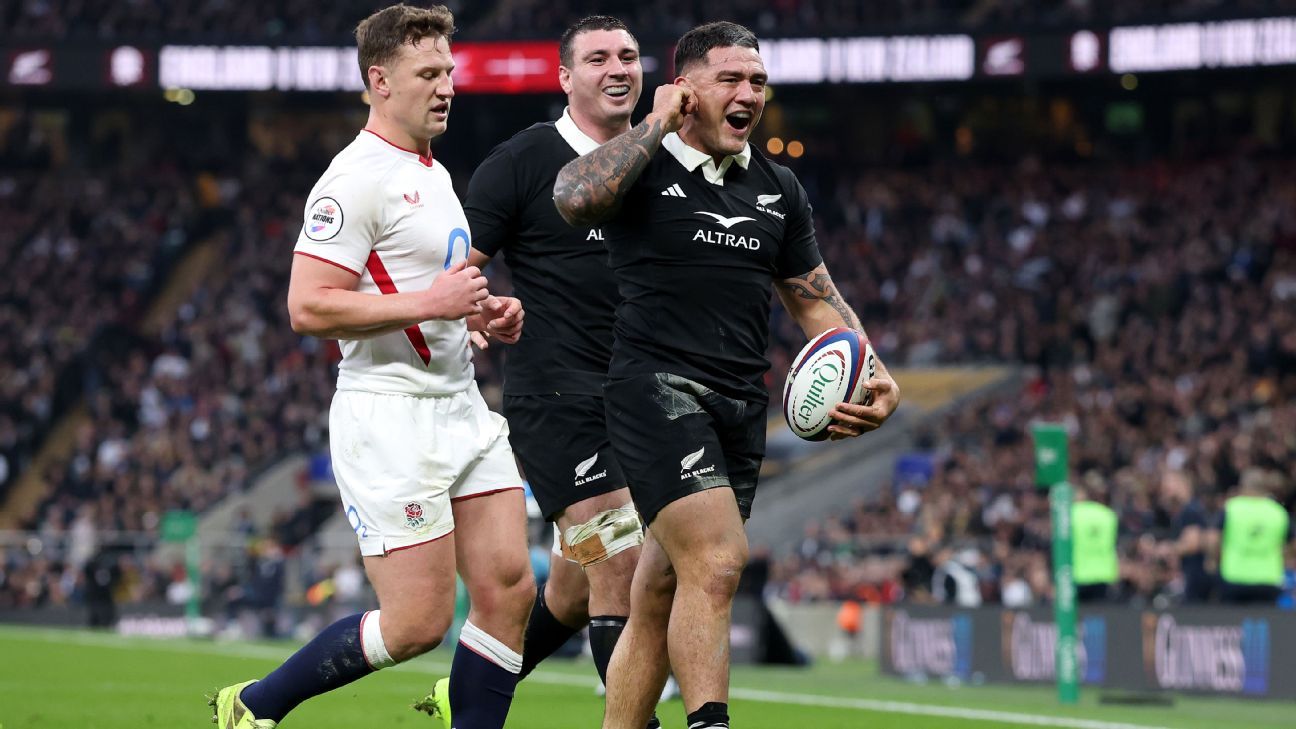
England stood firm, despite the adversities, and responded to the challenges. This was achieved thanks to Ford’s brilliance, Underhill’s incredible work, the organization of their centers, Maro Itoje’s leadership, the strength of their bench, and their versatility in attacking and putting pressure on teams in various ways.Codie Taylor scored New Zealand’s second try at Twickenham.
This victory represents an important step in building confidence and momentum for the English team. England had not achieved a victory of this caliber since 2019, when they defeated the All Blacks in the World Cup semi-finals.
A victory over the All Blacks is a rare achievement for England. Before this match, only eight English teams had defeated New Zealand in the 46 matches played.
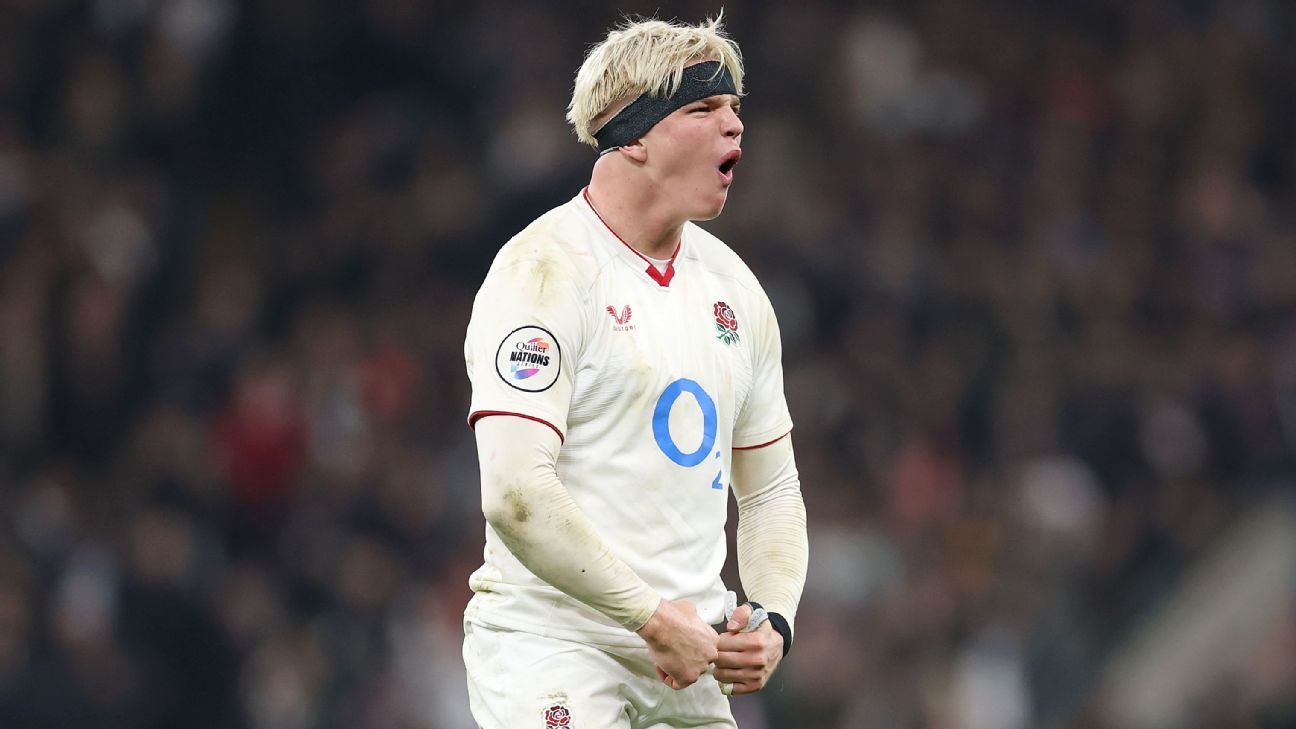
England’s response to the haka was similar to the V formation they used in the victory in Yokohama six years ago.Henry Pollock brought significant energy in the second half for England.
The match demonstrated the progress England is achieving under the direction of Steve Borthwick.
Ford had a magnificent performance as an opener. Ford scored a penalty in the 75th minute to extend England’s lead to nine points, and Roebuck scored a try a minute later to seal the 33-19 result.
It was an expert management, in a match where his two drop-goals just before halftime reduced the All Blacks’ lead from 12-5 to 12-11.
England built their game until the All Blacks’ defense collapsed. By the time Roebuck scored, the stadium came down.
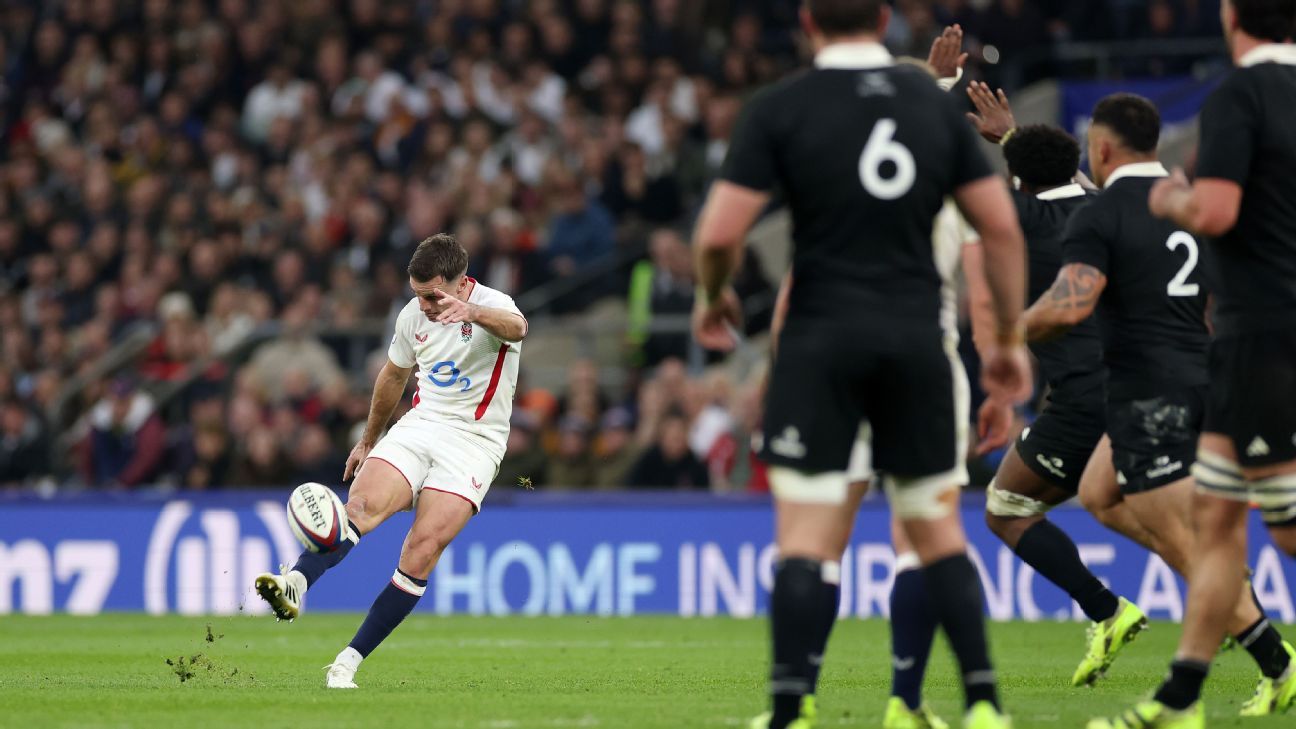
England made errors, losing three lineouts in the first half, which is unusual. However, they didn’t let it affect them, even when they were losing 12-0.George Ford scored two drop goals before halftime to reduce the difference to a single point.
England survived the All Blacks’ comeback attempt, when Will Jordan scored to put the score at six points in the 65th minute, while England played with 14 men. England managed to keep calm and deliver the final blows of the match, dominating in the scrum and recovering every loose ball.
New Zealand looked bewildered. They were seeking a Grand Slam on their tour of the northern hemisphere, but they fell short. Aside from their two quick tries, they were outplayed by a team that played with greater intensity, physicality, and effectiveness.
This is an England triumph, ending a 13-year wait for a victory over the All Blacks at Twickenham. Ford will take the headlines, but this was a victory for the whole team, from number 1 to 23, and a test of their progress.